LASIK Eye Surgery in Colombia

Eye Surgery.jpg

“You are perfect candidate.” Dr. Echeverri smiles. “We can schedule the surgery for two weeks.”

“Ella necesita usar las gafas durante las próximas dos semanas. Voy a examinar sus ojos el miércoles y ella puede tener la cirugía el viernes …”

The doctor starts speaking in Spanish to my school’s nurse, Maria Teresa, who has accompanied me to the appointment.

“You need to wear your glasses for two weeks. No contact lenses. Then you will need to see the doctor on Wednesday for an eye examination and your surgery will be on Friday,” she tells me.

Dr. Echeverri looks at me. “¿Tienes preguntas?”

“Any questions?” Maria Teresa translates.

“¿Cuánto tiempo…uh…no trabajo?…uh…no ejercicio?” I put my hands into fists do the running man action.

Again Dr. Echeverri smiles warmly, appreciating my efforts to speak in Spanish.

“Ummm…Friday, surgery, no trabajo. No work.” He replies. Yes, he can speak some English!

“One week, no exercise. One month, no swimming. Two months, no…ummm…deportes de contacto…” He looks at Maria Teresa for help.

“No contact sports for two months,” she tells me firmly.

*

I’ve always been curious about the possibility of getting LASIK eye surgery, but as a young Canadian struggling to build my career, pay off student loans, and scrape together the funds for world travel, it’s never been a budget priority.

“Maybe I’ll get LASIK when I’m a 30-year old professional and actually have savings,” I told my 25 year-old self. (LOL! #stillbroke)

But shortly after I moved to Colombia to teach at an international school, I learned that several of my American and Canadian co-workers had LASIK–IN COLOMBIA–and all had positive results. PLUS, at about 1, 700, 000.00 Colombian pesos (a little less than $750 CAD), it was much, much cheaper to have the surgery here as compared to in Canada or the US.

So I did a bit of research. Instead of being risky and “third-world” as I’d imagined, nearly everything I read, and people I talked to, convinced me that LASIK in Colombia consisted of high-quality doctors, cutting edge technology, and excellent patient care and treatment.Turns out, a Colombian doctor, Jose Barraquer, actually pioneered the earliest forms of the surgery in Bogota in the 1960s.

*

eyes


Two months later***, I’m at an ophthalmology office where a nurse is putting drops in my eyes to dilate my pupils for a pre-operative eye exam. This is an appointment that is usually scheduled a few days before the surgery so that the doctor can measure the refractive error, curvature of the eye, and thickness of the corneas, in order to create a map of the eye(s) prior to LASIK surgery.

My friend, Katie, is filling out some paperwork in Spanish for me, and answering the nurse’s questions about my demographic information for me, as at the time, my Spanish wasn’t good enough for me to answer myself. (Thanks Katie!)

After the drops set for about half an hour, an optometrist gestures me to put my chin and forehead against a metal device and look through a set of lenses. It takes him about five minutes to take the necessary photos of my eyes and measurements of my corneas in order for the doctor to get the final clearance for the surgery.

***(Unfortunately, I had to push back the appointment because I was attacked by a dog, and had to have two surgeries on my leg to debride the infection. Due to the potential risk of further infection, the doctor advised against putting my eyes in a vulnerable position and recommended waiting until the dog bite wound healed. This meant wearing my old, scratched glasses for two months instead of two weeks. While I could have gone back to wearing contacts for the time up until two weeks before the surgery, I decided to stick to the glasses to be safe. Contact lenses can distort the shape of your cornea, which could lead to inaccurate measurements and a poor surgical outcome.)

*

“Your vision will be perfect.”

Dr. Echeverri examines the results of the pre-operative exam. Using the measurement photos of my eye, he explains to me that the surgery will involve using a laser to create a flap in my cornea. He will then fold back the flap, remove a pre-determined amount of corneal tissue, and then lay the flap back in place. The whole procedure will take less than 15 minutes.

“No pain,” he reminds me.

*

At 9:30am on Friday, two days later, I meet my friend, Chrissie, in front of the building where the surgery is scheduled. Thankfully, she offered to go with me to the surgery, as I’m required to have a friend or family member take me home afterwards. Since my family is all back in Canada, so I am very grateful that Chrissie gave up her time to take care of me. She also had the surgery before with the same doctor, so understands my current state of anxiety.

“Ready?”

“I guess,” I say honestly. “I was getting a little panicked at the gym this morning. I kinda just decided that I wanted the surgery and hadn’t let myself think about what it would be like until now. I’m freaking out a bit.”

“It’s better than you think,” she tells me.

We go upstairs to the Ophthamology Office and are greeted by a friendly receptionist who asks me to sign some release forms (in Spanish) and pay the money I owe for the surgery. I give her about 800 000.00 pesos in cash and then take out my credit card to pay for the remainder (I had been told I could put half on card).

The receptionist shakes her head and tells me that the debit machine isn’t working. She says I could come back Monday to pay if I had to, but it would be better if I could go to a debit machine at the mall next door. Fortunately, I had been paid a few days earlier so have enough money in my account.

*

Fifteen minutes later, Chrissie and I return to the office with the cash in hand. Almost immediately, a nurse asks me to follow her into another room, helps me put my purse and shoes in a locker, and hands me a blue hospital gown. I wait awkwardly for a few minutes for her to leave.

She doesn’t.

Maybe Canadians are a little more modest when it comes to undressing in front of people.

I start taking off my clothes and the nurse immediately waves her hands no-no-no then helps me put the robe overtop of my clothes.

Oops.

Next, I’m led to a room where two other patients are lying on reclined leather chairs. There’s relaxing music playing and if one of the patients hadn’t been wearing little white plastic cones over his eyes, I would have guessed they were at a spa awaiting a pedicure.

I watch another nurse put drops into the other patient’s eyes. Then she gestures to me to sit in the vacant chair. I sit in the chair and join the “eye surgery assembly line.”

After I recline and try my best to relax, the nurse puts drops in my eyes as well.

“¿Alguien lavar los ojos?” I hear a nurse nearby say.

“¿Shannon?”

¿SHANNON?” ¿Alguien lavar los ojos?”

“No entiendo.” I don’t understand. I don’t understand. I don’t understand.

I freak out a bit, realizing that much of my Spanish comprehension comes from being able to read facial expressions and body language.

“Umm…she wants….uh…to know if someone has washed your eyes yet,” the guy sitting beside me with the cones on his eyes translates for me.

“Oh, no. No one has washed my eyes.”

*

I’m wheeled into a surgical room on a stretcher and put underneath a machine with a bright light that makes me feel like I’m at the dentist.

Dr. Echeverri greets me and then tapes my left eye shut.

“Now look at the red light….uh..very important,” he says as he positions my right eye under the laser. 

“Abierto. Abierto.”

He puts some more drops in my eyes which I presume is the anaesthetic. Then he uses a device to clamp my eyelid open. I’m still starting at the red light, which is hard to avoid looking at now that I can’t blink. I can’t feel anything as Dr. Echeverri uses a tool to mark the spot where the flap will be created on the cornea.

“A little…pressure,” he warns and as he places a suction ring on top of my eye to prevent eye movements.

“Now very important. Look at the red light. There will be…uh…twenty seconds of laser. The light will be a little…uh…blurry.”

I can feel someone–one of the nurses?–hold my hand, which makes me feel more at ease. I keep staring at the red light. It’s okay, be calm, Shan. I give myself a pep-talk and try to think of my family at the cottage and of my upcoming summer travels to help me relax. You wanted to do this, it’s okay. You won’t have to wear glasses and that’s so awesome. 

CLICK-CLICK-CLICK-CLICK-CLICK. The red light becomes black and blurry, the way things would look after staring directly at the sun for too long. I can smell a slight burning smell. Then the red light looks more clear then it did before.

“Perfect. Keep staring at the red light.”

I can see a tool scraping my eye and my vision becomes a bit blurry, like someone has applied Polysporin directly to my eyeball.

He tells me to open and close my eye several times. Every time I open my eye the red light seems more clear than before.

“Everything was perfect.” I can hear Dr. Echeverri’s calm, soothing voice.

Then he tapes my right eye shut.

*

I’m back in the assembly line (that feels like a spa waiting room), sitting on a reclined leather chair. Now I’m the one with the plastic cones on my eyes, while two others are being prepped for surgery.

My eyes are tearing up a lot, partly because of all the drops that the nurses are putting into my eyes, and partly in reaction to having been recently “lasered.”But I feel no pain. I’m surprised that I can see.

Before the surgery, I had imagined having a day or two of total darkness, where I’d be in a state of uncertainty of whether the surgery worked, and whether I’d ever be able to see again. But this is not the case. I know my vision is perfect. I feel so lucky. No more glasses for me!

*

Less than an hour after the surgery, the nurse takes me into a room where Dr. Echeverri examines my eyes. I’m surprised when he asks me to open my eyes and look through a similar apparatus that had been used to examine my eyes in the pre-operative exam.

“I thought that I wasn’t allowed to open my eyes.”

“You are allowed to open your eyes to go to the bathroom and eat.” I hear Chrissie’s voice. So the next few days will not be lived in total darkness as I’d imagined.

“Ok, everything is perfect.” Dr. Echeverri reassures me with his soothing, caring voice.

Tears are running down my face from all of the drops that the nurses have put in, so I wipe them off my right cheek and then go to wipe my eye. Then I freeze, realizing that I’m about to rub an eye that had undergone a major surgery less than an hour earlier.

Dr. Echeverri looks at me in disbelief.

“That is forbidden,” he says calmly, yet sternly. “Your cornea might detach. Very dangerous.”

I feel so stupid.

He gives Chrissie instructions in Spanish which she writes down for my friends, Katie and Jill, who will be taking care of me on the weekend (thanks ladies!!). I have to put drops in my eyes every hour for the next few days, and then use them as needed for the next year (which, six weeks after the surgery, has been a couple times a day).

I’m not allowed to look at screens or read all weekend, so no cell phone, computer, or book, for the next three days, and am not allowed to exercise for one week. I have to wear sunglasses inside for a little over a week and can’t go swimming for at least a month. I’m allowed to shower but have to keep my eyes closed.

And no rubbing my eyes. EVER.

I will have to go back to see Dr. Echeverri in two days and then a couple more times in the next few weeks to make sure my recovery is advancing as expected. But I can go to work on Monday for my students’ graduation, and other than some slight discomfort, I should feel no pain.

Medicine is amazing.

*

One of the gifts of travel is that it broadens your perspective and helps you see the world through a clearer lens.

Well, living in Colombia has given me better than 20/20 vision.

Literally.


Inspiring Women Series: A Conversation with Megan Valois

13318408_940373383368_957729404_n

“I’m just one person trying to leave the world a little better than I found it.”

The seventh episode of the Inspiring Women Series is my conversation with Megan Valois, a high school teacher in the Ottawa Catholic School Board and a longtime friend of mine.

Since she is one of the hardest working, most caring, and most positive women that I know, I feel fortunate that Megan was willing to share her story, insights, and passions with me.

Megan grew up in Ottawa, Ontario, where she currently lives and works. As a young girl, she was inspired by her father’s commitment to volunteerism, and became dedicated to community service herself.

“His name on a bulletin board wouldn’t mean anything to a lot of people…but the people who did know him were greatly impacted by him, and that’s the type of person that I want to be.”

During high school, she volunteered at her church, was involved in her school’s Youth Ministry and Peer Helping programs, and spearheaded the Student Ambassador Program for Kids Help Phone in Ottawa.  In 2002, she received the Governor General’s Caring Canadian Award for her contributions to the greater community.

“It’s just the little things that, cumulatively, create a person’s legacy.”

After “fast-tracking” from high-school, Megan completed a Bachelor of Arts degree at Acadia University in Nova Scotia. Following her graduation, Megan moved back home and earned her Bachelor of Education degree at the University of Ottawa with teachables in English and History at the Intermediate and Secondary Levels. She also has additional qualifications in Special Education, Primary/Junior Education, and French as a Second Language.

Megan has been working as a high school teacher for 10 years and is currently teaching Grade 11 English and Grade 10 history, including a “sheltered class” which consists of only ESL students. As a teacher, Megan is passionate about differentiated instruction, Assessment for Learning, 21st Century Learning, and the use of technology in the classrooms. Megan moderates Canadian Ed Chat and has completed her Google Apps for Education training. In 2012-2013, Megan received the honour of being one of five teachers recognized by Queen’s University as “Associate Teacher of the Year.”

“I would love to do something that has a big impact on education.”

As she is very invested in ongoing professional learning, Megan uses much of her spare time networking with other educators online, preparing for conference presentations, and attending professional development workshops. However, since giving birth to her son, Ethan, just under two years ago, Megan has learned to balance her passion for teaching with her family responsibilities.

In this episode of the Inspiring Women Series, Megan discusses her passion for education, the unique challenges of being an “army wife” (her husband, Travis, serves in the Canadian Armed Forces), her desire to make a difference in the world, and the importance of surrounding herself with positive people.

“I thrive on positive energy because when you are around like-minded people who really want to make a positive impact, it really causes you to look inward as well and ask yourself: ‘Where is my passion? What is my fire? Where do I want to go? What do I want to do? What kind of impact do I want to have?'”

The Inspiring Women Series is a podcast dedicated to sharing the many stories of women who have inspired me in my life, or who have inspired others. Please contact me if you would like to nominate someone for me to interview.

You can subscribe to the podcast series in the iTunes store or listen to Megan’s interview here:


Inspiring Women Series: A Conversation with Louise Johnson


13162020_871022556342521_139201149_n

“You have to stay authentic to what you really love, like when you were a kid, when you didn’t care what people thought…those weird quirky things…I think you should always hold onto those.”

For the sixth episode of the Inspiring Women Series, I had an insightful conversation with Louise Johnson, a Toronto-based writer and blogger.  I’ve known Louise since we were kids, as both of our families spend the summers in the beautiful cottage region of Norway Bay, Quebec. I’ve always been inspired by Louise’s love for her family, her way with words, her creativity, and her courage to put her thoughts into cyberspace.

Louise grew up in Oakville, Ontario, a suburb outside of Toronto. As a young girl, her  parents encouraged her to become  involved numerous activities, like dance and soccer. Louise believes her incredibly busy upbringing has helped her to learn how to balance her day job with her dreams of being a writer.

As a business student at the Richard Ivey School of Business at the University of Western Ontario, Louise spent her summers interning for Elizabeth Arden in New York. After graduating, she was offered a full-time job to work on the new Taylor Swift fragrance and starting making plans to relocate to New York City. However, two months before she was set to move, she was offered a position at Elizabeth Arden’s Geneva office and ended up moving to Switzerland for two years.

When she first moved to New York as an intern, Louise started the blog, Manhattan Maven, as a way of sharing her adventures abroad with her friends and family. She quickly realized her passion for writing and documenting, and the desire to pursue writing more seriously began to gnaw at her.

“It’s this invisible drive or voice inside of my head that I feel like I’ve always had. Sometimes it’s quieter than others, but it’s always there…and I just have to get it out.”

So, when she returned to New York after living in Switzerland, she assembled her writing portfolio and applied to grad school. Louise ended up getting into Harvard University’s Master’s of Journalism program and moved to Boston, where she fully committed herself  to the craft of writing.

Currently, Louise is living in Toronto and working full-time as an in-house writer for an advertising agency. This allows her to pay the bills, write creatively on the side, and live closer to her tight-knit family after six years of living abroad.

“I value my family so much…I am just in a constant state of ignorant bliss when I’m with them.”

On top of her day job, Louise is freelancing for several websites such as Normale MagazineGlamping Hub, and the Boston Day Book. Although she currently loves Toronto’s energy and social scene, she dreams of one day moving to a little cabin in the woods to write a novel.

In this episode of the Inspiring Women Series, Louise discusses why she left her incredible life in New York to pursue her dreams of becoming a writer, her obsession with her family, and the importance of living authentically.

“It’s hard to put yourself out there and take judgement, but when you do, it’s so freeing. You just stop caring what other people think and you just do things that make you happy… It’s the best feeling.”

The Inspiring Women Series is a podcast dedicated to sharing the many stories of women who have inspired me in my life, or who have inspired others.

You can subscribe to the podcast series in the iTunes store or listen to Louise’s interview here:


Inspiring Women Series: A Conversation with Josefina Bittar

Josefina

“I think sometimes you just have to let some things go so that you can find better things.”

For the fourth episode of the Inspiring Women Series, I had a lovely conversation with Josefina Bittar, a Paraguayan woman who currently holds a Fulbright Scholarship to study a Master’s Degree in Linguistics at the University of New Mexico in the United States.

After graduating from high school in Paraguay, Josefina studied Language Arts at the University of Asuncion. During her undergrad, at the age of 19, Josefina became pregnant and got married. Unfortunately, her marriage didn’t work out and she got divorced shortly after.

Instead of dropping out of school to deal with the emotional pain of her divorce and the challenges of raising her son as a single mother and full-time student, Josefina found the strength to continue her studies.

“School made me happy. If I didn’t have school, it would have been much more difficult.”

Her close-knit extended family was an amazing support for her during this difficult time. In addition, Josefina found hope through learning the stories of other women who had also gone through a similar experience. Josefina feels that her divorce has taught her important lessons that can be applied to both her personal and professional lives.

“You can try to convince yourself that this is the person or this is the place or this is the job and you don’t realize that you might be missing out…that there might be something better for you out there.”

Following university, Josefina worked for two years as a school teacher at the American School of Paraguay in Asuncion. While she excelled as a teacher, she felt pulled to continue her education. When she was awarded the prestigious Fulbright Scholarship, she moved to the United States with her 6-year-old son and her new husband.

In the future, Josefina hopes to work as a linguist in Paraguay, and possibly pursue a PhD so she can research the country’s use of Spanish and Guaraní, an indigenous language spoken by 90% of the population.

There has been very little research done in linguistics in Paraguay, so Josefina hopes to advance knowledge in this field. (Guaraní is the only indigenous language of the Americas whose speakers include a large proportion of non-indigenous people. Elsewhere, the indigenous languages have been largely replaced by European colonial languages such as Spanish, French or English).

In this episode of the Inspiring Women Series, Josefina talks about her research goals, love, self-acceptance, and the many different roles that women can have in society.

“I’ve learned that I can be the way I want to be, and as long as I’m a good person…that’s okay…”

The Inspiring Women Series is a podcast dedicated to sharing the many stories of women who have inspired me in my life, or who have inspired others.

You can subscribe to the podcast series in the iTunes store or listen to Josefina’s interview here:

Inspiring Women Series: A Conversation with Rose LaBrèche

12992210_10101394149915001_201775016_n
27-year-old Rose LaBrèche has been named as Canada’s only official for Rugby Sevens at the 2016 Olympic Games in Rio.

“When I started refereeing I never thought I would get to this point…or even when I started playing. You never think that what you are doing is going to take you down this amazing road of challenges but awesome occurrences in your life.”

For the third episode of the Inspiring Women Series, I had a conversation with Rose LaBrèche, a former rugby teammate of mine at Queen’s University, who has been named as Canada’s only official for the début of Rugby Sevens at the 2016 Olympic Games in Rio. At 27-years old, Rose feels honoured to be part of the Games so early in her refereeing career, an event she describes as being much bigger than herself, and much bigger than rugby.

“It’s the pinnacle of sport. It’s what everybody strives for.”

Rose started refereeing as a result of the encouragement of her coaches, particularly Beth Barz, at Queen’s University. After a series of concussions kept her off the pitch as a player, Rose began by refereeing high school and junior club rugby, and eventually progressed to both men’s and women’s matches at the top level.

Rose was initially attracted to the analytical and reflective nature of officiating, and loves how refereeing has enabled her to stay in the sport, despite her injuries.

“I am absolutely enthralled…and have this love affair with rugby.” 

This past September, Rose was named to the international panel of officials for World Rugby. Since then she has officiated “World Rugby Women’s Sevens Series” stops in Dubai, Sao Paulo, and in Langford, BC, as well as Six Nations games.

In order to make split-second calls during the fast-paced action of sevens play: a 14-minute game involving constant sprinting,  Rose has to maintain an incredible level of physical fitness. Rose has been described as one of the “fittest and fastest female referees out there,” which she attributes to her disciplined running regime and CrossFit workouts.

“It’s really tough once you’ve made an eighty meter break or something on the field and then you get to the next breakdown and you have to make a 50/50 decision….In order to make it easier for yourself you have to train by putting yourself under that sort of stress.”

Rose currently works for the Federal Government in Ottawa and has set high standards for herself in her “daytime” career. After graduating from Queen’s with a Bachelor of Science Honours Degree in Environmental Science and a minor in French, Rose worked for two years in Toronto at the Immigration and Refugee Board. Next, a short internship in Brussels, Belgium inspired her to complete a Master’s Degree at the University of Ottawa in International Affairs and Environmental Sustainability. Rose feels that what she has learned through refereeing has positively impacted her confidence and assertiveness in the workplace.

In this episode of the Inspiring Women Series, Rose talks about how overcoming her struggles with self-confidence has helped her to gain the respect of top-players and coaches in the international arena, as well as become better in all aspects of her life.

“When you have failure in your life you always second-guess yourself and you always doubt yourself. It’s about being able to come back from that minor failure, or even major failure to overcome your fears…

I have messed up. I have made bad calls on the international stage that have been on TV and that so many thousands of people have been watching and it’s kind of like, ‘How could I have done that? How do I ever come back from this?’ 

It’s all about looking within yourself and knowing that this is a temporary feeling and that you’ll get over it and time moves on, and you’ll get out of this in a better spot than when you came in.”

The Inspiring Women Series is a podcast dedicated to sharing the stories of the many women who have inspired me in my life. You can subscribe to the Inspiring Women Series podcast in the iTunes Store and can listen to my conversation with Rose below.


Witnessing Magic in the Amazon Rainforest

Peacock Fly
Peacock Fly in Cuyabeno Wildlife Reserve, Ecuador.

A few years ago, I took my first trip to Disney World during a spring break vacation to Florida. To be honest, I was kind of dreading the experience. I thought that I’d be turned off by all the crowds, commercialism, and unrealistically proportioned princesses.

Shannon as wizard
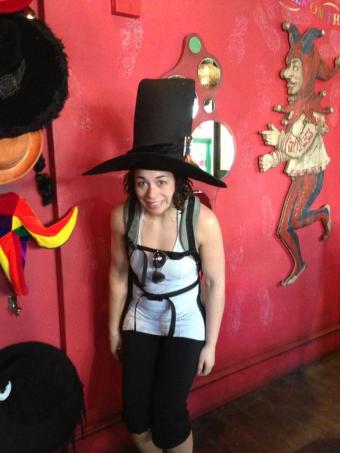
Becoming a wizard in the Magic Kingdom.

But since the friend I was traveling with was excited to visit the recently opened Harry Potter World, I decided to give it a chance.

As predicted, I did find some of the ways that the park commodifies happiness a little soul-crushing. Surprisingly, though, underneath all of the make-up and costumes, amusement park rides, princesses, castles, light shows and souvenir shops, I was witnessing a hint of magic–something unbelievable but that existed nonetheless.

Stripped down, I could see that Walt Disney World is an example of the extraordinary power of the human imagination and what can be accomplished when dreams are put into action.

Oddly, I sensed a similar presence of magic on a trip to the Amazon last week.

Tree love
The Amazon is so wild and beautiful that it is hard to believe that it really exists. But it does.

I know that Walt Disney World is NOTHING like the wild of the Amazon Rainforest, but both left me feeling like I was witnessing the impossible. They inspired a sense of wonder, left me questioning reality, and stretched my imagination of what I believed could exist in real life.

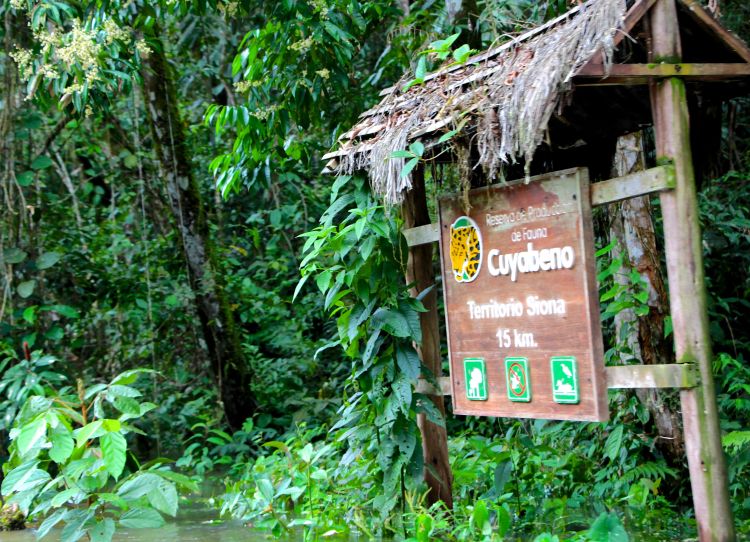
Cuyabeno
I visited the Amazon in Ecuador’s Cuyabeno Wildlife Reserve, home to an abundance of flora and fauna and several indigenous communities.

Unlike Disney World, however, the magic of the jungle is that it is not imagined, but a living, breathing ecosystem. It exposes the darkest side of nature, but also its brightest colours.

Baby Anaconda
A baby anaconda hides amidst the bushes. The average length of adult male anacondas is 2.7m, with the longest on record being almost 9m.
Caiman 1
Caimans, which tend to be 2.5-4m long, are well camouflaged in the dark, murky waters of the Amazon River.

The Amazon River is the largest river on earth, making up one-fifth of the earth’s freshwater. It’s been referred to as the “lung of the world” because of its massive power to have vital gases exchanged between the forest and the atmosphere. The rainforest stretches through nine countries:  Brazil, Peru, Colombia, Venezuela, Ecuador, Bolivia, Guyana, Suriname and French Guiana, and is the most bio-diverse region on the planet.

In the Amazon, there are anacondas that prey upon caimans, birds, and even jaguars from blackwater lagoons, trees that are over 5000 years old, termites that inspire engineering projects, birds that mate for life (take that, Ashley Madison!), and butterflies that re-define the colour wheel.

Squirrel Monkeys
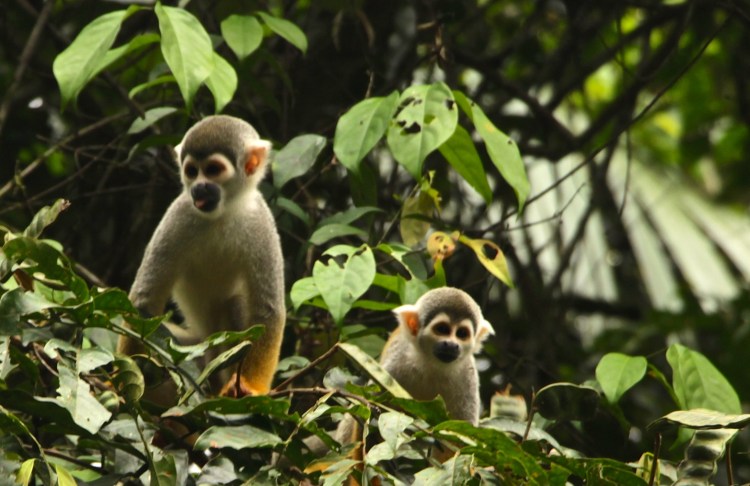
Squirrel Monkeys search for food in the Amazon’s canopy areas.
Sloth 4
A sloth slowly makes its way along a tree branch.
Stinky Turkeys
Stinky Turkeys are one of over 580 species of birds in the Amazon.
Wooly Monkey
The Wooly Monkey is one of over 10 species of monkeys in Cuyabeno Wildlife Reserve.

Due to its diversity, the extraordinary role it plays in regulating the earth’s climate, and the sense of wonder it inspires, the Amazon Rainforest is an example of the ways in which life can transcend what we believed to be possible. Unfortunately, looming threats of oil and gas extraction, deforestation, and other development projects threaten the future of the Amazon (along with many of the Earth’s wildest places).

Not only will this limit the diversity of life on the planet, it will also threaten our ability to imagine new possibilities for how to make the world a better place to live.  For me, it’s these glimpses of magic that make life interesting. They push us to dream bigger, live more fully, and expand our imaginations of what we can accomplish.

As Walt Disney said: “It’s kind of fun to do the impossible.”

Mitad del Mundo: Centring Myself in the Middle of the World

Shan Mitad del Mundo
That time I straddled the #Equator.

I smile in disbelief as my friend takes a picture of me, right leg in the northern hemisphere, left leg in the southern.

I’m standing in front of the Mitad del Mundo Monument, a historic site located 26km north of Quito, Ecuador, built between 1979 and 1982 to commemorate the 1736 French Geodesic Mission which determined the Equator’s approximate location at zero degrees latitude. (According to more recent GPS readings, the Equator actually lies about 240 meters north of the marked line.)

Thousands of tourists have struck a similar pose, but for me, the photo feels like MORE than a sweet shot for my Instagram followers #zerodegreeslatitude.

Why? At 31, I haven´t “checked the boxes” expected of someone my age: no stable career, no husband, no babies, no house, no pension, no savings, no assets. Yet I have a wealth of life experiences, lots of stamps on my passport, and amazing friends all over the world.

So, as I strike a pose in the middle of the world, I realize how lucky I am to be where I am, and how far I’ve come in order to get here.

Shan Machete
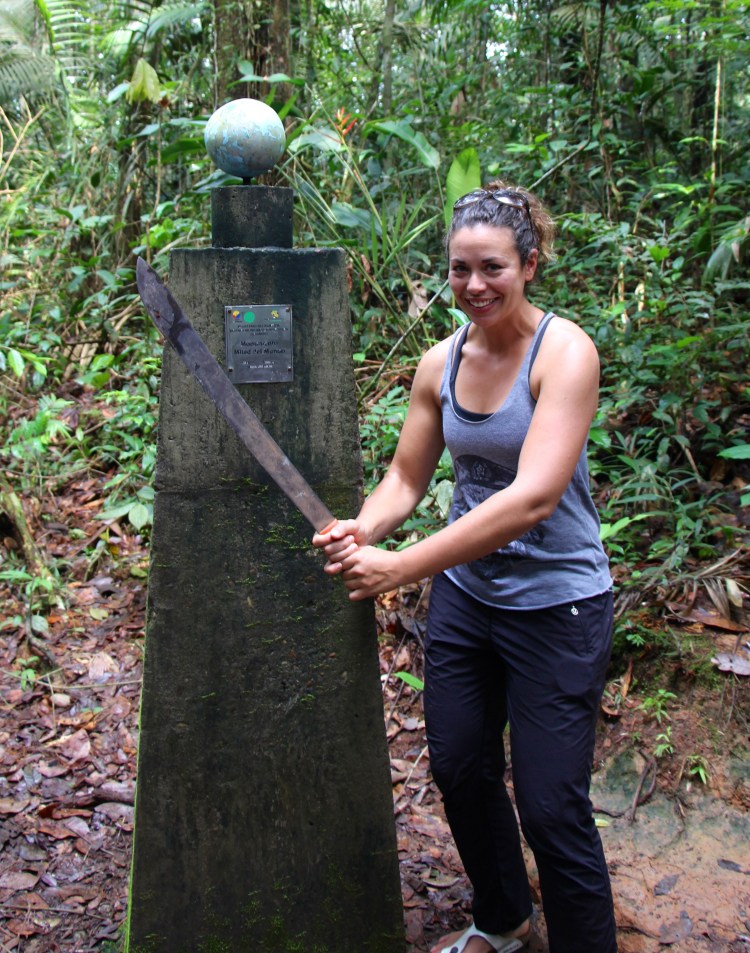
“Machete-ready” at the Mitad del Mundo Monument in the Amazon. There are milestones to mark the Equator along zero degrees latitude all over the world.

At zero degrees of latitude, the Equator may be an imaginary line. However, for me, it represents something real: taking risks, starting over, being one step closer to my dreams.

Only two years before, I was living above the Arctic Circle, at 72 degrees north, working towards becoming a university professor. However, after a few personal and professional heartbreaks, life has spun me in another direction, and I’ve begun pursuing more creative writing, (as opposed to academic which would have been a much more secure investment of my time and energy, but not as personally fulfilling).

Sundial
The position of the sun in relation to the Earth enables us to tell the time on a sundial.

It wasn’t until I stood at the centre of the world that I realized that finding my own “centre,” the road that I’m truly meant to follow, might involve choosing a different path than what’s expected of me. I guess the bright side of life not going “according to plan” is that the new plan (the one you are forced into when your previous one doesn’t work out) can take you somewhere new and unexpected, somewhere closer to where you wanted to go, but never had the courage to pursue.


At the Mitad del Mundo, I’m realizing that even though I’m traveling further and further away from the direction I thought I’d be going, that I’m moving closer and closer to where I truly ought to be.

Inspiring Women Series: A Conversation with Lovely Zaman Shima

“Every woman should have the strength to know herself. Yes, you will face obstacles, but you have to turn that obstacle into energy… If you have belief about your strength…if you have support in your life…then nothing can stop you.”

10578014_10209354939417333_77688219_n

For the second episode of the Inspiring Women Series, I had a conversation with Lovely Zaman Shima, who I met while we were both in graduate school at the University of Ottawa. From the moment I met Lovely, I was immediately struck by her positive spirit, her confidence, and her determination.

Lovely was born in Bangladesh in 1979 and grew up in the capital of Dhaka, where she is currently living with her husband and her two children. After losing her parents at a young age, and being raised by her brothers, Lovely was able to find the strength to stay positive and work towards her dreams.

A turning point in her life was achieving 7th place out of 150,000 students in Bangladesh on her exam for the Secondary School Certificate (S.S.C.). Positioning so highly on this exam helped her to believe in herself and her own abilities. It also inspired her to dream BIG.

Thus, she enrolled in an undergraduate program at the University of Dhaka where she met her husband. They quickly fell in love and got married, and Lovely became pregnant with her daughter at the age of 21. Instead of seeing her pregnancy as a barrier to finishing her studies, Lovely “turned the obstacle into energy,” and completed the program during her pregnancy. Afterwards, she completed a Master’s Degree in International Relations at the University of Dhaka.

Following her schooling, Lovely joined the government service as Assistant Super of Police (ASP) in 2005- one of the most prestigious jobs in Bangladesh. As ASP, she worked with Bangladeshi women to help them overcome situations of oppression.

When her husband, a diplomat, was posted abroad, she traveled with him and her family, first to Malaysia, and then to Canada. While in Canada, with the encouragement of her husband, she started a second Master’s in Women’s Studies at the University of Ottawa. Shortly, she will begin a PhD, which she hopes will help her to represent Bangladesh in the international arena.

In this episode of the Inspiring Women Series, Lovely describes how every woman should have confidence in her own inner strength. Rather than perceiving obstacles as barriers to personal growth, Lovely views them as a source of energy which women can use to gain strength and push themselves to reach their goals.

I interviewed Lovely over Skype from Colombia while she was in Bangladesh, so the connection gets a little fuzzy at times, but it’s definitely worth a listen to learn from her wisdom and courage.

The Inspiring Women Series is a podcast dedicated to sharing the stories of the many women who have inspired me in my life. You can subscribe to the Inspiring Women podcast series in the iTunes Store.

Practising Self-Love on Valentine’s Day


IMG_0776-2
Finding my balance by connecting with nature! (On a camping trip in Los Nevados National Natural Park, Colombia) Photo credit: Jill Holmes

In light of it being Valentine’s Day in North America (in Colombia El Dia del Amor y La Amistad is celebrated in September), I thought I’d write about self-love. (After all, the longest relationship any of us will ever have is with ourselves!)

Sadly, though, we live in a world that makes it difficult to love ourselves. From a young age, we are taught that we are never enough. Beauty is purchased. Happiness is pursued. Bodies are shaped. There’s always someone smarter, fitter, faster, stronger, more beautiful than us. In my grade five class, I’ve been alarmed by the number of uber-thin girls who have told me how fat they are, and the boys who have broken down in tears after receiving 9/10 on their Math quizzes. As high-achieving ten-year-olds, they are already striving for perfection in every aspect of their lives.

But I did the same when I was their age. I was constantly complaining about how fat I was compared to the other girls in my ballet class and would wear baggy sweatshirts to hide my curvy figure. While I never developed an eating disorder, like many other dancers and female athletes, I struggled with exercise addiction until my mid-twenties (and arguably still do). I’d push my body to the point of injury and would beat myself up if I missed a day at the gym.

I’ll admit, there was a day during my undergrad when I taught three fitness classes and then played 80 minutes of rugby. I’d always opt for a Sunday morning run over Sunday morning cuddles with my boyfriend. In addition, I over-scheduled my life with clubs, activities, and leadership roles to fulfill a compulsive need to be the best at everything I did. But it wasn’t entirely my fault: “busy-ness,” over-achievement and perfectionism were glorified in the culture of my university. I even won an award at my graduation for outstanding contribution to athletics and student government. I’m sure my Dean’s List average, long list of extra-curriculars, and high-achieving résumé helped me land a grad school scholarship.

However, my extensive involvement and over-scheduled life came at a cost: time for myself. I went years without going to the doctor, was often running on little sleep, experienced several chronic injuries from over-exercise, and took some of the relationships I valued most in my life for granted. I missed a few of my good friends’ weddings. I had to skip out on Thanksgiving at the cottage (my favourite family time of the year), and wasn’t able to be there for friends who were going through hard times. Also, I never made time for creative pursuits, like writing and photography, which add joy and meaning to my life.

It took a tough and painful breakup alongside the professional heartbreak of not receiving funding for my PhD research for me to realize that the compulsive need to be busy all of the time, as well as perfectionism, come from a place of fear of not being enough as I am. I was forced to confront the fact that I’m human like everyone else, and this means accepting that I’m deeply flawed and ultimately, imperfect. But, as a good friend wisely told me, my beauty lies in my imperfection: my inability to close cupboards or doors, my awkwardness in big groups, my terrible sense of direction.

One of the hard lessons that I’ve learned from being a teacher is to practise self-love in both my personal and professional lives. This means, putting myself first and being okay with saying “no” to people who need my help.

Most of my teaching experiences have been in low-income, “at-risk” communities, like inner-city Toronto and London, and on First Nations reserves. So I’ve worked really hard in my role as a “helper”: helping students believe in themselves, helping them overcome adversity, helping them reach their potential when the odds are stacked against them. However, the amount of energy I spent in investing in others came at the expense of helping myself. Since I was on the road most weekends  coaching basketball or rugby, I struggled to make time for the people and passions that I loved. This led to frustration and burn-out. It’s no wonder that nearly half of teachers leave the profession within their first five years of teaching.

I love teaching, but I’ve learned that to thrive in the profession, as well as maintain my health and sanity, that I have to constantly practise self-love. I have to put myself before my students. As my amazing and inspiring friend and fellow teacher said, “It’s like being on an airplane. You have to put on your own oxygen mask before you put on someone else’s.” This means making time every day to exercise, prepare healthy meals, and get to bed early, no matter how much grading I have. I give myself permission to have shitty lessons every now and then. I give less assignments that I have to grade myself and have more peer and self-evaluated assessments. I continue to be involved in extra-curriculars but I don’t coach EVERY sports team or run EVERY club.

Prioritizing self-love in my professional life has also helped me in my personal life. I say “no” to social events I don’t want to go to and have stopped trying to please other people. I make time to pursue my passions like writing and travel. I’ve stopped investing in friendships that don’t make me better or add substance to my life and instead, spend the bulk of my time with the people I really care about. While I still exercise most days, I schedule time for my body to rest and recover, and I don’t beat myself up when I skip my workouts.

While I spent the bulk of this Valentine’s Day alone, I didn’t feel sad or lonely. I went for a beautiful run in the morning and shared a traditional Colombian lunch with my friend. I spent the afternoon writing in a café, practiced photography with my new camera, and then enjoyed una cerveza y sol with another friend. I felt free to do what I wanted with who I wanted because I didn’t feel the need to achieve, or please, or meet any sort of social expectations.

This Valentine’s Day, I feel lucky to have spent the day loving the person who matters most in my life: me.


El Sol

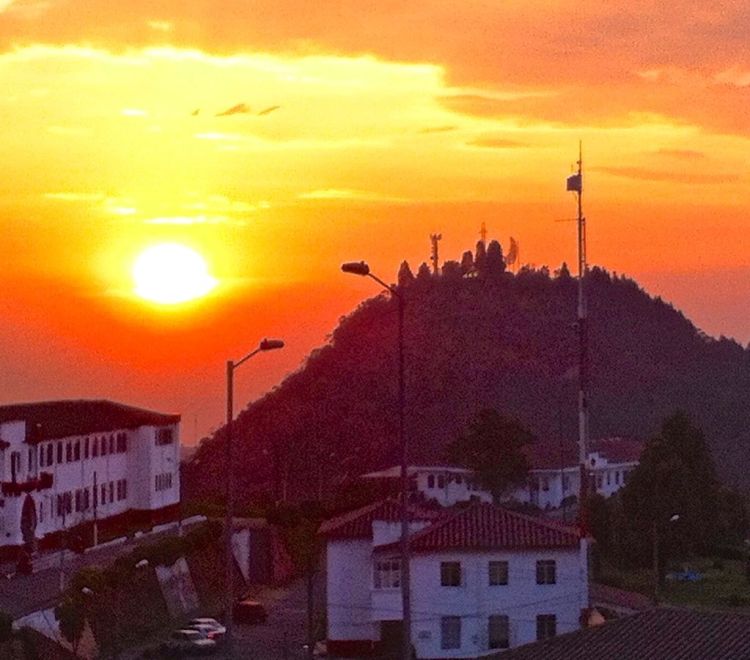
Manizales sunset
Manizales, una “fábrica de atardeceres” -Pablo Neruda

In my travels, I’ve been fortunate to have witnessed some amazing sunsets. Located five degrees north of the Equator, Manizales, Colombia, the city where I’m currently living and working, has the some of most beautiful sunsets I’ve ever seen. It’s no wonder that the Chilean writer, Pablo Neruda, described Manizales as a “fábrica de atardeceres” (sunset factory). On sunny days, at about six o’clock in the evening, the sky transforms into the most radiant blend of orange, yellow, and pink, colours that stretch the limits of my imagination, as el sol (the sun) slowly disappears behind the Andes.

cable cars
Sunset from historic cable cars in Manizales.

For me, sunsets are like a delicious piece of fruit: a juicy red mango freshly picked at my friend’s finca (farm), or a locally grown Ontario peach from a roadside stand. They remind me that life can be more colourful, more flavourful, more radiant, than I usually experience it to be. Sunsets inspire me to dream of a tomorrow that will be better than today…and encourage me to STOP what I’m doing, grab una cerveza (a beer), and enjoy the moment.

Adriatic sea
Sunset on the Adriatic Sea, off the coast of Hvar Island, Croatia.
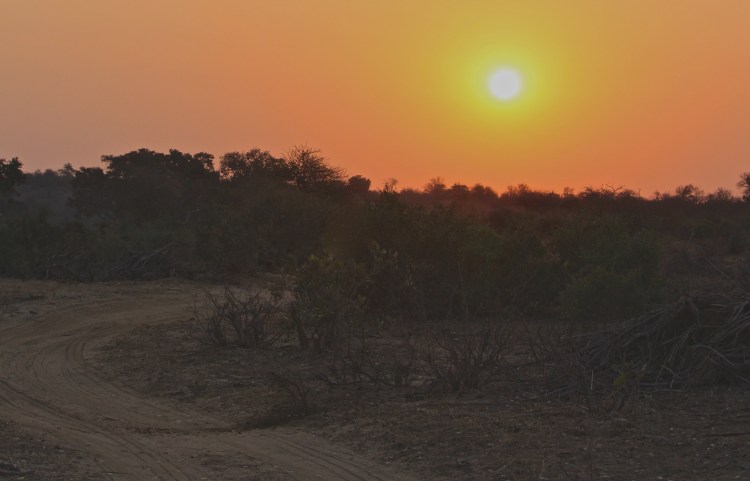
Serengeti Sunset
Kruger National Park, South Africa


sunset over arctic ocean
Sunset over the Arctic Ocean
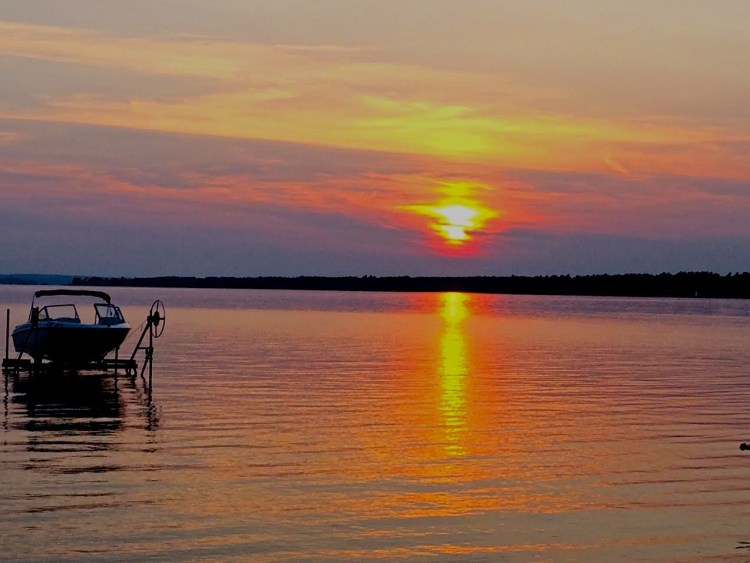
norway bay sunset
I can travel the world, but it’s hard to beat a sunset at my cottage in Norway Bay, Quebec.

As I taught my fifth grade students in Science this week, the sun is the Earth’s primary energy source. It warms the planet, drives the water cycle, and makes life on Earth possible. While sunsets calm me down and inspire me to dream BIG, it wasn’t until I lived without el sol that I learned to appreciate its full value.

Screen Shot 2016-01-23 at 7.08.29 PM
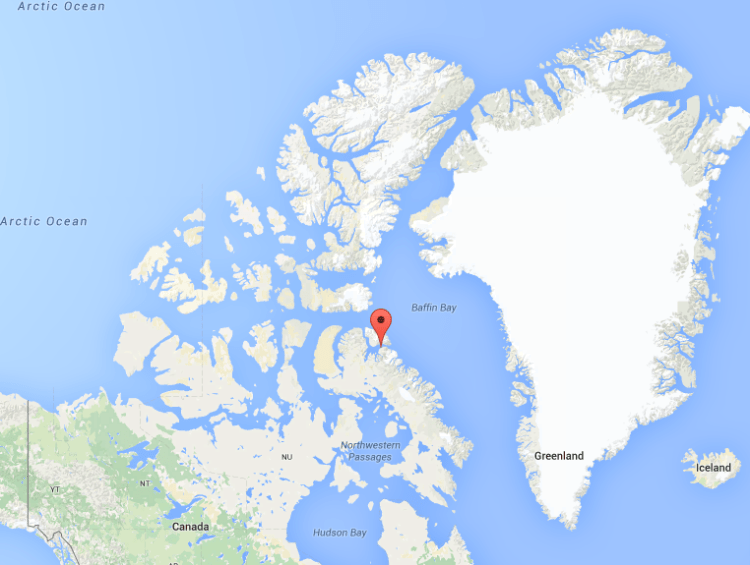
Pond Inlet is a community of 1500 people located on the northernmost tip of Baffin Island in Nunavut, Canada

This time two years ago, while teaching in the community of Pond Inlet, Nunavut, I experienced  “the polar night,” which occurs when night lasts for more than 24 hours. When I was there, the sun set in mid-November, and didn’t rise again until early February.

This meant living in four months of darkness.

walking to church 11am
I took this photo while walking to church on a Sunday morning in December for 11:30am mass. (Mittimatalik is the Inuit name for Pond Inlet.)

It wasn’t totally dark all-day, everyday. There was a twilight period between about 11am-2pm when the sun was just below the horizon, meaning you could go for a walk, ski, or snowmobile outside without a flashlight. However, I remember being shocked when some of my students opened the outside door to get some fresh air during last period gym class (about 2:30pm) and it was so dark that I was able to point out the Big Dipper.

OLYMPUS DIGITAL CAMERA
It was important for me to get outside during the twilight hours of the dark season.
OLYMPUS DIGITAL CAMERA
My friend and I witnessed the “Return of the Sun” on a -40C ski in early February.

Without the sun, a natural energy source, I had to develop strategies for creating my own energy. I took Vitamin D pills daily, had a spin bike and a set of weights in my bedroom, tried to force myself to get outside everyday (even if all I did was take a quick walk to the Northern Store or to school), coached community basketball, and connected with friends as much as possible. I’m often described as an incredibly positive and extremely active person, but without the sun to give me energy, there were several weekends when I didn’t even leave my house.

Needless to say, I’m amazed and inspired by the Inuit and northerners for whom living in darkness is a regular part of life. Let’s just say, I’ll never have sympathy for students who complain about the cold, as my students in Pond Inlet walked to school and gladly went outside for recess on days when it was nearly -50°C with the windchill, often without proper boots, mitts, or a warm enough parka.

Leahtee
I was so pumped for the “Return of the Sun” that I did a -30 C photo shoot in my Leahtee, an awesome clothing line designed by my good friend, Leah!

Living without the sun made me reflect on the simple, yet crucial elements of life that I’ve taken for granted over the years. The fast-paced North American culture encouraged me to chase the future, look for a better relationship, check another item off my bucket-list, pursue another degree. But when you live one step ahead of your own life, you overlook the people, places, and opportunities that contribute to your ability to survive and prosper in the present.

So for now, every time I see a Manizales sunset, I’m going to make an effort to STOP, grab a beer, and ENJOY the moment. As I’ve learned the hard way: sooner or later, that moment will be gone.

And it’s always great to have an excuse for some cerveza y sol (beer and sun)!