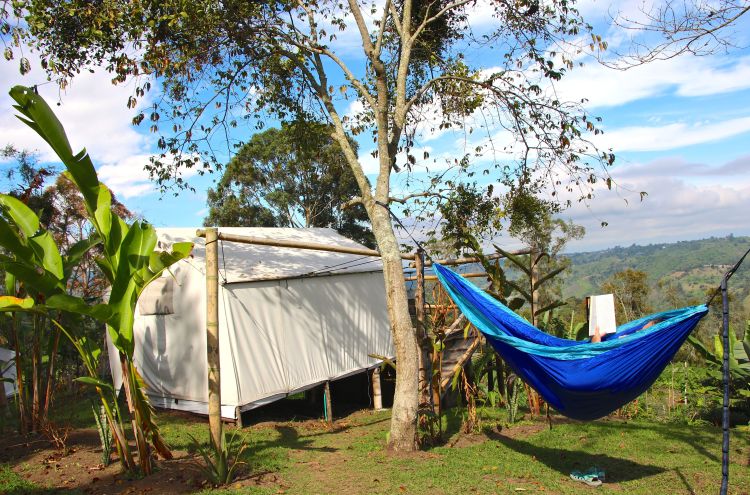
During my 9 months in Colombia, I went to Salento four times and each time I “glamped” at La Serrana Eco Hostel (#happyplace)
When I travel, I often feel overwhelmed by how much of the world I’ve yet to discover.
I meet people along the way who reveal hidden gems they’ve stumbled upon, and think I want to go there too.
My “bucket-list” just keeps getting longer and longer: Hike in Patagonia. Visit friends in Israel, New Zealand, and Australia. Trek in the Himalayas. Walk the Camino de Santiago. Camp in Northern Ontario. Drive across Canada.
But I have no intention of traveling for the sake of checking items off a bucket-list. For me, the wonder of travel lies in opening myself up to new places and cultures so that I can develop a deeper understanding of the world and of myself. Much like Andrew Evans of National Geographic Travel, I cringe at the idea of “DOING” a country.
“Last summer, I DID Colombia. Next vacation, I’m going to DO Morocco.”
Yuck.
Like a one-night stand, doing someone/somewhere implies CONQUEST: traveling to boost your “likes” on Facebook/Instagram (ie. your ego). It misses the true beauty of an intimate moment, the magic of possibility which comes from a deeper and often unexpected connection.
Even though I know that I’ll never have enough time to travel to all of the destinations I want to visit, I’ve found myself GOING BACK to places I’ve ALREADY BEEN.
When I was 16 my family took a ski trip to Banff National Park that changed my life forever. As we drove from Calgary airport to Banff in our jam-packed rental car, I was struck by the danger & beauty of the Rocky Mountains, and said something I will NEVER live down amongst my family:“I’m overwhelmed by the magnitude of the mountains,” as though I was a character in Road to Avonlea (which at the time, I probably wanted to be).
Less than 6 years later, I went back and spent nearly a year working at the Fairmont Banff Springs Hotel. My reasons for going back weren’t rational: I went back because something about the energy of the place took my breath away. I went back because I had to. I went back because I knew that the story of “me there” wasn’t over yet.
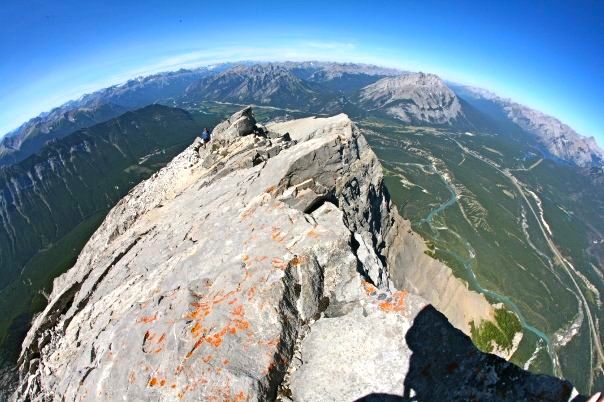
Me, the ant, on top of Rundle Mountain in Banff National Park
Since Banff, I’ve gone back to many other places for many different reasons. The land. A person. A challenge that wasn’t complete. A relationship that wasn’t over. A sense of ALIVENESS that I’d never experienced before. Something that made me think: I’m a better person because I’ve been here.
Five months after my teaching contract ended in the Arctic, I went back to take the junior boys basketball team that I’d coached while I was working in Pond Inlet, Nunavut, to a tournament in Iqaluit. I had applied for a grant from the government to build the program and provide more opportunities for the team of grade 7-9 boys to engage in school & basketball.
Matthew & I at the Nunavut Territorial Basketball Tournament in Iqaluit
Shortly after I’d returned to Ontario, I found out that I’d received the grant. I’d invested so much of myself in the team, that I couldn’t just decline it because I’d moved back home. Even though my contract at the school had ended, my responsibilities as a coach hadn’t. I needed to go back to finish what I’d started.
Much like life, travel is a journey, not a destination. Sometimes the story isn’t finished in time for the return flight.
Sometimes we stay.
Sometimes we have to go back to read the next chapter.
Around this time last year, I accepted a temporary teaching position at a bilingual international school in Colombia. Now I’m back in Toronto, surrounded by familiar faces and the comforts of “home.”
In some ways, it feels like I’m in the same place I was before I left. But travel is an incredible teacher, and my experiences in Colombia have taught me some valuable lessons that I hope will help me live a healthier, happier, more meaningful life in Toronto. Here are some of the lessons that I learned from teaching and traveling in Colombia.
Lesson 1: We are not our past.
Colombia went from having one of the world’s most violent countries in the mid-90s to the “Happiest Country in the World”
The class sat around in a circle while ‘José’ told his story.
Everyone was crying including me. José told us that he had been bullied since Grade 2, especially by three other boys in the class. He couldn’t take it anymore. Due to the stress he’d experienced at school, he was acting out at home, being rude to his parents and mean to his sister. He was thinking of switching schools so he could have a fresh start. But he didn’t want to. He liked the school and the teachers and his friends and the extra-curricular clubs he participated in there.
After he spoke, each student told José something they appreciated or admired about him. The bullies apologized. José forgave them. Everyone cried some more. A group hug ensued.
A group of ten year olds had committed to starting over. They rose above their past and the identities of “bully” and “victim” they’d been living in for years.
A similar process has occurred in the political landscape of Colombia, but at a much larger scale.
After nearly four years of peace negotiations, the Colombian government is on the brink of finalizing a deal with the FARC guerrillas it has been fighting since 1964. According to the United Nations, the conflict has left more than 220,000 dead and driven nearly seven million Colombians from their homes.
The peace accord is an opportunity to formally end decades of violence. As the New York Times writes, “Victims of the conflict, many of whom have supported the process fervently, deserve recognition for their willingness to forgive. By facing down an enemy across the negotiating table, they set a laudable example at a time when so many of the world’s armed conflicts appear intractable.”
Thus, an important lesson I took away from living in Colombia is that clinging to past identities does nothing but cause more pain, more suffering, more violence. It is never too late to forgive, accept, more forward, re-build.
Lesson 2: Growth occurs through struggle.
It wasn’t easy to learn a new language, teach at a different level, or live in the mountains, but overcoming these challenges made me stronger.
I tell ‘Natalia’ to go to the office. She’d just thrown an eraser at ‘Elizabeth’ and I’m on the verge of breakdown. Five other students are already staying in for detention at recess.
I just want them to stop talking and listen.
I want them to learn math. I want them to WANT to learn math. I want to be doing a better job right now. But I’d never taught math before. I’m trying my best. Sometimes my lessons suck but I’m learning.
‘Martin’ walks up to me while I’m in the middle of teaching a strategy for multiplying fractions. He shows me his Hatchet quiz and asks me why I’d taken a mark off for #5. You’re unfair. It’s Friday and we are supposed to be playing. We are just kids.
I know you’re kids but the class’ behaviour was terrible today and you didn’t earn your free time. We didn’t cover what we were supposed to cover in math.
Fernando’s on the couch! ‘Monika’ yells from the back of the class. He’s not sitting in his seat. You’re unfair. It’s Friday and we are supposed to be playing. I don’t get fractions!!!
I take a deep breath.
I’m about to lose my shit. I knock on the teacher’s door beside me and ask him to watch my class. I walk around campus for two minutes, look at mountains, remind myself that life is beautiful and everything is going to be okay, then I go back to teaching math.
*
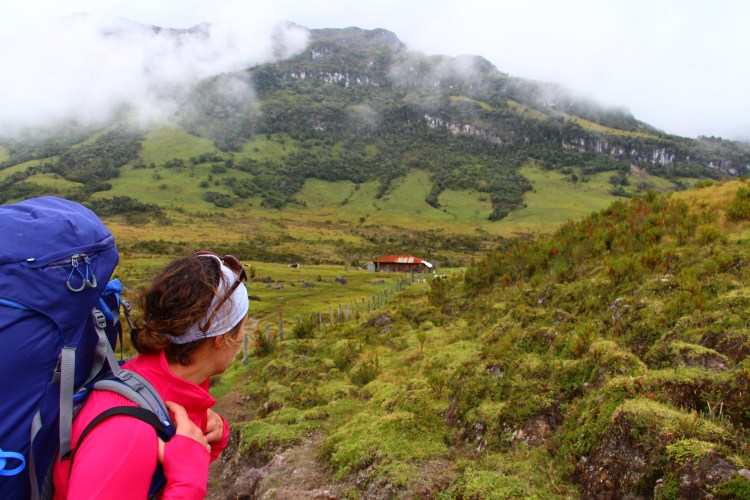
I avoid looking to my right at what looks like a 50 foot sheer drop into the dense jungle below. My heavy pack, filled with my tent, camping gear, and remnants of a week’s worth of food, throws me off balance as I carefully place my hands and feet on tree roots to pull myself up a steep, muddy cliff face. My body’s shaking, cold from the rain and terrified by my irrational fear of heights. All I can think is: Get me the fuck out of here.
We’ve been hiking for over 6 hours after a week of camping in Los Nevados National Park, and I just want to get home. But then getting home will involve another 4 hour drive in a jeep in my wet, smelly, camping clothes, and my family’s all back in Canada, enjoying the rest of their Christmas holidays, sitting warm and dry by the fire like normal people while I’m bushwhacking through the high-altitude cloud-forest in the Colombian Andes, so where’s home anyways?
*
It smells like gas. I say. The man looks at me blankly as I wave my hand in front of my nose and point to my gas tank by the washing machine.
He gestures towards the gas tank and asks me an onslaught of questions in Spanish. I don’t understand anything.
This continues for a few minutes. I’m feeling incompetent and incredibly helpless. What am I doing here?
I type: “There’s a gas smell” into Google Translate and show him on my phone. He reads it and then types something himself.
Carbon Monoxide. I read. Is he telling me that there is a carbon monoxide leak in my apartment? Am I going to die in my sleep?
I call my friend, Jill, and ask her if she can speak to the contractor in Spanish over the phone. I hand the contractor the phone and he explains the situation to Jill. A valve was open. Some gas did leak. I’m not going to die. Keep the windows open. The smell should go away in a couple of hours.
Gracias. Gracias. Gracias. I say because it’s all I CAN say.
So I found myself reflecting a lot about whether or not happiness is something I should be aspiring towards. (I wrote this blog post about this dilemma when I first arrived.)
During the year, locals often asked me if I was happy. Si, si.Estoy muy contenta. I’d say, after I learned enough Spanish to be able to do so. In some ways I was.
But there were definitely many low moments.
Life was really hard for me at times. I cried ALOT (especially at the beginning). During these moments, I’d beat myself up for not being “happy,” as I thought I should be. Look at all these incredible pics my other friends here are posting on Facebook about their amazing adventures. What’s WRONG with me??
Because I stuck it out during hard times, I learned some great teaching strategies that I can apply to future jobs. I can now speak broken Spanish, and decided to register for a course in Toronto so that I can continue to improve. The physical challenges that I undertook in the mountains taught me greater patience, discipline, and the importance of living in the moment.
While I don’t think I should seek out opportunities for sustained unhappiness, living in Colombia taught me the value of struggle. Many aspects of living and working in a foreign country were challenging. I often thought of quitting and coming back to Canada where people spoke my language and life was a little easier. Yet these struggles provided opportunities for incredible growth, which helped me become a stronger, more balanced, and tri-lingual (ish) person.
Lesson 3: Live in COLOUR.
Chiva party. 8:00 am. Staff Appreciation Day in Salento
In Kanata, a suburb in Ottawa, Canada, just minutes away from where I grew up, there’s a city by-law which regulates the colours of homes and garage doors. Basically, if you paint your exterior doors purple, you will get fined. In contrast, the Colombian towns of Guatapé, Salamina, and Salento, look like a giant package of Skittles exploded and painted the whole town in rainbow. Colour is EVERYWHERE.
I’m not blaming Kanata’s bland garages on my shyness or how I’ve often placed limits on my own potential. But Colombia’s colourfully warm and vibrant culture inspired me to live bigger, brighter, and more passionately. It reminded me to embrace opportunities for love and adventure, even when they seemed like silly fantasies.
So when my friend and teaching partner, Matt, introduced me to the “20% Percent Project” which he had done with his class for the last couple of years, I quickly jumped on board. It’s a project which is inspired by Google’s mandate that its employees spend 20% of their time at Google to work on a passion project, something not covered by their job description. This allows innovative ideas and projects to flourish and/or fail without the bureaucracy of committees and budgets. As a result of Google’s 20% Project, its employees created Gmail, AdSense, Google News, and the Google Teacher Academy.
Following Matt’s lead, I required that my students devote 20%(ish) of class-time learning about something that they are passionate about, something that adds colour to their lives. For their projects, they needed to choose a topic that they were excited to learn about, where they could apply research to creation and innovation.
They wrote weekly reflections on a blog that they shared with their classmates and presented their projects to their parents and school community in a TED-style 5 minute presentation at the end of the school year. The results of this project were unbelievable. My class of grade five students invented board games, wrote cookbooks, created craft books, created stop animation movies with characters and sets made out of LEGO, and built a model “Future House” using sustainable materials. It was amazing.
This project also inspired me to devote 20% of my own time to exploring my passions. As a result, I started the Inspiring Women Series podcast. I prioritized writing, travel, and living according to a healthy, active lifestyle. I spent five weeks traveling in Colombia with my parents, my brother, Brian, and my friend, Ashley. Then I spent most of August getting my novel ready for publication.
By learning to see the world (and myself!) through a more colourful lens, I was able to see greater possibilities for my life, and inspire my students to do the same.
Lesson 4: It’s okay to take care of yourself.
My friend, Katie, takes time out to read a book during a long weekend in Salento
A few days ago Hillary Clinton took time off from the campaign trail to recover from pneumonia. She received much criticism for this decision, from people who condemned her for not being able to “power through” her sickness, to others who blamed her for not being more forthcoming initially about her medical condition. This criticism came to no surprise to me, as North Americans perceive taking time off as weakness.
My first couple of years of teaching, I never called in sick out of fear of being judged. When I was in university, I played rugby games with serious injuries because the culture of the sport promotes an invincibility complex. Needless to say, when I was required to take more than two weeks off of teaching after being attacked by a wild dog in Colombia, I felt very stressed out. A committed employee persists despite the pain, right?
Instead of making me feel pressured to come back to work, people from my school community came to visit me at home and in the hospital and even had food delivered to my house daily. They helped me to realize that my health was more important that my job, and that I don’t need permission to put myself first.
In Colombia, the attitudes towards self-care and rest are strikingly different than in North America. Colombia has the second highest number of national holidays in the world (after Argentina), with 18 public holidays and an average of 15 paid vacation days. Comparatively, Canada ranks third last in paid vacations. It’s hard to feel anything but lazy when you take time off in a culture where productivity is valued over health.
Living in Colombia helped me realize that taking care of myself is not a sign of weakness. In fact, it takes a lot of strength to say: I need help. I need time off. I need a break.
Lesson 5: Paths aren’t always linear.
Maybe life’s a series of switchbacks, taking us up, down and around the mountain, instead of a straight path to the top.
There’s an underlying pressure in North America to follow a linear path. Go to school. Get X degree. Get Y job. Find husband. Buy house. etc. We are uncomfortable with living in the moment, allowing life to unfold organically. It feels stressful/ silly/ irresponsible to even consider opportunities that aren’t a tangible stepping stone to something else (especially if they don’t come with a pension or benefits!).
So when an opportunity for me to teach in Colombia presented itself to me, my immediate reaction was “well, maybe this would have been great a few years ago, but it’s time for me to ‘settle down.'”At the time, I was intending to stay in Toronto, and start building my life there. I wasn’t seeking out positions that would take me away from the city.
Since I’d never been to South America, I decided to apply for the job despite the rational side of my brain telling me not to.
A few days later, I had a great interview with the director of the school. While I felt positively about the position, I was booked to fly to Johannesburg for a trip to South Africa later that day, and figured that seeing wild beasts on a safari in Kruger National Park would satisfy my thirst for adventure. I told the director thank you for the interview, but it is probably best if you interview other people as I’ll be offline for the next two weeks.
When I returned from South Africa, the director of the school requested a second interview. I panicked and ignored his e-mail for a day. It would have been much easier for me if he’d hired someone else. I could tell myself that going to Colombia to teach was a nice idea. But an unrealistic one.
I went for coffee that day with my cousin, Jenn, who was pregnant with twins at the time. I told her about the job prospect, and about my plan to tell the director that there was no point of going through the interview. I didn’t want the job anyways. She suggested that I go through the interview, and then decide. Keep my options open. Darn hormones!
After the second interview, the director offered me the job. I had the weekend to decide. I made pros and cons lists. Talked to my friends and family. Convinced myself that I would be better off not going. When I sat down to write the director the e-mail, thanking him for the offer, and telling him of my decision not to come, the e-mail somehow transformed into a “thank you for the offer and I’ll accept the position.”
A few days later, I was offered a teaching position with the school board in Toronto. Of course. After four years of applying for jobs in Toronto and hearing nothing, I get offered a job NOW. The logical, rational, choice would have been to tell the school in Colombia about this unanticipated change in plans, and continue down the path I had intended for myself.
Teaching in Colombia was something I’d stumbled upon, not something I’d planned. Instead of finding the job, the job kind of “found me.” This experience taught me that sometimes it’s best to accept the gifts that life gives us, even if it takes us in an entirely different direction. I feel so grateful that I did.
“You have to stay authentic to what you really love, like when you were a kid, when you didn’t care what people thought…those weird quirky things…I think you should always hold onto those.”
For the sixth episode of the Inspiring Women Series, I had an insightful conversation with Louise Johnson, a Toronto-based writer and blogger. I’ve known Louise since we were kids, as both of our families spend the summers in the beautiful cottage region of Norway Bay, Quebec. I’ve always been inspired by Louise’s love for her family, her way with words, her creativity, and her courage to put her thoughts into cyberspace.
Louise grew up in Oakville, Ontario, a suburb outside of Toronto. As a young girl, her parents encouraged her to become involved numerous activities, like dance and soccer. Louise believes her incredibly busy upbringing has helped her to learn how to balance her day job with her dreams of being a writer.
As a business student at the Richard Ivey School of Business at the University of Western Ontario, Louise spent her summers interning for Elizabeth Arden in New York. After graduating, she was offered a full-time job to work on the new Taylor Swift fragrance and starting making plans to relocate to New York City. However, two months before she was set to move, she was offered a position at Elizabeth Arden’s Geneva office and ended up moving to Switzerland for two years.
When she first moved to New York as an intern, Louise started the blog, Manhattan Maven, as a way of sharing her adventures abroad with her friends and family. She quickly realized her passion for writing and documenting, and the desire to pursue writing more seriously began to gnaw at her.
“It’s this invisible drive or voice inside of my head that I feel like I’ve always had. Sometimes it’s quieter than others, but it’s always there…and I just have to get it out.”
So, when she returned to New York after living in Switzerland, she assembled her writing portfolio and applied to grad school. Louise ended up getting into Harvard University’s Master’s of Journalism program and moved to Boston, where she fully committed herself to the craft of writing.
Currently, Louise is living in Toronto and working full-time as an in-house writer for an advertising agency. This allows her to pay the bills, write creatively on the side, and live closer to her tight-knit family after six years of living abroad.
“I value my family so much…I am just in a constant state of ignorant bliss when I’m with them.”
On top of her day job, Louise is freelancing for several websites such as Normale Magazine, Glamping Hub, and the Boston Day Book. Although she currently loves Toronto’s energy and social scene, she dreams of one day moving to a little cabin in the woods to write a novel.
In this episode of the Inspiring Women Series, Louise discusses why she left her incredible life in New York to pursue her dreams of becoming a writer, her obsession with her family, and the importance of living authentically.
“It’s hard to put yourself out there and take judgement, but when you do, it’s so freeing. You just stop caring what other people think and you just do things that make you happy… It’s the best feeling.”
The Inspiring Women Seriesis a podcast dedicated to sharing the many stories of women who have inspired me in my life, or who have inspired others.
27-year-old Rose LaBrèche has been named as Canada’s only official for Rugby Sevens at the 2016 Olympic Games in Rio.
“When I started refereeing I never thought I would get to this point…or even when I started playing. You never think that what you are doing is going to take you down this amazing road of challenges but awesome occurrences in your life.”
For the third episode of the Inspiring Women Series, I had a conversation with Rose LaBrèche, a former rugby teammate of mine at Queen’s University, who has been named as Canada’s only official for the début of Rugby Sevens at the 2016 Olympic Games in Rio. At 27-years old, Rose feels honoured to be part of the Games so early in her refereeing career, an event she describes as being much bigger than herself, and much bigger than rugby.
“It’s the pinnacle of sport. It’s what everybody strives for.”
Rose started refereeing as a result of the encouragement of her coaches, particularly Beth Barz, at Queen’s University. After a series of concussions kept her off the pitch as a player, Rose began by refereeing high school and junior club rugby, and eventually progressed to both men’s and women’s matches at the top level.
Rose was initially attracted to the analytical and reflective nature of officiating, and loves how refereeing has enabled her to stay in the sport, despite her injuries.
“I am absolutely enthralled…and have this love affair with rugby.”
This past September, Rose was named to the international panel of officials for World Rugby. Since then she has officiated “World Rugby Women’s Sevens Series” stops in Dubai, Sao Paulo, and in Langford, BC, as well as Six Nations games.
In order to make split-second calls during the fast-paced action of sevens play: a 14-minute game involving constant sprinting, Rose has to maintain an incredible level of physical fitness. Rose has been described as one of the “fittest and fastest female referees out there,” which she attributes to her disciplined running regime and CrossFit workouts.
“It’s really tough once you’ve made an eighty meter break or something on the field and then you get to the next breakdown and you have to make a 50/50 decision….In order to make it easier for yourself you have to train by putting yourself under that sort of stress.”
Rose currently works for the Federal Government in Ottawa and has set high standards for herself in her “daytime” career. After graduating from Queen’s with a Bachelor of Science Honours Degree in Environmental Science and a minor in French, Rose worked for two years in Toronto at the Immigration and Refugee Board. Next, a short internship in Brussels, Belgium inspired her to complete a Master’s Degree at the University of Ottawa in International Affairs and Environmental Sustainability. Rose feels that what she has learned through refereeing has positively impacted her confidence and assertiveness in the workplace.
In this episode of the Inspiring Women Series, Rose talks about how overcoming her struggles with self-confidence has helped her to gain the respect of top-players and coaches in the international arena, as well as become better in all aspects of her life.
“When you have failure in your life you always second-guess yourself and you always doubt yourself. It’s about being able to come back from that minor failure, or even major failure to overcome your fears…
I have messed up. I have made bad calls on the international stage that have been on TV and that so many thousands of people have been watching and it’s kind of like, ‘How could I have done that? How do I ever come back from this?’
It’s all about looking within yourself and knowing that this is a temporary feeling and that you’ll get over it and time moves on, and you’ll get out of this in a better spot than when you came in.”
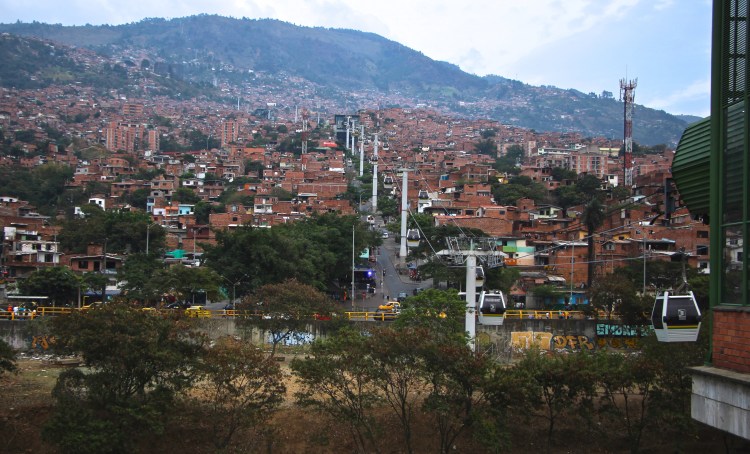
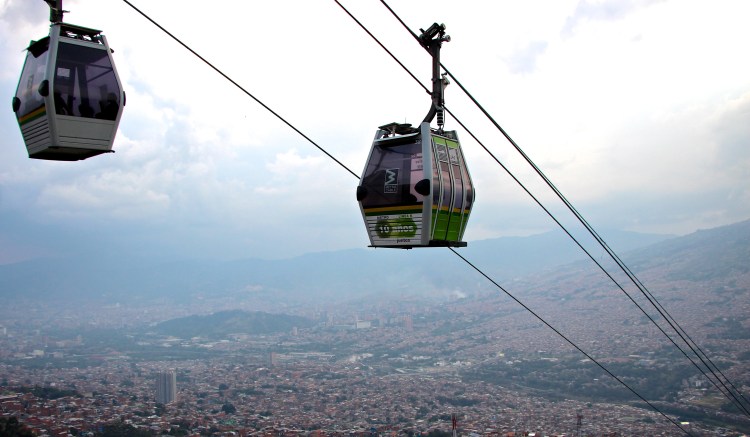
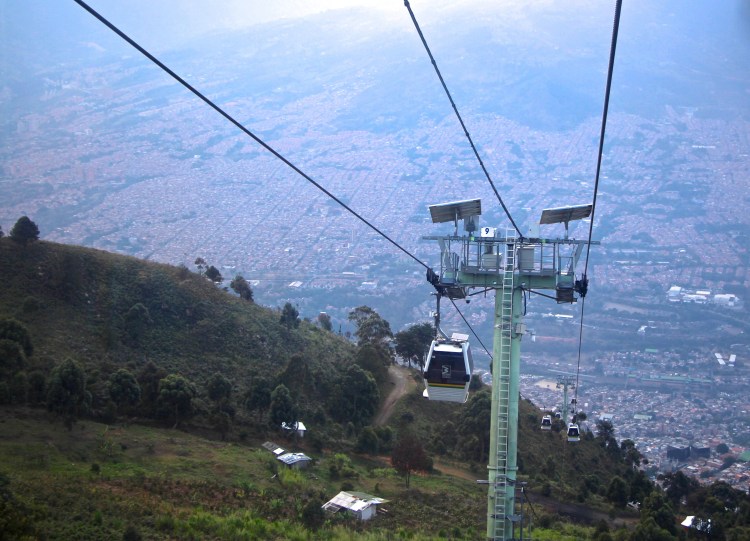
The Metrocable in Medellin, Colombia is part of the city’s public transit system and has carried 30 000 people per day since starting operations in 2004.
I’m re-charging in my hotel room after a jam-packed day of being a tourist in Medellin, Colombia when a Tweet catches my attention.
The Don Valley Cable Car would connect an environmental community centre and ravine trails with Toronto’s public transit system. Photo: Don Valley Cable Car
The Don Valley Cable Car is just beginning community consultations at a time when Toronto’s SmartTrack transit plan is getting smaller and cheaper. Although the Don Valley Cable Car is being proposed as a method of connecting both tourists and residents with urban greenspace, rather than at connecting low-income communities with better transit access as Medellin does, it’s a reminder that alternative methods for urban transit are possible.
According to research from York University, there is a “transit inequity” in Toronto, as the people who are most dependent on public transit, particularly those living in low-income, inner-suburb neighbourhoods, referred to as “transit deserts,” get the worst service. The study suggests that more recent transit infrastructure expansions have primarily benefited the rich living in areas of the city which are already thriving, while neglecting the inner suburbs.
Ironically, I’m learning about the proposed Don Valley Cable Car immediately after spending most of the afternoon riding Medellin’s Metrocable. All of my previous knowledge about Medellin has come from watching Narcos: crime, drugs, violence and Pablo Escobar. So I’m surprised by the city’s innovative approach to public transit, for which it won the 2012 Sustainable Transport Award (tied with San Francisco, USA).
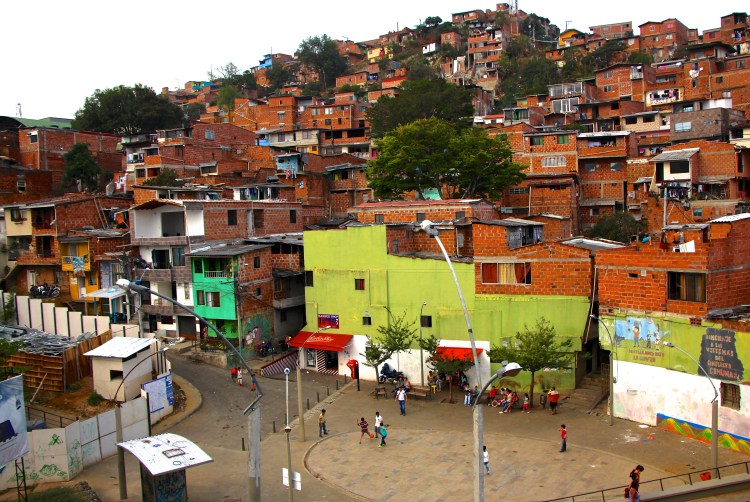
The Metrocable opened in 2004 in response to significant spatial inequalities in transit access in Medellin. It connects low-income neighbourhoods located in the surrounding mountains, many of which had high rates of violence and crime, with the city centre. A 2014 study published in the Journal of Transport Geography, found that the Metrocable has doubled access to employment opportunities for residents living in low-income neighbourhoods. Another report, found that the neighbourhoods affected by the Metrocable Line K experienced a 66% faster decline in homicide rates than in the control neighbourhood. (Although both violence and homicide rates decreased dramatically for both groups).
These studies suggest that expanding public transit through alternative means can transform a city’s poorest and most violent areas.
Prior to the opening of the Metrocable, residents of the neighbourhood of Santo Domingo would have had to walk several hours or depend on infrequent buses to reach the city centre.
Medellin has also targeted several social interventions in the neighbourhoods linked with the Metrocable. This includes support for social housing, schools, micro-enterprise, libraries, and implementation of additional lighting in public spaces. In addition, the city has involved local residents in participatory budgeting to determine how to allocate the funds designated for investment in their neighbourhoods.
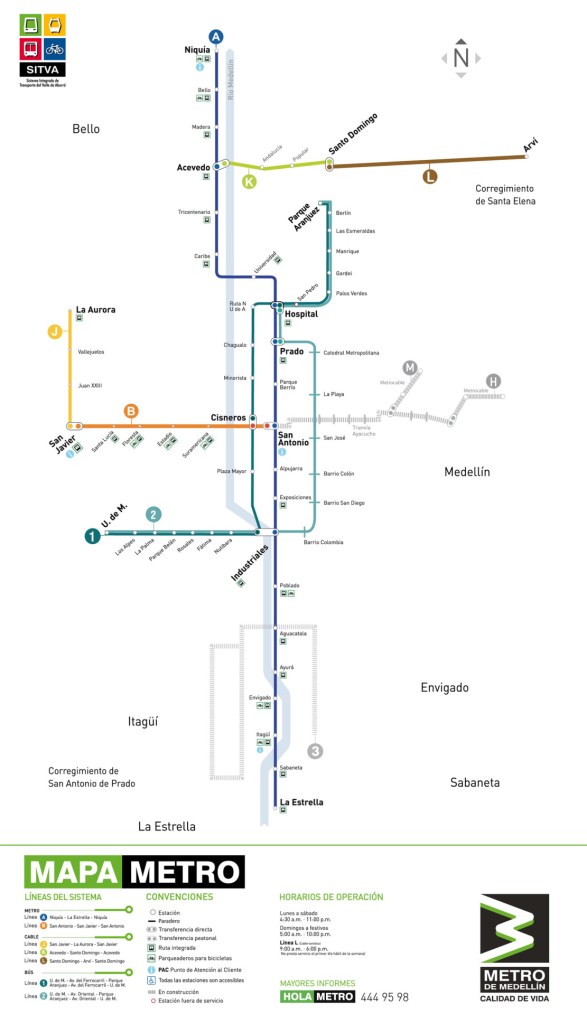
I traveled efficiently from a downtown metro stop to Santo Domingo Metrocable station at the end of Line K for about $1 CAD.A quick cable car transfer to Line L and an extra four thousand pesos (about $2 CAD) brought me over farms and forests to Arvi station at the top of the mountain.
As the world’s first modern urban aerial cable car transport system, the Medellin Metrocable presents an inspiring vision for how a city’s transit plan can be re-imagined to create stronger, healthier communities, and better life-opportunities for its residents.
It is an example for cities, like Toronto, that bold visions for affordable and sustainable public transit are possible and are already being lived out in cities around the world.
Manizales, una “fábrica de atardeceres” -Pablo Neruda
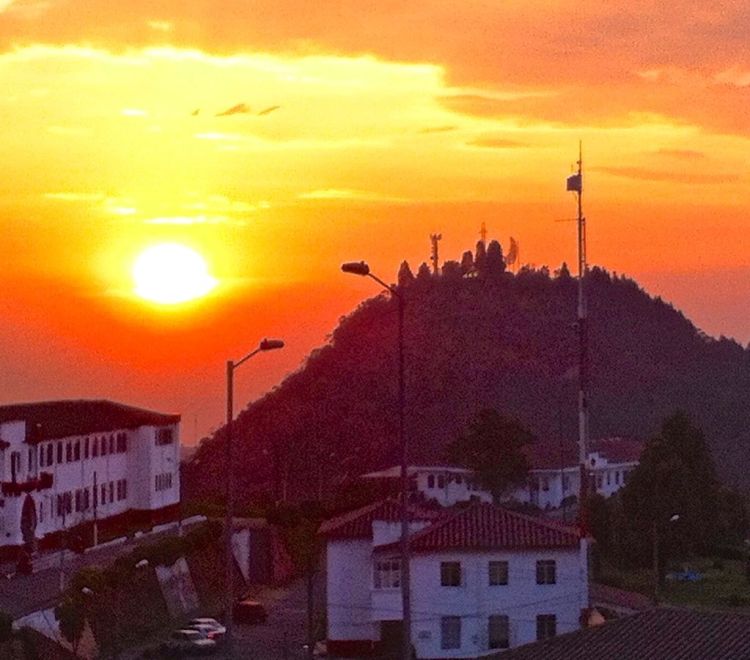
In my travels, I’ve been fortunate to have witnessed some amazing sunsets. Located five degrees north of the Equator, Manizales, Colombia, the city where I’m currently living and working, has the some of most beautiful sunsets I’ve ever seen. It’s no wonder that the Chilean writer, Pablo Neruda, described Manizales as a “fábrica de atardeceres” (sunset factory). On sunny days, at about six o’clock in the evening, the sky transforms into the most radiant blend of orange, yellow, and pink, colours that stretch the limits of my imagination, as el sol (the sun) slowly disappears behind the Andes.
Sunset from historic cable cars in Manizales.
For me, sunsets are like a delicious piece of fruit: a juicy red mango freshly picked at my friend’s finca (farm), or a locally grown Ontario peach from a roadside stand. They remind me that life can be more colourful, more flavourful, more radiant, than I usually experience it to be. Sunsets inspire me to dream of a tomorrow that will be better than today…and encourage me to STOP what I’m doing, grab una cerveza (a beer), and enjoy the moment.
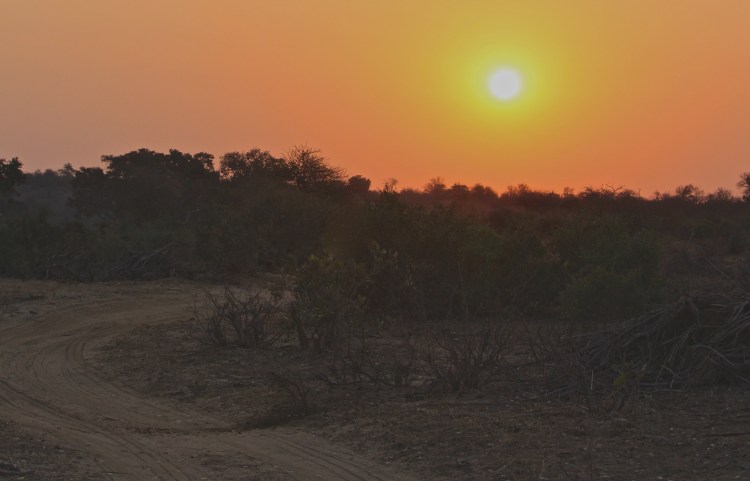
Sunset on the Adriatic Sea, off the coast of Hvar Island, Croatia.Kruger National Park, South Africa
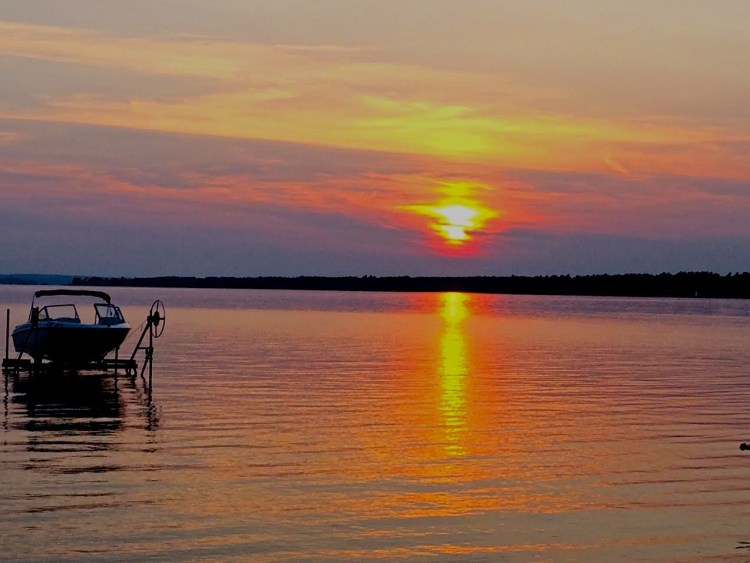
Sunset over the Arctic OceanI can travel the world, but it’s hard to beat a sunset at my cottage in Norway Bay, Quebec.
As I taught my fifth grade students in Science this week, the sun is the Earth’s primary energy source. It warms the planet, drives the water cycle, and makes life on Earth possible. While sunsets calm me down and inspire me to dream BIG, it wasn’t until I lived without el sol that I learned to appreciate its full value.
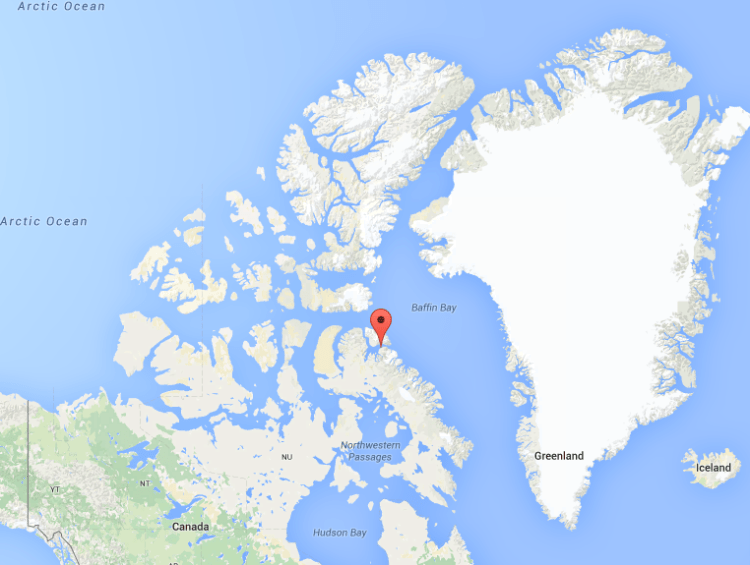
Pond Inlet is a community of 1500 people located on the northernmost tip of Baffin Island in Nunavut, Canada
This time two years ago, while teaching in the community of Pond Inlet, Nunavut, I experienced “the polar night,” which occurs when night lasts for more than 24 hours. When I was there, the sun set in mid-November, and didn’t rise again until early February.
This meant living in four months of darkness.
I took this photo while walking to church on a Sunday morning in December for 11:30am mass. (Mittimatalik is the Inuit name for Pond Inlet.)
It wasn’t totally dark all-day, everyday. There was a twilight period between about 11am-2pm when the sun was just below the horizon, meaning you could go for a walk, ski, or snowmobile outside without a flashlight. However, I remember being shocked when some of my students opened the outside door to get some fresh air during last period gym class (about 2:30pm) and it was so dark that I was able to point out the Big Dipper.
It was important for me to get outside during the twilight hours of the dark season.My friend and I witnessed the “Return of the Sun” on a -40C ski in early February.
Without the sun, a natural energy source, I had to develop strategies for creating my own energy. I took Vitamin D pills daily, had a spin bike and a set of weights in my bedroom, tried to force myself to get outside everyday (even if all I did was take a quick walk to the Northern Store or to school), coached community basketball, and connected with friends as much as possible. I’m often described as an incredibly positive and extremely active person, but without the sun to give me energy, there were several weekends when I didn’t even leave my house.
Needless to say, I’m amazed and inspired by the Inuit and northerners for whom living in darkness is a regular part of life. Let’s just say, I’ll never have sympathy for students who complain about the cold, as my students in Pond Inlet walked to school and gladly went outside for recess on days when it was nearly -50°C with the windchill, often without proper boots, mitts, or a warm enough parka.
I was so pumped for the “Return of the Sun” that I did a -30 C photo shoot in my Leahtee, an awesome clothing line designed by my good friend, Leah!
Living without the sun made me reflect on the simple, yet crucial elements of life that I’ve taken for granted over the years. The fast-paced North American culture encouraged me to chase the future, look for a better relationship, check another item off my bucket-list, pursue another degree. But when you live one step ahead of your own life, you overlook the people, places, and opportunities that contribute to your ability to survive and prosper in the present.
So for now, every time I see a Manizales sunset, I’m going to make an effort to STOP, grab a beer, and ENJOY the moment. As I’ve learned the hard way: sooner or later, that moment will be gone.
And it’s always great to have an excuse for some cerveza y sol (beer and sun)!













 Shannon Mullen