That Time I was Attacked by a Callejero


Hospital
Post-work bike ride gone wrong!

I watch blood trickle out of thumbnail-sized bite marks on the outside of my right shin. A  blob of fat jiggles down my leg. 

I wrap a hot pink Adidas dry-fit tee around the wound. Then I glance at the large black and white callejero, sitting peacefully on the other side of the fence, only a few meters away from me.

I didn’t think it would attack me…until it did…

*

Despite being fatigued from a long week of teaching my class of sweet, yet rambunctious 5th graders, I’m happy that I’ve joined my friend, Matt, on his regular Friday ride. It’s a longer and more challenging way home from school, an ascent of at least 20 minutes of steady switchbacks that brings us to a single track mountain bike trail across farmland.

My legs ache when I get to the top. But it’s a fulfilling exhaustion, much like the popular “runner’s high.” Cycling in the mountains helps me detach from the daily struggles of living in another country, releases any lingering stresses from the work week, and reminds me of the joys of living in the moment.

At the top of the mountain, we get off our bikes and have some snacks and drinks in a farmer’s field overlooking the Manizales sunset. I tell Matt that I feel so lucky to have the opportunity to live in such a beautiful place: “Life takes us down different and unexpected paths.”

*

“There’s often dogs around here,” Matt warns as a large black and white dog emerges from behind a small red and white paisa farmhouse. But they never caused him any harm.

I’m not worried.

So I remain calm when a couple of farm dogs emerge from behind a small paisa-style farmhouse. They’re harmless. I often bike by stray dogs–both in Manizales and on regular Sunday rides with my Dad at the cottage back home in Canada. Usually, they bark at us, then leave us alone. 

Matt shows me how to climb through the fence before he lifts his bike over. I’m not really paying attention. I’m thinking of what I should pack the next morning for my flight to Bogota. Only enough for a carry on: a pair of jeans, a cardigan, pjs, a couple of t-shirts, socks, undies, camera. Wallet. It’s a risk to schedule my return for the early bird flight back Monday morning in hopes of getting to school on time. But I’m a firm believer in the power of positive thinking, and things seem to always work out for me (See my 2010 ‘Iceland Volcano’ story). Fingers crossed for good weather. 

I just finish passing my bike over the fence when I feel a sharp, piercing pain in my right shin.

It’s like someone’s just hammered two nails into my leg then immediately ripped them out. 

*

“What can you tell me about the dog?” An orthopedic surgeon asks me, examining the infected wound. 

 After a night in the hospital, all I can think is “thank God he speaks English.” (Necessito ir al bano and un perro mi mordio can only get you so far in Spanish-speaking Manizales). 

“From the size of these teeth marks, it must have been big,” He adds. 

The dog.

The first doctor I saw in the emergency room immediately after the attack had also asked many questions about it. I couldn’t say much. After it bit me, I figured it was best to keep my distance.

“Yeah, it was pretty big.” I tell him, “The woman at the farm said it wasn’t her dog, that it just hangs around.” 

Un perro callejero.

“Yeah. A wild dog.”

The doctor sits down in a chair beside my bed and cleans his glasses. “So I’m going to recommend surgery. We’ll have to open the wound and debride the infection. How does that sound to you?”

Since he seems nice and incredibly caring, I tell him that it sounds good. Do whatever you need to do to get the infection out. I’d just spent my first night EVER in a hospital so I may as well have my first surgery, too. (Add it to my list of things to do before I leave Colombia). 

After receiving a rabies shot (my first of five) and a tetanus vaccination at the hospital almost a week earlier, I figured I would be okay. The attack happened on a Friday after school and I genuinely thought I would be able to go to work the following Monday. I biked home for at least 20 minutes following the attack!

Instead of going to school Monday, the school nurse, Maria Teresa took me to see a surgeon. He told us that it looked okay at the moment, but to keep an eye for infection, which can happen often in piercing dog bites. As time passed, the wound started turning red and eventually a bit black, signs of infection. So, when she came to check on me Wednesday night, Maria Teresa, suggested I go to the hospital. (I ended up staying there for three nights) 

Maria Teresa was one of many people from my school who tirelessly cared for me throughout this incident. I feel so lucky to have been supported by the many teachers, support staff, administrators, parents, and students who went out of their way to act as “family support” for me when I’m so far away from home. 

*

I wake up from the surgery with the incredible urge to ask the surgeon if he likes fishing. Then I have a brief panic about where I am and what happened. Everyone around me is speaking Spanish, I’m exhausted, and this weird tube is shooting hot air onto my thigh.

My leg! 

Nervously, I glance towards my right foot. Phfewf. Still there. Feeling the effects of the full anaesthesia I’d received two hours earlier, I close my eyes and go to sleep. 

Later on, my friend Jill tells me that the surgery went well, and that they even had to clean the muscle. We’re curious to see the wound, but it’s heavily wrapped in gauze and a tensor bandage. The sight of blood soaking through the bandages suggests that the post-surgery wound is much larger than the initial dog bites. (I later learn that the surgeon had to make two incisions, each about the size of my pinky finger to effectively debride the infection).

*

Two days later, I have another surgery, a “second look” to make sure that the infection is gone. This requires another full anaesthesia and opening of the wound. 

This time when I wake up, I’m not thinking of fishing.

Maybe it’s the exhaustion of having two anaesthesias in two days. Maybe it’s my frustrations with the language barrier and my limitations in communicating with the hospital staff in Spanish. Maybe it’s the stress of how much time I’ve had to take off work. Maybe it’s anxiety of knowing that my friends and family back home are worried about what kind of health care I’m receiving in another country. Maybe it’s the loneliness of being in a foreign country, longing for someone I love to hold my hand.

This time, I wake up from the surgery in tears. 

*

After two surgeries and two weeks off, I’m now back at work. I can walk and carry out my daily activities without much pain. At the end of it, I feel lucky.

It all could have been much, much worse. 

Since puncture wounds from dog bites cannot be closed with stitches due to the risk of bacterial infection being trapped under the skin, I have to be careful to keep my wound clean and dry. I’ve been instructed to keep it well covered and have to see the surgeon every couple of days to change the bandages. While he is slowly closing the wound with tape as it heals, I know I’ll have some nasty scars. 

However, now that I can tell the tale of that time I survived being attacked by a wild dog (a callejero) in the Colombian bush, I’ll wear my scars with pride.

Warrior wounds. 


Inspiring Women Series: A Conversation with Rose LaBrèche

12992210_10101394149915001_201775016_n
27-year-old Rose LaBrèche has been named as Canada’s only official for Rugby Sevens at the 2016 Olympic Games in Rio.

“When I started refereeing I never thought I would get to this point…or even when I started playing. You never think that what you are doing is going to take you down this amazing road of challenges but awesome occurrences in your life.”

For the third episode of the Inspiring Women Series, I had a conversation with Rose LaBrèche, a former rugby teammate of mine at Queen’s University, who has been named as Canada’s only official for the début of Rugby Sevens at the 2016 Olympic Games in Rio. At 27-years old, Rose feels honoured to be part of the Games so early in her refereeing career, an event she describes as being much bigger than herself, and much bigger than rugby.

“It’s the pinnacle of sport. It’s what everybody strives for.”

Rose started refereeing as a result of the encouragement of her coaches, particularly Beth Barz, at Queen’s University. After a series of concussions kept her off the pitch as a player, Rose began by refereeing high school and junior club rugby, and eventually progressed to both men’s and women’s matches at the top level.

Rose was initially attracted to the analytical and reflective nature of officiating, and loves how refereeing has enabled her to stay in the sport, despite her injuries.

“I am absolutely enthralled…and have this love affair with rugby.” 

This past September, Rose was named to the international panel of officials for World Rugby. Since then she has officiated “World Rugby Women’s Sevens Series” stops in Dubai, Sao Paulo, and in Langford, BC, as well as Six Nations games.

In order to make split-second calls during the fast-paced action of sevens play: a 14-minute game involving constant sprinting,  Rose has to maintain an incredible level of physical fitness. Rose has been described as one of the “fittest and fastest female referees out there,” which she attributes to her disciplined running regime and CrossFit workouts.

“It’s really tough once you’ve made an eighty meter break or something on the field and then you get to the next breakdown and you have to make a 50/50 decision….In order to make it easier for yourself you have to train by putting yourself under that sort of stress.”

Rose currently works for the Federal Government in Ottawa and has set high standards for herself in her “daytime” career. After graduating from Queen’s with a Bachelor of Science Honours Degree in Environmental Science and a minor in French, Rose worked for two years in Toronto at the Immigration and Refugee Board. Next, a short internship in Brussels, Belgium inspired her to complete a Master’s Degree at the University of Ottawa in International Affairs and Environmental Sustainability. Rose feels that what she has learned through refereeing has positively impacted her confidence and assertiveness in the workplace.

In this episode of the Inspiring Women Series, Rose talks about how overcoming her struggles with self-confidence has helped her to gain the respect of top-players and coaches in the international arena, as well as become better in all aspects of her life.

“When you have failure in your life you always second-guess yourself and you always doubt yourself. It’s about being able to come back from that minor failure, or even major failure to overcome your fears…

I have messed up. I have made bad calls on the international stage that have been on TV and that so many thousands of people have been watching and it’s kind of like, ‘How could I have done that? How do I ever come back from this?’ 

It’s all about looking within yourself and knowing that this is a temporary feeling and that you’ll get over it and time moves on, and you’ll get out of this in a better spot than when you came in.”

The Inspiring Women Series is a podcast dedicated to sharing the stories of the many women who have inspired me in my life. You can subscribe to the Inspiring Women Series podcast in the iTunes Store and can listen to my conversation with Rose below.


Witnessing Magic in the Amazon Rainforest

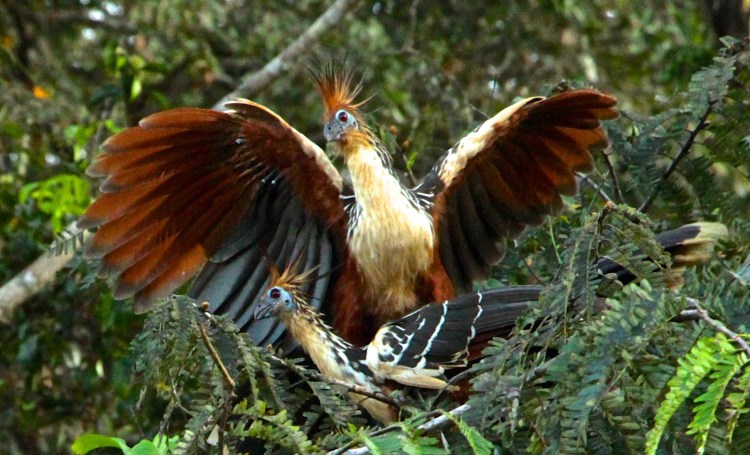
Peacock Fly
Peacock Fly in Cuyabeno Wildlife Reserve, Ecuador.

A few years ago, I took my first trip to Disney World during a spring break vacation to Florida. To be honest, I was kind of dreading the experience. I thought that I’d be turned off by all the crowds, commercialism, and unrealistically proportioned princesses.

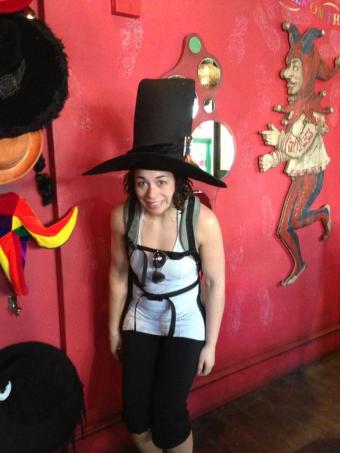
Shannon as wizard
Becoming a wizard in the Magic Kingdom.

But since the friend I was traveling with was excited to visit the recently opened Harry Potter World, I decided to give it a chance.

As predicted, I did find some of the ways that the park commodifies happiness a little soul-crushing. Surprisingly, though, underneath all of the make-up and costumes, amusement park rides, princesses, castles, light shows and souvenir shops, I was witnessing a hint of magic–something unbelievable but that existed nonetheless.

Stripped down, I could see that Walt Disney World is an example of the extraordinary power of the human imagination and what can be accomplished when dreams are put into action.

Oddly, I sensed a similar presence of magic on a trip to the Amazon last week.

Tree love
The Amazon is so wild and beautiful that it is hard to believe that it really exists. But it does.

I know that Walt Disney World is NOTHING like the wild of the Amazon Rainforest, but both left me feeling like I was witnessing the impossible. They inspired a sense of wonder, left me questioning reality, and stretched my imagination of what I believed could exist in real life.

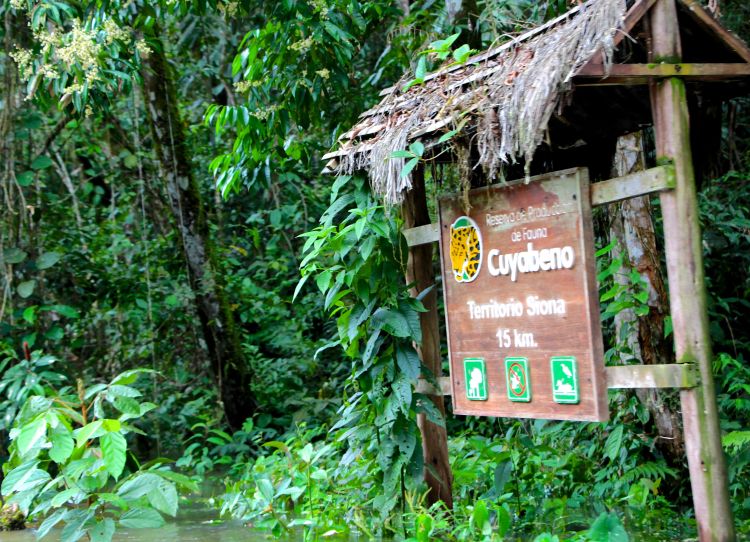
Cuyabeno
I visited the Amazon in Ecuador’s Cuyabeno Wildlife Reserve, home to an abundance of flora and fauna and several indigenous communities.

Unlike Disney World, however, the magic of the jungle is that it is not imagined, but a living, breathing ecosystem. It exposes the darkest side of nature, but also its brightest colours.

Baby Anaconda
A baby anaconda hides amidst the bushes. The average length of adult male anacondas is 2.7m, with the longest on record being almost 9m.
Caiman 1
Caimans, which tend to be 2.5-4m long, are well camouflaged in the dark, murky waters of the Amazon River.

The Amazon River is the largest river on earth, making up one-fifth of the earth’s freshwater. It’s been referred to as the “lung of the world” because of its massive power to have vital gases exchanged between the forest and the atmosphere. The rainforest stretches through nine countries:  Brazil, Peru, Colombia, Venezuela, Ecuador, Bolivia, Guyana, Suriname and French Guiana, and is the most bio-diverse region on the planet.

In the Amazon, there are anacondas that prey upon caimans, birds, and even jaguars from blackwater lagoons, trees that are over 5000 years old, termites that inspire engineering projects, birds that mate for life (take that, Ashley Madison!), and butterflies that re-define the colour wheel.

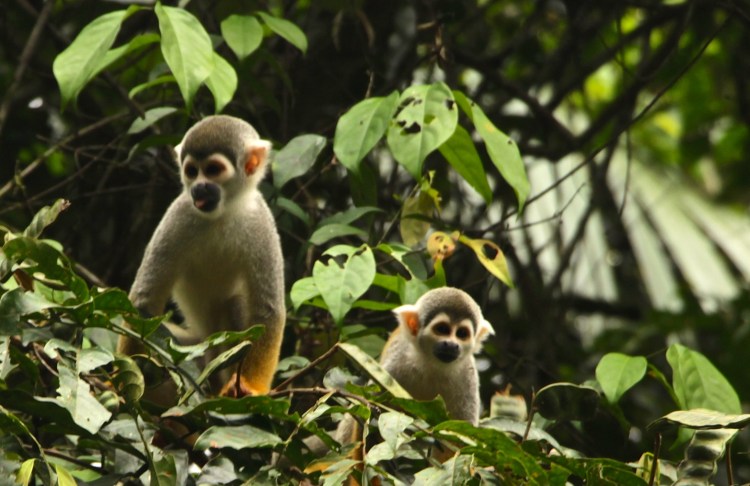
Squirrel Monkeys
Squirrel Monkeys search for food in the Amazon’s canopy areas.
Sloth 4
A sloth slowly makes its way along a tree branch.
Stinky Turkeys
Stinky Turkeys are one of over 580 species of birds in the Amazon.
Wooly Monkey
The Wooly Monkey is one of over 10 species of monkeys in Cuyabeno Wildlife Reserve.

Due to its diversity, the extraordinary role it plays in regulating the earth’s climate, and the sense of wonder it inspires, the Amazon Rainforest is an example of the ways in which life can transcend what we believed to be possible. Unfortunately, looming threats of oil and gas extraction, deforestation, and other development projects threaten the future of the Amazon (along with many of the Earth’s wildest places).

Not only will this limit the diversity of life on the planet, it will also threaten our ability to imagine new possibilities for how to make the world a better place to live.  For me, it’s these glimpses of magic that make life interesting. They push us to dream bigger, live more fully, and expand our imaginations of what we can accomplish.

As Walt Disney said: “It’s kind of fun to do the impossible.”

Mitad del Mundo: Centring Myself in the Middle of the World

Shan Mitad del Mundo
That time I straddled the #Equator.

I smile in disbelief as my friend takes a picture of me, right leg in the northern hemisphere, left leg in the southern.

I’m standing in front of the Mitad del Mundo Monument, a historic site located 26km north of Quito, Ecuador, built between 1979 and 1982 to commemorate the 1736 French Geodesic Mission which determined the Equator’s approximate location at zero degrees latitude. (According to more recent GPS readings, the Equator actually lies about 240 meters north of the marked line.)

Thousands of tourists have struck a similar pose, but for me, the photo feels like MORE than a sweet shot for my Instagram followers #zerodegreeslatitude.

Why? At 31, I haven´t “checked the boxes” expected of someone my age: no stable career, no husband, no babies, no house, no pension, no savings, no assets. Yet I have a wealth of life experiences, lots of stamps on my passport, and amazing friends all over the world.

So, as I strike a pose in the middle of the world, I realize how lucky I am to be where I am, and how far I’ve come in order to get here.

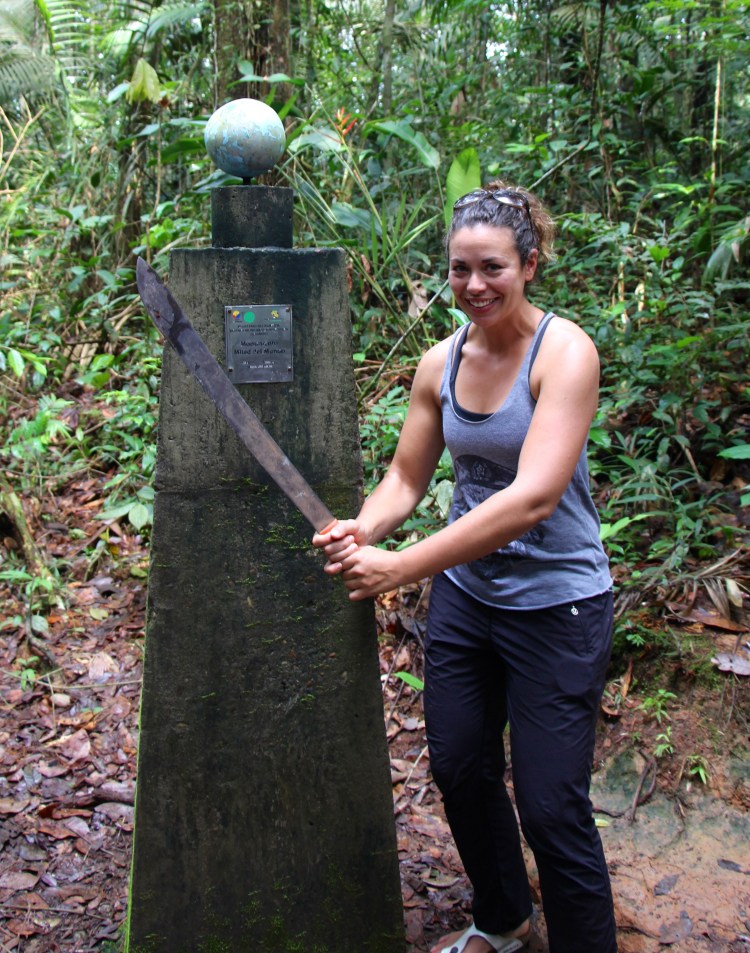
Shan Machete
“Machete-ready” at the Mitad del Mundo Monument in the Amazon. There are milestones to mark the Equator along zero degrees latitude all over the world.

At zero degrees of latitude, the Equator may be an imaginary line. However, for me, it represents something real: taking risks, starting over, being one step closer to my dreams.

Only two years before, I was living above the Arctic Circle, at 72 degrees north, working towards becoming a university professor. However, after a few personal and professional heartbreaks, life has spun me in another direction, and I’ve begun pursuing more creative writing, (as opposed to academic which would have been a much more secure investment of my time and energy, but not as personally fulfilling).

Sundial
The position of the sun in relation to the Earth enables us to tell the time on a sundial.

It wasn’t until I stood at the centre of the world that I realized that finding my own “centre,” the road that I’m truly meant to follow, might involve choosing a different path than what’s expected of me. I guess the bright side of life not going “according to plan” is that the new plan (the one you are forced into when your previous one doesn’t work out) can take you somewhere new and unexpected, somewhere closer to where you wanted to go, but never had the courage to pursue.


At the Mitad del Mundo, I’m realizing that even though I’m traveling further and further away from the direction I thought I’d be going, that I’m moving closer and closer to where I truly ought to be.

Don Valley Cable Car: Inspiring Vision? Lessons From Medellin, Colombia

IMG_1267
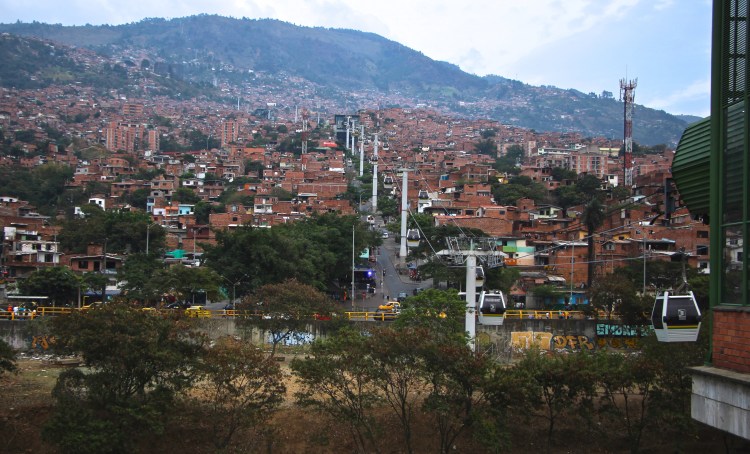
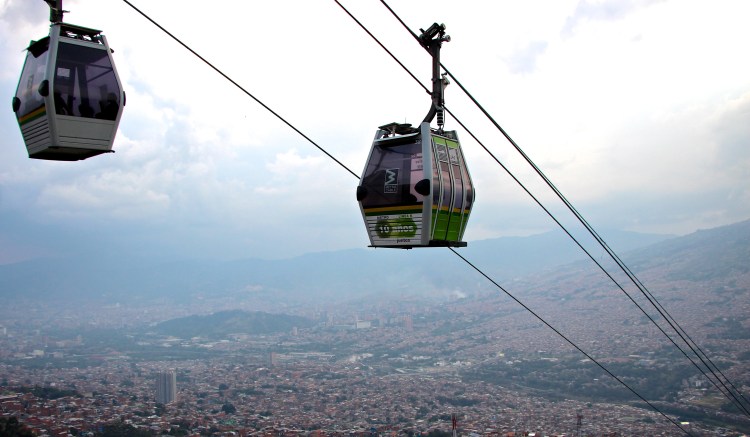
The Metrocable in Medellin, Colombia is part of the city’s public transit system and has carried 30 000 people per day since starting operations in 2004.

I’m re-charging in my hotel room after a jam-packed day of being a tourist in Medellin, Colombia when a Tweet catches my attention.

Screen Shot 2016-02-28 at 8.14.26 AM

Toronto_DonValleyCableCarMap_666_1000_80
The Don Valley Cable Car would connect an environmental community centre and ravine trails with Toronto’s public transit system. Photo: Don Valley Cable Car

I click on the Globe’s link and read about the Don Valley Cable Car, a private initiative to connect the Evergreen Brick Works, an environmental community centre, with Broadview-Danforth Subway Station.

I’m intrigued.

I’ve lived in Toronto on-and-off since 2009 and never owned a car. For me, the more options to get around the city without a car, the better!

Yet I’ve never imagined a cable car as a method of urban transit. (The only gondola rides I’d ever taken were to get me to the top of a ski hill!)

In fact, when I lived in London, UK, after a few early-morning frustrations with the Tube, I wondered, “If Only I Could Take a Chair-Lift To Work…At the time, I didn’t realize that people living in Medellin, and several other cities worldwide, already do!

The Don Valley Cable Car is just beginning community consultations at a time when Toronto’s SmartTrack transit plan is getting smaller and cheaper. Although the Don Valley Cable Car is being proposed as a method of connecting both tourists and residents with urban greenspace, rather than at connecting low-income communities with better transit access as Medellin does, it’s a reminder that alternative methods for urban transit are possible.

According to research from York University, there is a “transit inequity” in Toronto, as the people who are most dependent on public transit, particularly those living in low-income, inner-suburb neighbourhoods, referred to as “transit deserts,” get the worst service. The study suggests that more recent transit infrastructure expansions have primarily benefited the rich living in areas of the city which are already thriving, while neglecting the inner suburbs.

Ironically, I’m learning about the proposed Don Valley Cable Car immediately after spending most of the afternoon riding Medellin’s Metrocable. All of my previous knowledge about Medellin has come from watching Narcos: crime, drugs, violence and Pablo Escobar.  So I’m surprised by the city’s innovative approach to public transit, for which it won the 2012 Sustainable Transport Award (tied with San Francisco, USA).

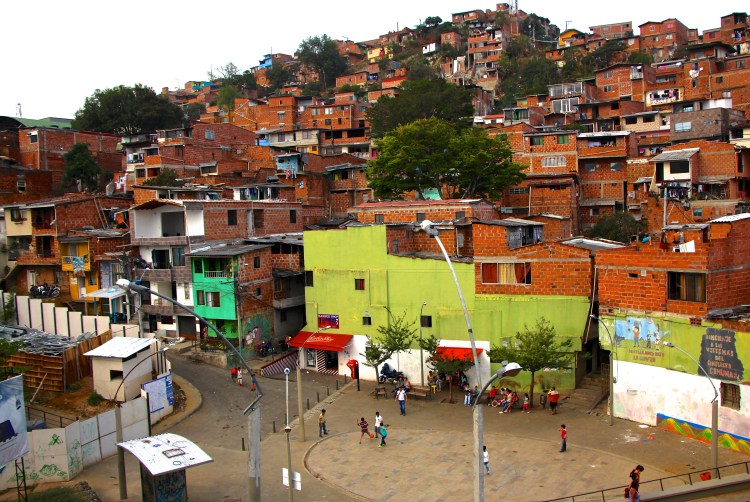
The Metrocable opened in 2004 in response to significant spatial inequalities in transit access in Medellin. It connects low-income neighbourhoods located in the surrounding mountains, many of which had high rates of violence and crime, with the city centre. A 2014 study published in the Journal of Transport Geography, found that the Metrocable has doubled access to employment opportunities for residents living in low-income neighbourhoods. Another report, found that the neighbourhoods affected by the Metrocable Line K experienced a 66% faster decline in homicide rates than in the control neighbourhood. (Although both violence and homicide rates decreased dramatically for both groups).

These studies suggest that expanding public transit through alternative means can transform a city’s poorest and most violent areas.

IMG_1213
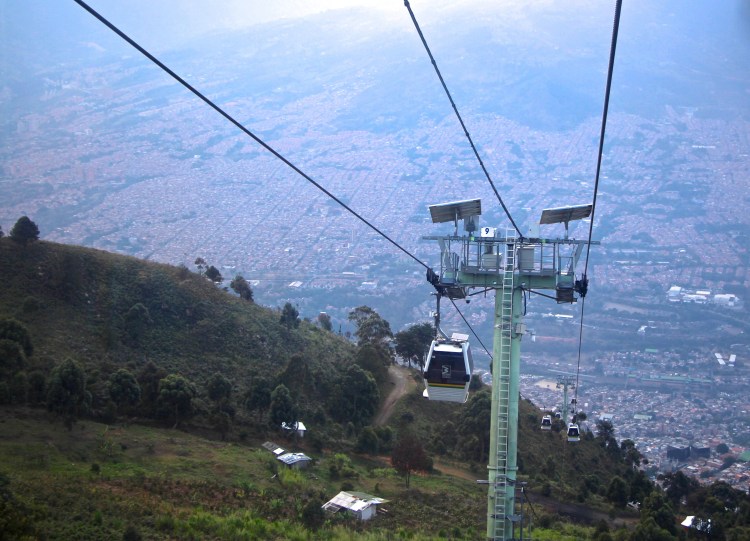
Prior to the opening of the Metrocable, residents of the neighbourhood of Santo Domingo would have had to walk several hours or depend on infrequent buses to reach the city centre.

Medellin has also targeted several social interventions in the neighbourhoods linked with the Metrocable. This includes support for social housing, schools, micro-enterprise, libraries, and implementation of additional lighting in public spaces. In addition, the city has involved local residents in participatory budgeting to determine how to allocate the funds designated for investment in their neighbourhoods.

tumblr_n06afbsuMz1r54c4oo1_1280


IMG_1208
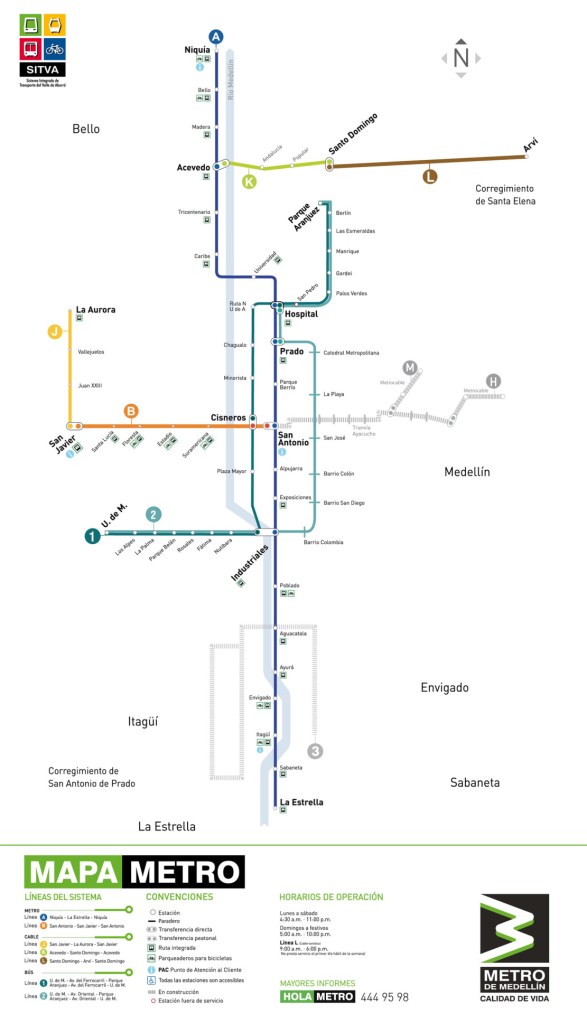
I traveled efficiently from a downtown metro stop to Santo Domingo Metrocable station at the end of Line K for about $1 CAD.
IMG_1170
A quick cable car transfer to Line L and an extra four thousand pesos (about $2 CAD) brought me over farms and forests to Arvi station at the top of the mountain.


As the world’s first modern urban aerial cable car transport system, the Medellin Metrocable presents an inspiring vision for how a city’s transit plan can be re-imagined to create stronger, healthier communities, and better life-opportunities for its residents.

It is an example for cities, like Toronto, that bold visions for affordable and sustainable public transit are possible and are already being lived out in cities around the world.


Practising Self-Love on Valentine’s Day


IMG_0776-2
Finding my balance by connecting with nature! (On a camping trip in Los Nevados National Natural Park, Colombia) Photo credit: Jill Holmes

In light of it being Valentine’s Day in North America (in Colombia El Dia del Amor y La Amistad is celebrated in September), I thought I’d write about self-love. (After all, the longest relationship any of us will ever have is with ourselves!)

Sadly, though, we live in a world that makes it difficult to love ourselves. From a young age, we are taught that we are never enough. Beauty is purchased. Happiness is pursued. Bodies are shaped. There’s always someone smarter, fitter, faster, stronger, more beautiful than us. In my grade five class, I’ve been alarmed by the number of uber-thin girls who have told me how fat they are, and the boys who have broken down in tears after receiving 9/10 on their Math quizzes. As high-achieving ten-year-olds, they are already striving for perfection in every aspect of their lives.

But I did the same when I was their age. I was constantly complaining about how fat I was compared to the other girls in my ballet class and would wear baggy sweatshirts to hide my curvy figure. While I never developed an eating disorder, like many other dancers and female athletes, I struggled with exercise addiction until my mid-twenties (and arguably still do). I’d push my body to the point of injury and would beat myself up if I missed a day at the gym.

I’ll admit, there was a day during my undergrad when I taught three fitness classes and then played 80 minutes of rugby. I’d always opt for a Sunday morning run over Sunday morning cuddles with my boyfriend. In addition, I over-scheduled my life with clubs, activities, and leadership roles to fulfill a compulsive need to be the best at everything I did. But it wasn’t entirely my fault: “busy-ness,” over-achievement and perfectionism were glorified in the culture of my university. I even won an award at my graduation for outstanding contribution to athletics and student government. I’m sure my Dean’s List average, long list of extra-curriculars, and high-achieving résumé helped me land a grad school scholarship.

However, my extensive involvement and over-scheduled life came at a cost: time for myself. I went years without going to the doctor, was often running on little sleep, experienced several chronic injuries from over-exercise, and took some of the relationships I valued most in my life for granted. I missed a few of my good friends’ weddings. I had to skip out on Thanksgiving at the cottage (my favourite family time of the year), and wasn’t able to be there for friends who were going through hard times. Also, I never made time for creative pursuits, like writing and photography, which add joy and meaning to my life.

It took a tough and painful breakup alongside the professional heartbreak of not receiving funding for my PhD research for me to realize that the compulsive need to be busy all of the time, as well as perfectionism, come from a place of fear of not being enough as I am. I was forced to confront the fact that I’m human like everyone else, and this means accepting that I’m deeply flawed and ultimately, imperfect. But, as a good friend wisely told me, my beauty lies in my imperfection: my inability to close cupboards or doors, my awkwardness in big groups, my terrible sense of direction.

One of the hard lessons that I’ve learned from being a teacher is to practise self-love in both my personal and professional lives. This means, putting myself first and being okay with saying “no” to people who need my help.

Most of my teaching experiences have been in low-income, “at-risk” communities, like inner-city Toronto and London, and on First Nations reserves. So I’ve worked really hard in my role as a “helper”: helping students believe in themselves, helping them overcome adversity, helping them reach their potential when the odds are stacked against them. However, the amount of energy I spent in investing in others came at the expense of helping myself. Since I was on the road most weekends  coaching basketball or rugby, I struggled to make time for the people and passions that I loved. This led to frustration and burn-out. It’s no wonder that nearly half of teachers leave the profession within their first five years of teaching.

I love teaching, but I’ve learned that to thrive in the profession, as well as maintain my health and sanity, that I have to constantly practise self-love. I have to put myself before my students. As my amazing and inspiring friend and fellow teacher said, “It’s like being on an airplane. You have to put on your own oxygen mask before you put on someone else’s.” This means making time every day to exercise, prepare healthy meals, and get to bed early, no matter how much grading I have. I give myself permission to have shitty lessons every now and then. I give less assignments that I have to grade myself and have more peer and self-evaluated assessments. I continue to be involved in extra-curriculars but I don’t coach EVERY sports team or run EVERY club.

Prioritizing self-love in my professional life has also helped me in my personal life. I say “no” to social events I don’t want to go to and have stopped trying to please other people. I make time to pursue my passions like writing and travel. I’ve stopped investing in friendships that don’t make me better or add substance to my life and instead, spend the bulk of my time with the people I really care about. While I still exercise most days, I schedule time for my body to rest and recover, and I don’t beat myself up when I skip my workouts.

While I spent the bulk of this Valentine’s Day alone, I didn’t feel sad or lonely. I went for a beautiful run in the morning and shared a traditional Colombian lunch with my friend. I spent the afternoon writing in a café, practiced photography with my new camera, and then enjoyed una cerveza y sol with another friend. I felt free to do what I wanted with who I wanted because I didn’t feel the need to achieve, or please, or meet any sort of social expectations.

This Valentine’s Day, I feel lucky to have spent the day loving the person who matters most in my life: me.


Colombian Coffee: From Crop to Cup

Colombia is the third largest coffee exporter in the world, behind Brazil and Vietnam.
Manizales (where I live & work) is part of Colombia’s Zona Cafeteria (Coffee Triangle), an area of 150 square kilometres, which produces 10% of the world’s coffee.

As a writer, I spend a lot of time in coffee shops. On average, I visit a café at least once per day, and usually do the tour of my local faves on weekends. This means, I likely spend $30-40 CAD per week on coffee, which is more than I budget for my phone, transportation, and sometimes entertainment (and I wonder why my only assets are my MacBook Pro, my Canon Rebel, and a couple of cute Anthropologie dresses).
For me, coffee is more than a daily dose of caffeine. It’s a reunion with friends I haven’t seen in years, or a regular catch-up with the people I see every day. It’s the motivation to teach a 6am spin class or go for a morning run when all I want to do is hit snooze and roll over. It’s a source of inspiration for grad school papers, blog posts, and writing my first novel.

Coffee has also been an integral part of the conversations that have changed my life: first dates, painful breakups, job interviews, and crucial advice from friends or family.

tio conjeo
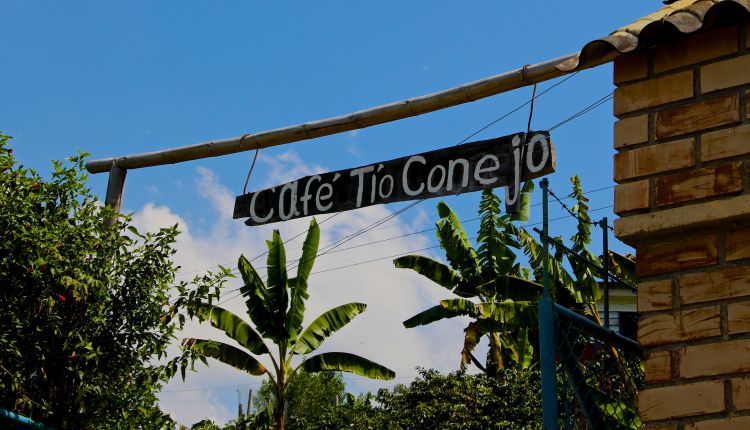
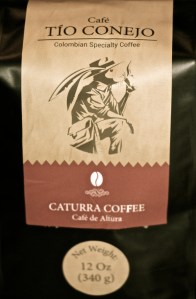
Tio Conejo is a family-farm that produces specialty coffee and promotes a philosophy of sustainability, community-building, equality and hope.

While coffee is a regular part of my daily life, I never really considered the complex story behind the coffee I consume.

However, after visiting the Tio Conejo coffee farm this past weekend, I learned that behind every cup of coffee there’s a struggle to build stronger, healthier, more sustainable communities. There’s an effort to be part of the full circle of life by giving back to the land and being able to pass on history, traditions and culture to the next generation.
At every step in the production process, there’s labour, sweat, and pain, as well as hope, innovation, and social change. After a day at the coffee farm, it was clear to me that producing a high-quality cup of coffee means a lot more than profiting from a commodity crop on the world market.

The Zona Cafeteria was recently declared a UNESCO World Heritage Site. This means efforts will be made to protect the landscape and preserve the paisa culture reflected in the historic farms
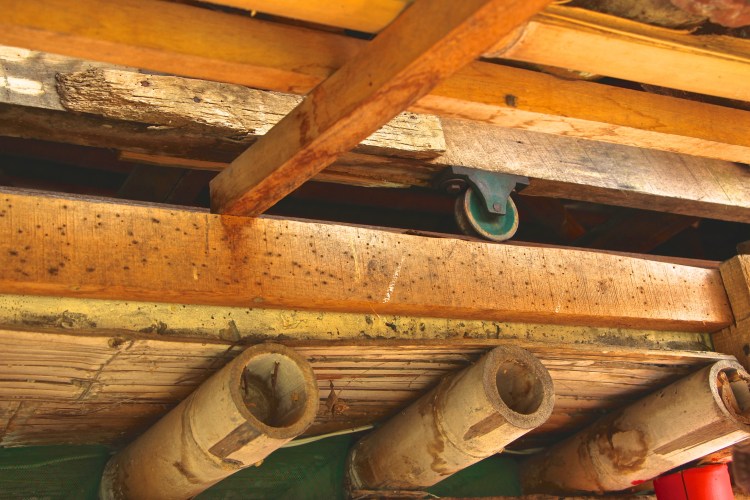
The Zona Cafeteria was recently declared a UNESCO World Heritage Site. This means efforts will be made to protect the landscape and preserve the paisa culture reflected in the historic buildings. The farm houses built by the first settlers of the region were made by cutting down guadua (bamboo-like trees) with machetes.
Arabica (the coffee beans typically grown in Colombia) is not native to Colombia. It originated in Ethiopia and was brought to Colombia by Jesuit priests in the 16th century. Coffee trees were planted after Colombians were ordered to plant 3-4 trees as penance for confession.

Stages in Coffee Production

Cultivating Nutrient-Dense Soil

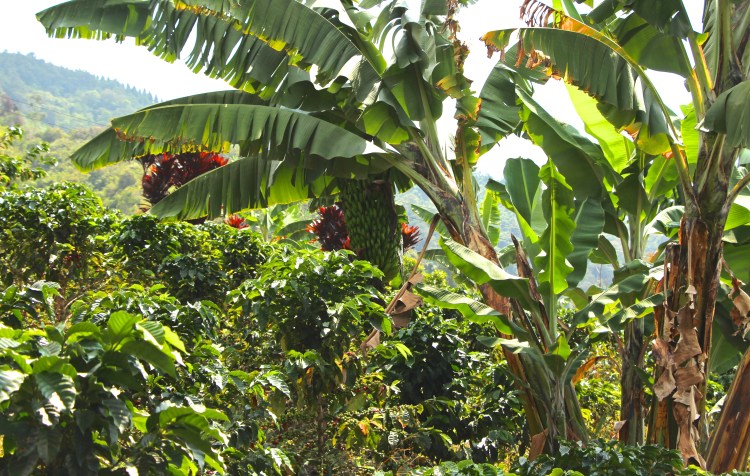
Banana trees provide shade and species diversity while nitrogen-fixers are strategically planted to improve the quality of the soil.
Pulp is decomposed by Californian worms to be used as fertilizer.

Planting

baby coffee
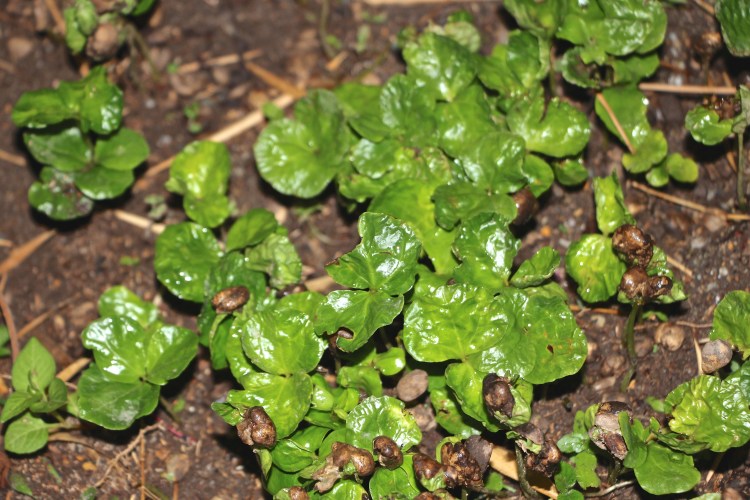
The highest quality seeds are carefully selected for planting.
It takes more than two years until a newly planted coffee plant is able to produce berries that are ripe enough for picking!

Harvesting

Coffee berries
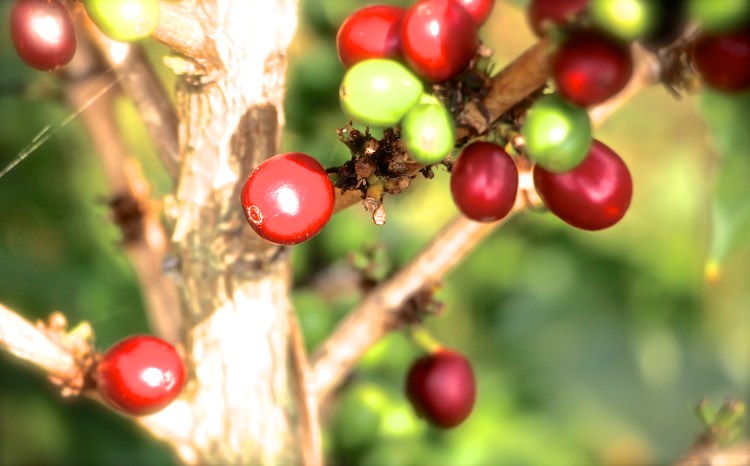
Coffee beans are hand-picked which is an extremely laborious process.  In order to meet the flavour and quality requirements to be graded specialty coffee, beans need to be carefully selected during the harvest.
Only red beans are ready to be picked. Green beans need more time to ripen.

Bean selection

separate seeds
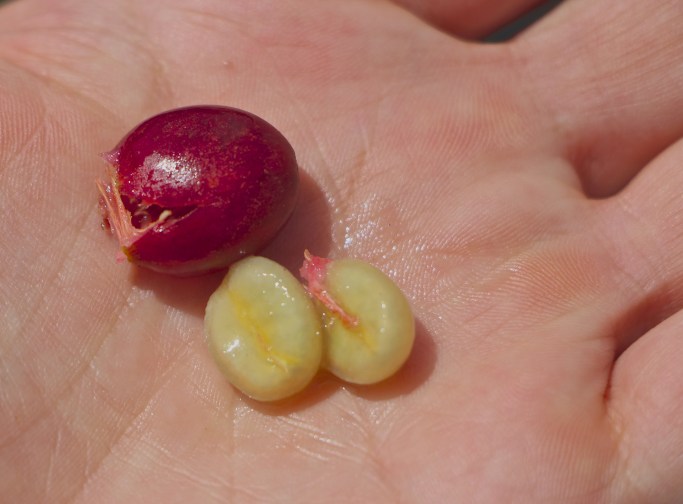
At Tio Conejo, farmers place berries in a giant tub of water to separate the “floaters” from the “sinkers.” Ripe coffee beans are dense and sink to the bottom. These are processed for specialty coffee which is usually exported. If the beans float, it means that they are missing a bean, or are damaged in some way. These are separated to be processed and sold to the local markets (which buy lower grade coffee).

Processing

The pulp and coffee beans are mechanically separated by centrifugal force and a barrel screen system.  
The pulp and coffee beans are mechanically separated by centrifugal force and a barrel screen system.

Fermentation

Coffee beans are covered in a layer of slippery mucilage. At Tio Conejo, beans are placed in fermentation tanks for 18 hours and then undergo three washing cycles to remove the mucilage before drying. The reactions of yeast and bacteria in the fermentation process breaks down the sugars in mucilage to produce acids which add more flavour and complexity to the coffee. Many producers, especially large-scale farms skip this step and use different technologies to immediately begin drying the beans in order to increase production (likely at the expense of flavour). 
Coffee beans are covered in a layer of slippery mucilage. The reactions of yeast and bacteria in the fermentation process breaks down the sugars in mucilage to produce acids which add more flavour and complexity to the coffee. The beans then undergo three washing cycles.

Drying

Originally, beans produced in mountainous areas were dried on roof tops under an ingenious roof that rolled to cover the beans.
The pulped and fermented beans are spread out on drying tables or floors to 11% moisture. The dried beans are known as "parchment coffee" as they still contain a parchment layer. After drying, beans are sent to a mill where hulling machinery removes this shell. 
The pulped and fermented beans are spread out on drying tables or floors to 11% moisture (this one is empty). The dried beans are known as “parchment coffee” as they still contain a parchment layer. After drying, beans are sent to a mill where hulling machinery removes this shell.

Exporting

Bags
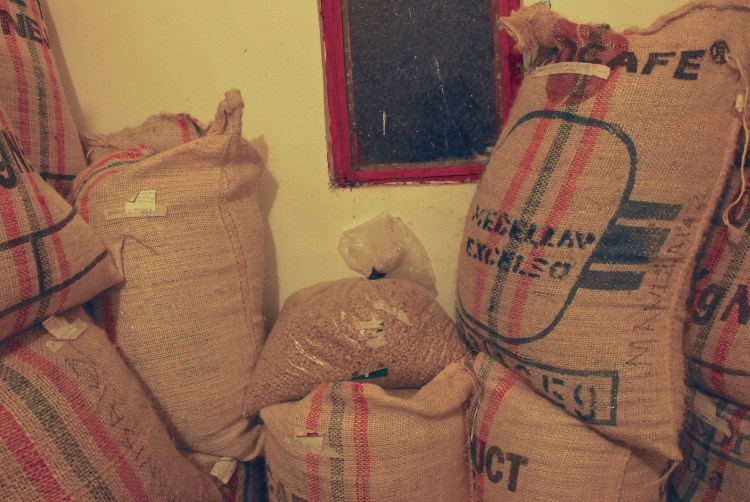
The milled beans, now referred to as green coffee, are put in special plastic bags which preserve the moisture levels, inside jute or sisal bags. They are shipped to North America or overseas to roasters who transform the green coffee into the aromatic, flavourful brown beans that we purchase at our local cafés.

Consumption

Bagged

Here’s where I come in! I’d be a completely different person without my morning brew. Thank you, coffee farmers, for all of the work that you to do to improve my quality of life…by helping me wake up in the morning, inspiring my writing, supporting engaging conversations with friends and families, and warming my insides on a cold winter day.

If you are in the Manizales area, or if you are a coffee roaster, café owner, barista, or curious consumer, I’d recommend taking a trip to Tio Conejo to learn about the origins of coffee and the story of where your coffee comes from. (When I was there, I met a couple from Black Dog Coffee in West Virginia who made the trip to Colombia to learn about the farm that produces the beans they roast for their customers!!)

For more info about Tio Conejo, check out this awesome video:


El Sol

Manizales sunset
Manizales, una “fábrica de atardeceres” -Pablo Neruda

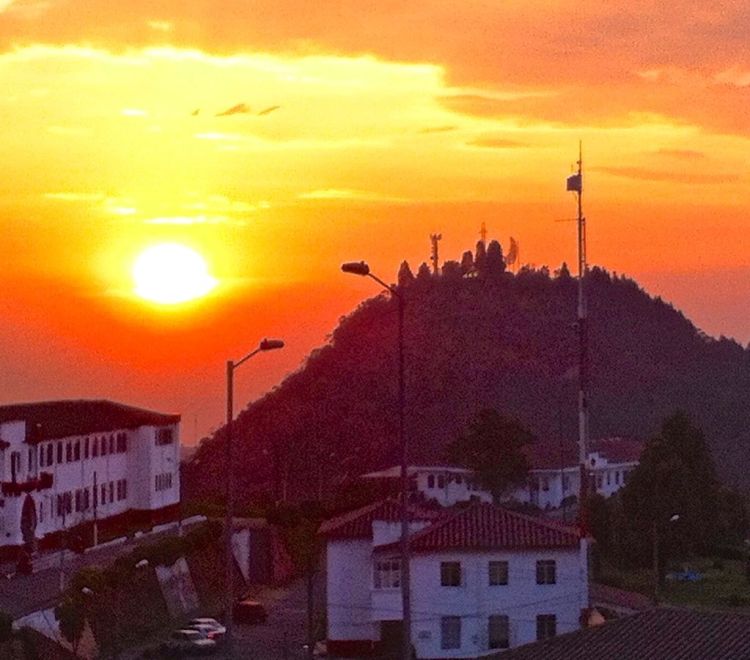
In my travels, I’ve been fortunate to have witnessed some amazing sunsets. Located five degrees north of the Equator, Manizales, Colombia, the city where I’m currently living and working, has the some of most beautiful sunsets I’ve ever seen. It’s no wonder that the Chilean writer, Pablo Neruda, described Manizales as a “fábrica de atardeceres” (sunset factory). On sunny days, at about six o’clock in the evening, the sky transforms into the most radiant blend of orange, yellow, and pink, colours that stretch the limits of my imagination, as el sol (the sun) slowly disappears behind the Andes.

cable cars
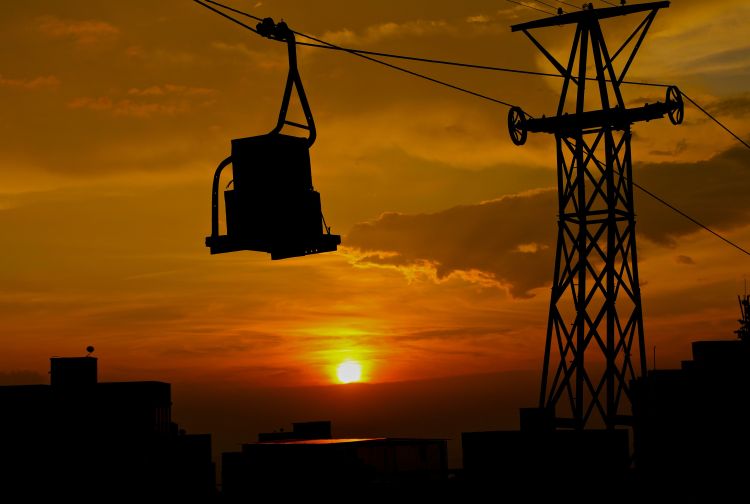
Sunset from historic cable cars in Manizales.

For me, sunsets are like a delicious piece of fruit: a juicy red mango freshly picked at my friend’s finca (farm), or a locally grown Ontario peach from a roadside stand. They remind me that life can be more colourful, more flavourful, more radiant, than I usually experience it to be. Sunsets inspire me to dream of a tomorrow that will be better than today…and encourage me to STOP what I’m doing, grab una cerveza (a beer), and enjoy the moment.

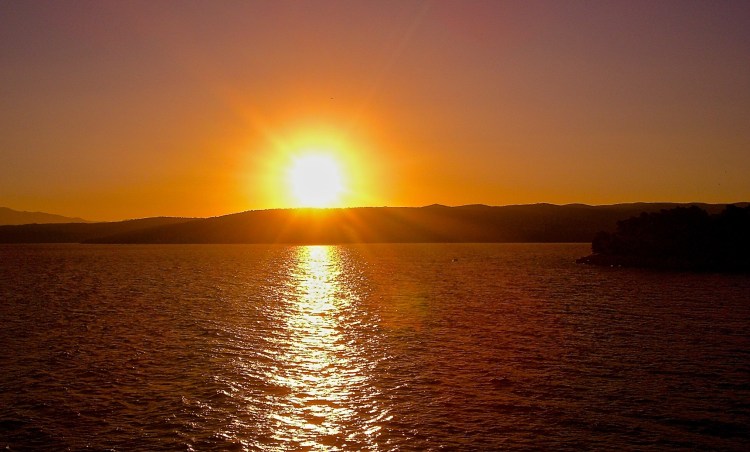
Adriatic sea
Sunset on the Adriatic Sea, off the coast of Hvar Island, Croatia.
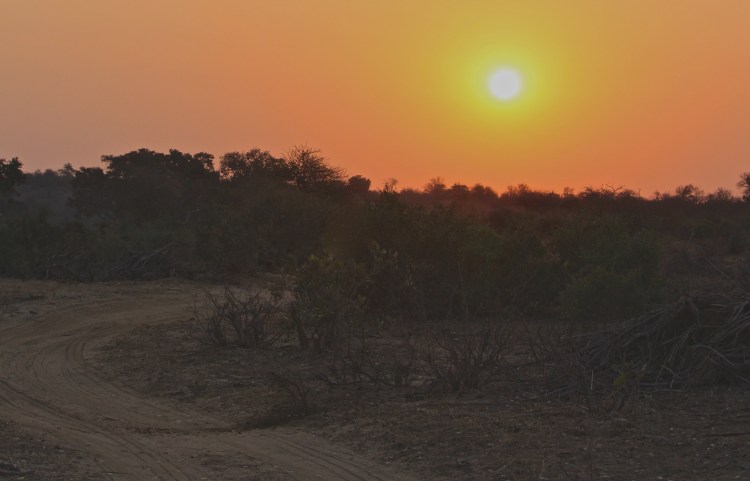
Serengeti Sunset
Kruger National Park, South Africa


sunset over arctic ocean
Sunset over the Arctic Ocean
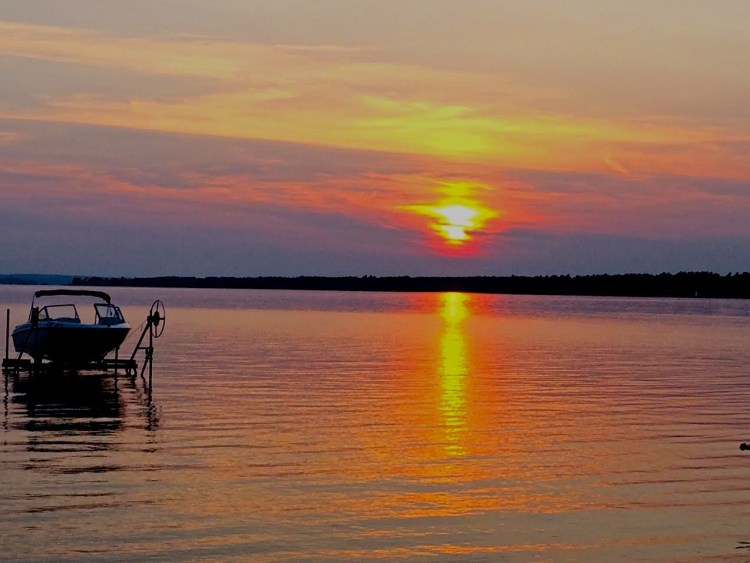
norway bay sunset
I can travel the world, but it’s hard to beat a sunset at my cottage in Norway Bay, Quebec.

As I taught my fifth grade students in Science this week, the sun is the Earth’s primary energy source. It warms the planet, drives the water cycle, and makes life on Earth possible. While sunsets calm me down and inspire me to dream BIG, it wasn’t until I lived without el sol that I learned to appreciate its full value.

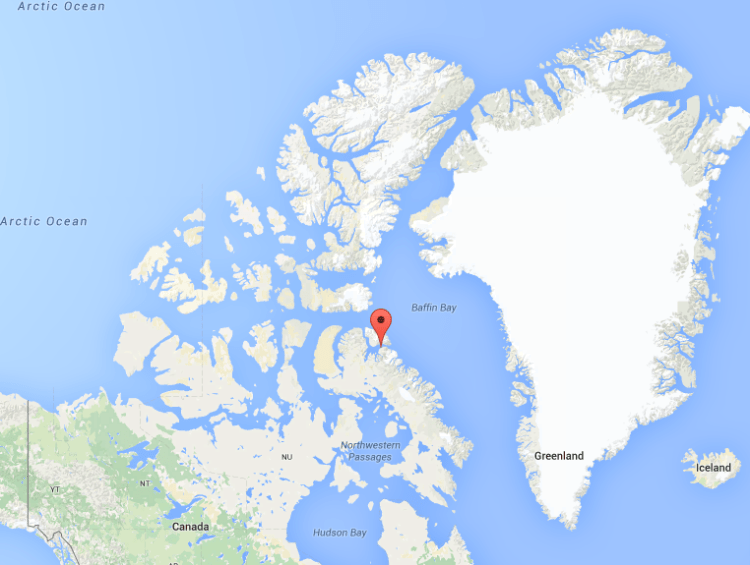
Screen Shot 2016-01-23 at 7.08.29 PM
Pond Inlet is a community of 1500 people located on the northernmost tip of Baffin Island in Nunavut, Canada

This time two years ago, while teaching in the community of Pond Inlet, Nunavut, I experienced  “the polar night,” which occurs when night lasts for more than 24 hours. When I was there, the sun set in mid-November, and didn’t rise again until early February.

This meant living in four months of darkness.

walking to church 11am
I took this photo while walking to church on a Sunday morning in December for 11:30am mass. (Mittimatalik is the Inuit name for Pond Inlet.)

It wasn’t totally dark all-day, everyday. There was a twilight period between about 11am-2pm when the sun was just below the horizon, meaning you could go for a walk, ski, or snowmobile outside without a flashlight. However, I remember being shocked when some of my students opened the outside door to get some fresh air during last period gym class (about 2:30pm) and it was so dark that I was able to point out the Big Dipper.

OLYMPUS DIGITAL CAMERA
It was important for me to get outside during the twilight hours of the dark season.
OLYMPUS DIGITAL CAMERA
My friend and I witnessed the “Return of the Sun” on a -40C ski in early February.

Without the sun, a natural energy source, I had to develop strategies for creating my own energy. I took Vitamin D pills daily, had a spin bike and a set of weights in my bedroom, tried to force myself to get outside everyday (even if all I did was take a quick walk to the Northern Store or to school), coached community basketball, and connected with friends as much as possible. I’m often described as an incredibly positive and extremely active person, but without the sun to give me energy, there were several weekends when I didn’t even leave my house.

Needless to say, I’m amazed and inspired by the Inuit and northerners for whom living in darkness is a regular part of life. Let’s just say, I’ll never have sympathy for students who complain about the cold, as my students in Pond Inlet walked to school and gladly went outside for recess on days when it was nearly -50°C with the windchill, often without proper boots, mitts, or a warm enough parka.

Leahtee
I was so pumped for the “Return of the Sun” that I did a -30 C photo shoot in my Leahtee, an awesome clothing line designed by my good friend, Leah!

Living without the sun made me reflect on the simple, yet crucial elements of life that I’ve taken for granted over the years. The fast-paced North American culture encouraged me to chase the future, look for a better relationship, check another item off my bucket-list, pursue another degree. But when you live one step ahead of your own life, you overlook the people, places, and opportunities that contribute to your ability to survive and prosper in the present.

So for now, every time I see a Manizales sunset, I’m going to make an effort to STOP, grab a beer, and ENJOY the moment. As I’ve learned the hard way: sooner or later, that moment will be gone.

And it’s always great to have an excuse for some cerveza y sol (beer and sun)!

Embracing new relationships & yearning for an old flame

When I lived in London, UK, I brought my camera on every weekend getaway or school vacation.

Looking through my travel photos, I have hundreds of pictures of my adventures in Europe: celebrating my 25th birthday with the Mona Lisa, cycling with my Dad in Spain and Italy, and journeying through Eastern Europe by rail.

Dad and Shannon in Italy
Dad and I representing “Team Canada” on the Giro d’Italia. Next stop: Monte Grappa!

But I have very few pictures of London itself. In fact, I don’t have a single photo of the places cinco minutos de mi casa (five minutes from my house) that I saw every day and developed a connection with.

No photos of the old Victorian buildings.

Or of the cobblestone alleyways.

Or of the artsy cafés & bars (where I’d go to write my blog, inspired that Oscar Wilde may have once sat down to write in the same places).

Or of the designer consignment stores, like the one where I bought a funky shirt-dress for five pounds, which my students decided was a hideous fashion blunder and claimed made me look like a cupcake/sumo wrestler.

Or of the many electronic shops on Tottenham Court Road that I walked by every day but never stepped inside.

Or of my favourite pub, the King & Queen.

Maybe I didn’t take as many pictures at “home” because it’s harder to look at the parts of  my life that go deeper than tourist shots. I started to see a London that captured all of the joys and heartaches that come with living.

In my neighbourhood of Fitzrovia, I developed strategies for coping with struggles at work, like rainy runs in Regent’s Park, or a Turkish Wrap at the Camden Lock Market, as well as rituals for celebrating success, like pints at the neighbourhood pub, or spontaneous dance parties followed by late-night Korean food.

I learned to feel the pulse and beat of the city (“Do you hear that sound? It’s London, calling…”, an old man whispered to me after last call at a pub he’d been frequenting every night for the last 40 years).

I discovered the most efficient routes for navigating public transit (don’t fall asleep on the last train from Clapham Junction and avoid night buses at all costs!) and the etiquette for using it (avoid eye contact, keep to yourself, become as stressed out as possible, and most importantly, “mind the gap”).

My relationship with London was definitely love-hate. It inspired me to live wildly and deliberately. It broke me down and drained my bank account. It’s a city that brought out the best and worst in me. It’s left me with a hopeful yearning that, perhaps, if we’re lucky, our stars will eventually align and we might have another shot at each other sometime in the future.

My passionate affair with London pushed me to those moments of agony and ecstasy that sometimes get lost in the monotonous grind of daily life. Ultimately, it forced me to grow and become stronger than I was before because I wouldn’t have survived if I’d stayed the same.  That’s what the best relationships do: they change you.

My relationship with Manizales, Colombia, is still fresh–I moved here in October 2015. So, it’s too soon to know which parts of it will stay in my heart and which parts I’ll want to leave behind. But with all of its cafés, vibrant culture, and easy access to the outdoors, I can easily see how it’s been voted as Colombia’s best city to live in.

In light of my regret about not documenting my life in London, here are some photos of places in my new neighbourhood in Manizales: spots that are all cinco minutos de mi casa. I’m still in tourist mode, though, so let’s see how intimately I come to know them in the future.

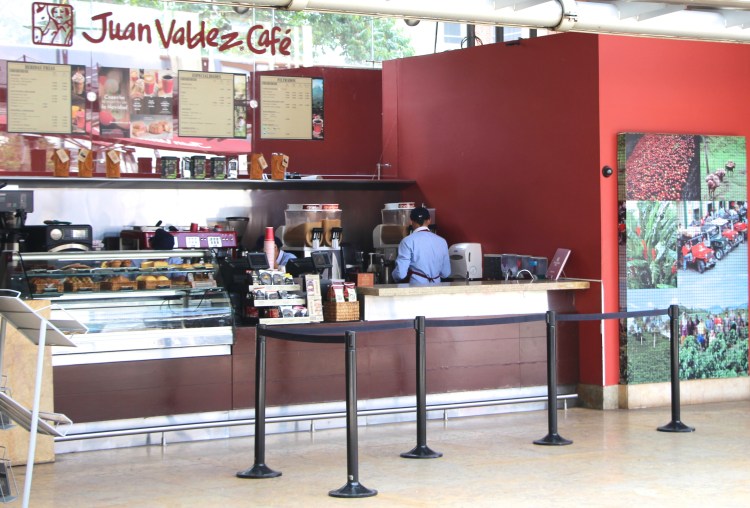
Juan Valdez
Since Manizales is in Colombia’s “Coffee Triangle,” there’s no shortage of places to go for a caffeine fix.
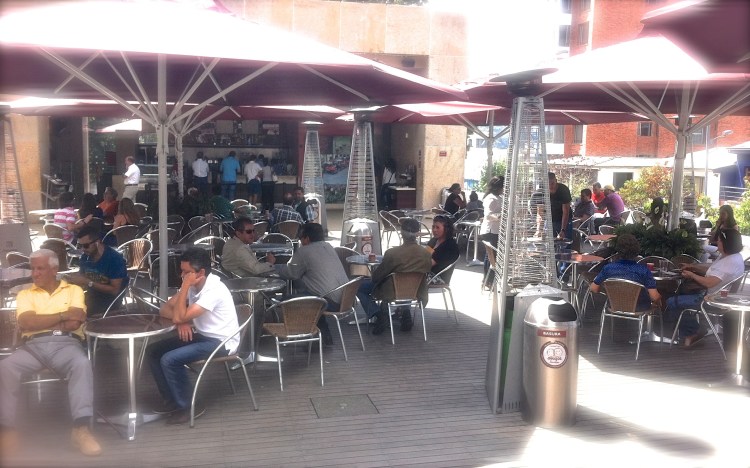
Juan Valdez cafe
Juan Valdez Café is a popular spot to sit outside and have una capuchino y croissant con queso (a cappuccino and cheese croissant)
La Suiza
I like going to La Suiza on a Sunday afternoon for a coffee, pastry, or a limonada de coco.
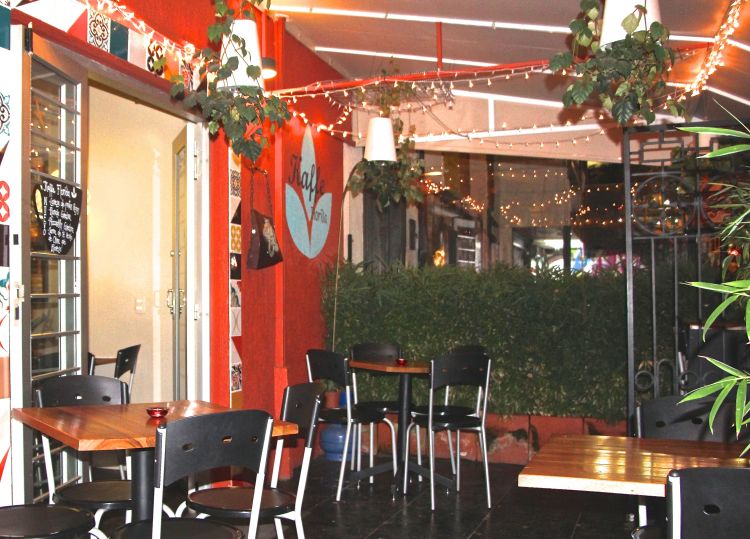
Kaffe Florida
What better way to spend an evening than writing at Kaffe Florida?
Bar
It’s always patio season when you live only 5 degrees north of the Equator!
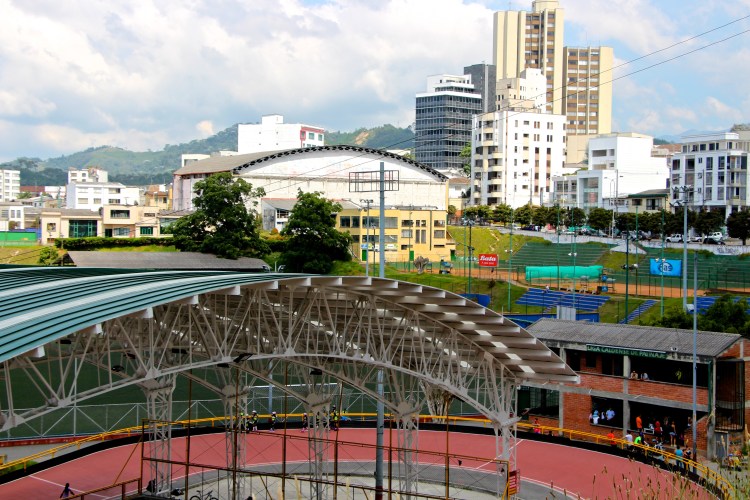
Track
Estadio Palogrande soccer stadium & amazing outdoor sports complex: cycling track, running track, soccer fields, tennis courts, basketball courts, bike park
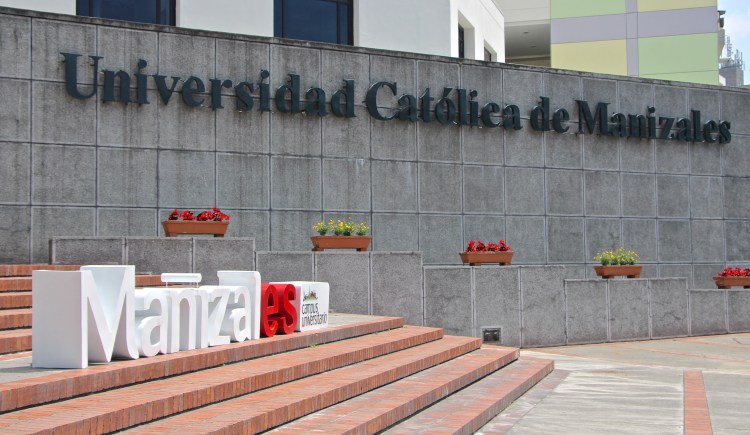
University
Manizales is known for its academic culture and has been called the “Boston of Colombia.”
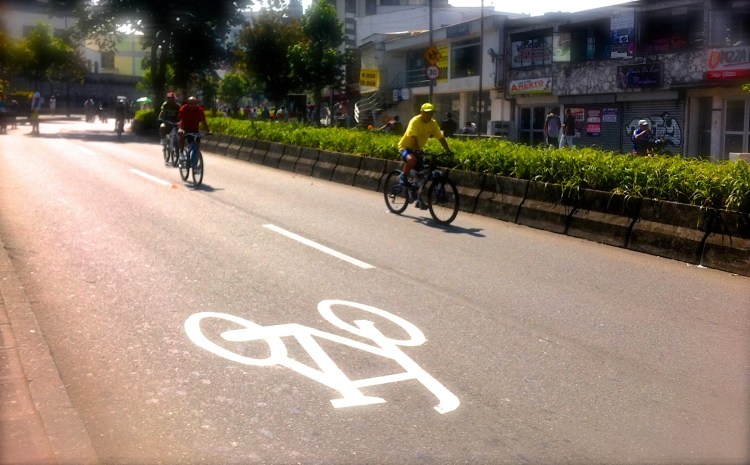
Avenida
Los Domingos (on Sundays) Avenida Santander, a main strip, is closed to cars in the mornings. Hundreds of cyclists and joggers take advantage of being able to workout on the paved, flat road.
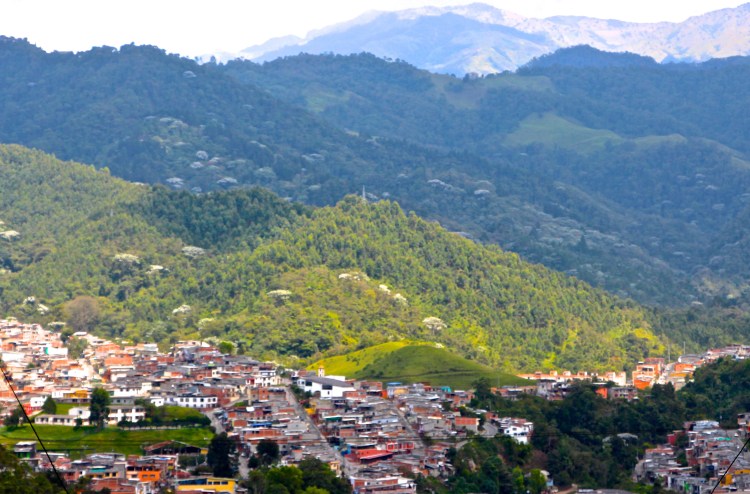
View of mountains
For me, the best part of living in Manizales is its easy access to the outdoors. View of the mountains from a side street off of the busy Avenida Santander.

Los Nevados: My week ‘out on the land’

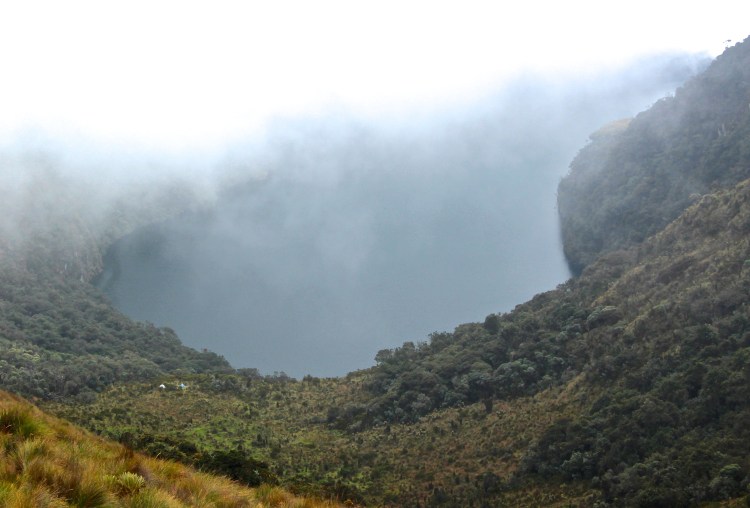
laguna clouds
Camping by a secluded laguna in Los Nevados National Natural Park, Colombia. My carpa (tent) is the white dot in the bottom left corner.

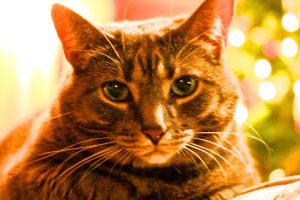
I just spent the last week without my iPhone. I know what you’re thinking: How did I live without the daily dose of selfies from my fave Instacat? #Olivegram

@justoneolive
@justoneolive  How pretty is this kitty? #Model.

Even though I make a conscious effort to detach when I can, it’s been years since I’ve gone without the Internet at my fingertips for more than a couple of days. Many places of quiet solitude, like my family cottage in Quebec, and some of Canada’s National Parks, my ‘refuges’ from the stresses of city life, now have Wi-Fi hotspots. With so many distractions, so much pressure to squeeze in a status update, respond to an e-mail, or scroll through a database of potential dates for Saturday night while riding the subway or running on the treadmill, it’s hard to make time these days to stop. think. breathe.

Los Nevados National Park, Colombia
Los Nevados National Natural Park, Colombia

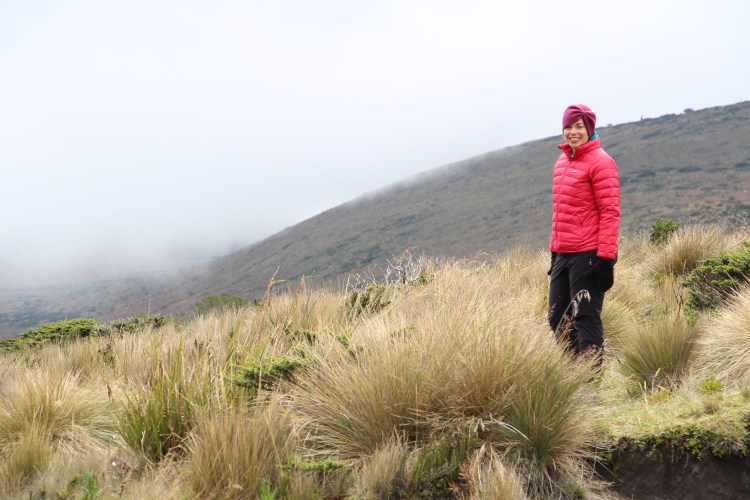
But last week, on a week-long camping trip in Los Nevados National Natural Park, I was finally able to unplug and disconnect. Los Nevados (Spanish for ‘snow covered peaks’), is a protected wilderness high up in the Colombian Andes (over 3500m in altitude), where conditions are wild and rugged, reminiscent of previous trips I’ve done in the remote Alaskan backcountry and northern Canada.

At least in the regions of the park where we were, there is no electricity or running water, no designated campsites or marked trails, and certainly no Wi-Fi. It is a place that is difficult to access, even for local Colombians.

I hope this jeep can handle lava! Driving past Nevado del Ruiz, an active volcano in Los Nevados National Park.
I hope this jeep can handle lava! Driving past Nevado del Ruiz, an active volcano in Los Nevados National Natural Park.

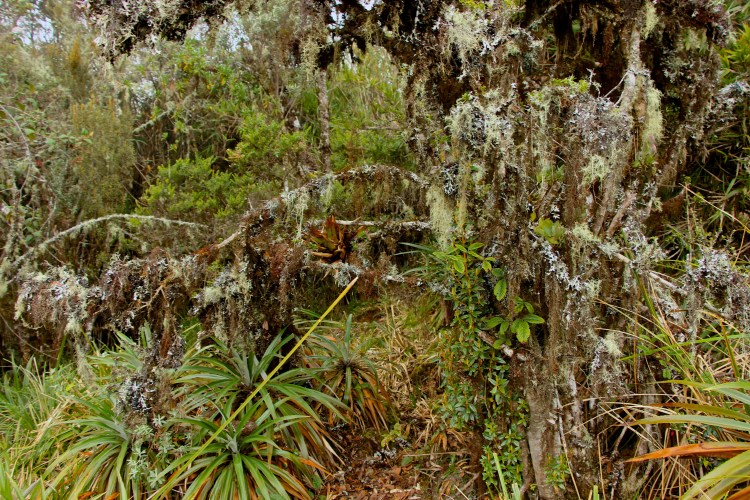
Luckily, I was camping with locals who knew the land really well, as cloudy conditions and gnarly terrain resulted in us losing the ‘trail’ multiple times. On several occasions, the clouds had created such a whiteout that I felt like I was standing at the top of Tremblant, the ski resort that my family often went to when I was a kid which often has blizzard like conditions at the summit.

Following a trail in a cloud forest is like a game of 'Where's Waldo' at the top of Mount Tremblant!
Following a trail in a cloud forest is like a game of ‘Where’s Waldo’ !

Since the ultimate purpose of our trip was to fly-fish for trucha (trout), we had a goal of locating a laguna (small lake) that my friend’s boyfriend had previously heard about from some campesinos (local farmers). It took us two days to find it, which involved bush-whacking through thick jungle, crossing swamps and streams, summiting mountains, hiking across tundra, and getting lost then re-routed several times, but it was certainly worth the struggle. The elusive laguna was nestled in a secluded valley surrounded by mountains and was a gold-mine of trucha. Originally, we planned on traveling overtop one of the mountains to another river, but rainy weather and great fishing convinced us to change plans and camp at the laguna for four nights.

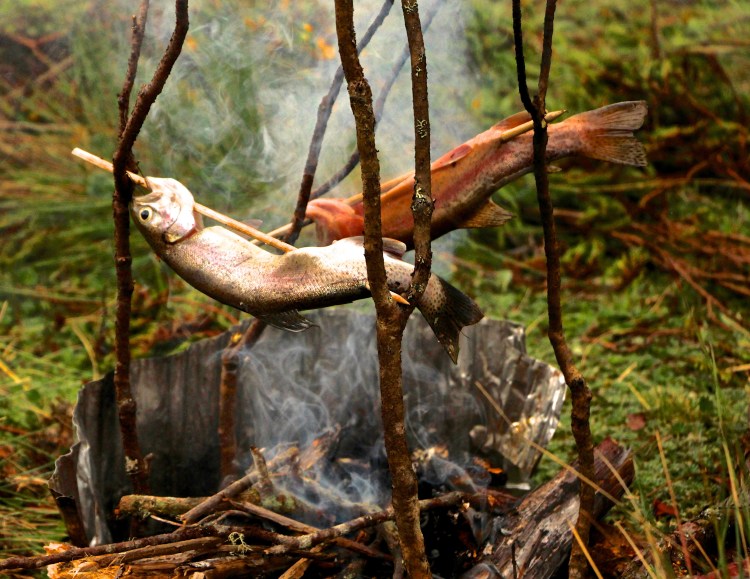
Smoking trout for dinner!
Smoked trout for dinner!

I was pleasantly surprised by how refreshing it was to be forced to slowdown and be still. I enjoyed being able to read a book without being constantly distracted by texts or e-mails, and having real conversations with friends who were truly paying attention to what I was saying, rather than half-listening while scrolling through Instagram.

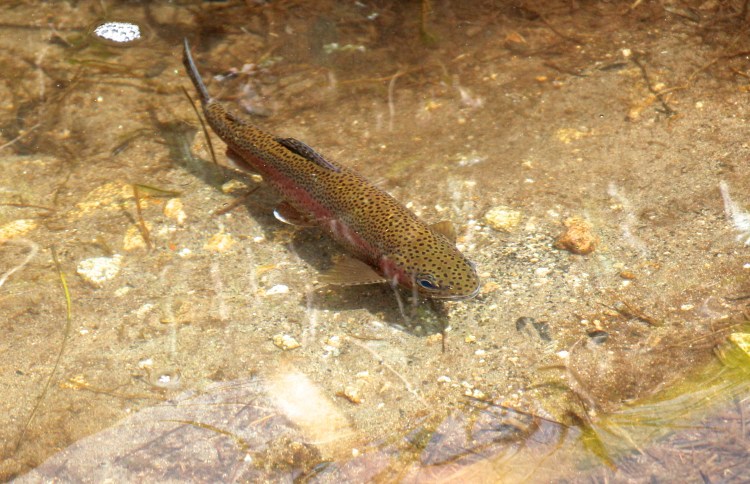
Trucha (trout)
Trucha (trout)
The sun did make some brief appearances! Good thing a 5am need to pee forced me out of my tent to see this beauty of a sunrise.
The sun did make some brief appearances! 5am sunrise over the laguna.
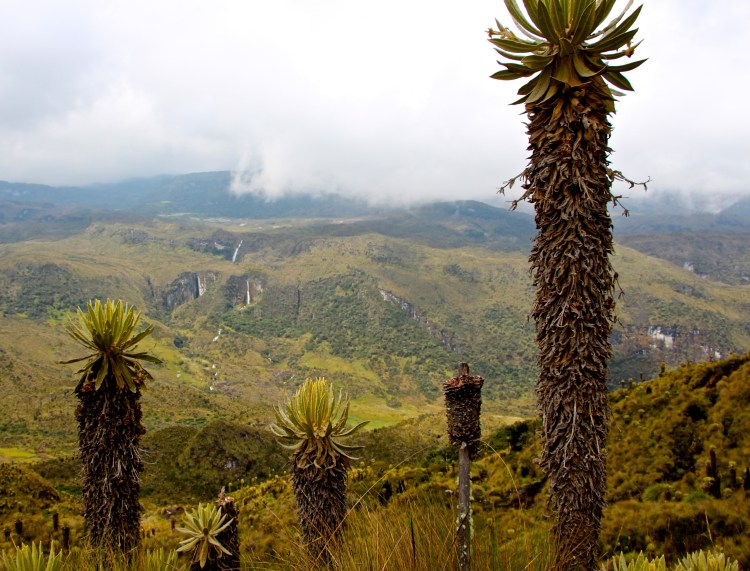
Frailejones, a cacti-looking plant that is exclusive to the Andes of Venezuela, Colombia, and Ecuador. It grows only 1cm/year, so the one in the right corner is likely 800-100 years old!
Frailejones, a cacti-looking plant that is exclusive to the Andes of Venezuela, Colombia, and Ecuador. It grows only 1cm/year, so the one in the right corner is likely 800-1000 years old!
Apparently the trail goes through here.
Apparently the trail is this way.

My week of being ‘out on the land’ (a phrase I often heard used by Inuit when I lived in Pond Inlet, Nunavut, to describe being in nature) forced me to truly live in the moment, which according to Buddhist and many New Age philosophies, is the pathway to happiness.

I loved being able to read without distractions.

(Okay, so maybe one of the books I read in my tent during a monsoon was Eckhart Tolle’s The Power of Now, which further reinforced the idea that showing up, being present, letting go of the past and our expectations for the future, and living in what he calls ‘the NOW’, is essential for spiritual transformation and whole-hearted living).

I guess my challenge NOW that I’m back in the city, is how to live without distractions in a world that is full of them. I haven’t even been able to write this post without pulling out my phone to see if my friend’s messaged me on WhatsApp or compulsively checking Instagram for @justoneolive’s latest status update.

Maybe I should start by–gasp!– turning my phone off.