Are you happy?

4866981971_0b3804ecd0_b
Is happiness the key to life?

Since moving to Colombia two months ago, on most days, a staff member at my school, or one of my students’ parents will approach me, greet me with kisses on both cheeks, and ask the same series of questions:

Colleague/Parent: Hola (hi), Miss Shannon. Como estas? (How are you?)

Me: Bien. (Good) [At this point, I try to avoid the standard “y tu?” (and you?) as that invites an onslaught of Spanish that I can’t understand.]

Colleague/Parent: Are you happy?

I never really know how to respond.

Happy?

Am I “happy”?

I have a good job and am trying to pursue my dreams of becoming a writer. I have amazing friends and family (even though I’m currently living on another continent from most of them, hooray for FaceTime and Skype!!!).

Surprisingly, living in Colombia has offered me a comparable if not better quality of life than I had back in Canada. I’m lucky in that I’ve never had any major health problems and have a healthy, active lifestyle filled with biking, hiking, and spending time with friends.

So, am I “happy?” I guess so…???

I’m not sure why the question makes me uncomfortable.

Maybe it’s because it’s not the cultural norm in Canada to ask anyone outright if they are happy, not even the people we are closest with, so it feels weird being expected to reveal what feels like personal information to strangers.

Maybe it’s because the North American consumer-based culture that I was brought up in has ingrained in me that happiness is an ideal to be pursued & purchased: better hair, better body, better make-up, better house, better car, better TV, better boobs, better boyfriend, etc.

Maybe it’s because I’m not sure if “being happy” is even something that I should be aspiring for.

Isn’t happiness fleeting?

I think about the people who have inspired me in my life: Athletes like Michael Jordan and Clara Hughes. Writers like Cheryl Strayed and Elizabeth Gilbert. My parents (shout out to my Mom who’s probably the only one who’ll even read this blog post- Hi Mom!). My amazing, beautiful, and talented friends.

These people have all struggled and overcome great adversity to achieve the things that have given their lives the most meaning, whether it’s winning championships, writing novels, building careers, moving overseas for the people they love, having children, or designing their dream cottage (Hi Mom! Hi Dad!).

If there’s any wisdom in the Barenaked Ladies song, Lovers In A Dangerous Time“Nothing worth having comes without some kind of fight/ Got to kick at the darkness ’til it bleeds daylight,” it seems like achieving our goals requires some kind of struggle.

And a state of struggle doesn’t necessarily equate with a state of happiness.

(Suddenly, I’m brought back to my rugby days at Queen’s University. Those Thursday night practices at West Campus in the RAIN, always in the RAIN, were miserable. Rainy October nights in Kingston, Ontario, Canada are the worst. Cold & wet. Tackling each other in the mud. I hated every minute of them. But in the end, they were worth it. They made our team stronger, as we bonded in our collective struggle. Personally, they made me tougher and more resilient in games, as I needed those miserable practices to amount to SOMETHING.)

So I’m not sure if answering, “Si. Yes. I’m happy” to concerned and caring parents and staff members necessarily means that I’m living a better or more fulfilling life.

I’m not advocating for a life of gloom and doom. In fact, I think it’s important to avoid letting myself get “stuck” in situations where the possibility for happiness is hopeless. There’s a fine line between accepting too much suffering and making a change.

At the same time, I think it’s okay not to be happy all of the time. If my rugby days taught me anything, it’s that sometimes the struggle, the pain, the fight, and the frustration, are totally worth it. These periods of potential unhappiness can result in more meaningful careers, deeper relationships, and greater life satisfaction in the long run.

But for now, when people here ask me if I’m happy, I’ll respond with “Si” (yes), or “Oui” (yes), as sometimes my terrible Spanish comes out as French.
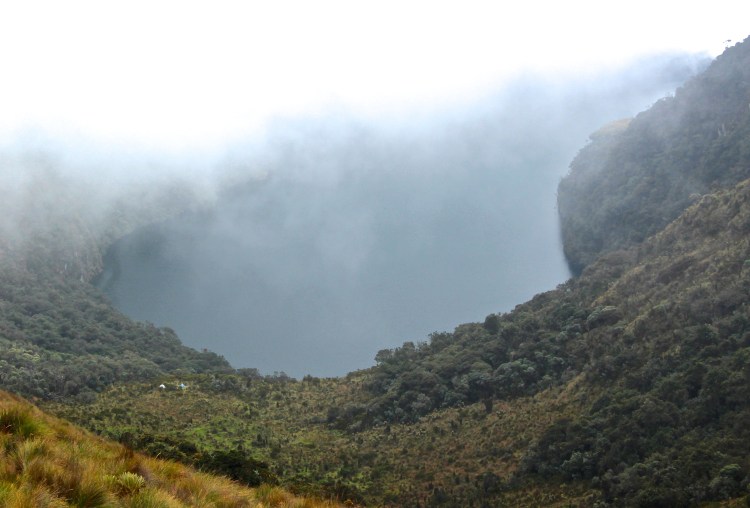



Los Nevados: My week ‘out on the land’

laguna clouds
Camping by a secluded laguna in Los Nevados National Natural Park, Colombia. My carpa (tent) is the white dot in the bottom left corner.

I just spent the last week without my iPhone. I know what you’re thinking: How did I live without the daily dose of selfies from my fave Instacat? #Olivegram

@justoneolive
@justoneolive  How pretty is this kitty? #Model.

Even though I make a conscious effort to detach when I can, it’s been years since I’ve gone without the Internet at my fingertips for more than a couple of days. Many places of quiet solitude, like my family cottage in Quebec, and some of Canada’s National Parks, my ‘refuges’ from the stresses of city life, now have Wi-Fi hotspots. With so many distractions, so much pressure to squeeze in a status update, respond to an e-mail, or scroll through a database of potential dates for Saturday night while riding the subway or running on the treadmill, it’s hard to make time these days to stop. think. breathe.

Los Nevados National Park, Colombia
Los Nevados National Natural Park, Colombia

But last week, on a week-long camping trip in Los Nevados National Natural Park, I was finally able to unplug and disconnect. Los Nevados (Spanish for ‘snow covered peaks’), is a protected wilderness high up in the Colombian Andes (over 3500m in altitude), where conditions are wild and rugged, reminiscent of previous trips I’ve done in the remote Alaskan backcountry and northern Canada.

At least in the regions of the park where we were, there is no electricity or running water, no designated campsites or marked trails, and certainly no Wi-Fi. It is a place that is difficult to access, even for local Colombians.

I hope this jeep can handle lava! Driving past Nevado del Ruiz, an active volcano in Los Nevados National Park.
I hope this jeep can handle lava! Driving past Nevado del Ruiz, an active volcano in Los Nevados National Natural Park.

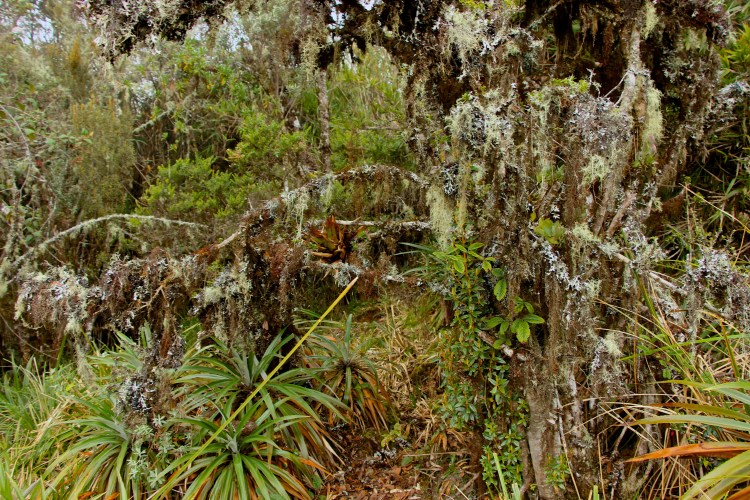
Luckily, I was camping with locals who knew the land really well, as cloudy conditions and gnarly terrain resulted in us losing the ‘trail’ multiple times. On several occasions, the clouds had created such a whiteout that I felt like I was standing at the top of Tremblant, the ski resort that my family often went to when I was a kid which often has blizzard like conditions at the summit.

Following a trail in a cloud forest is like a game of 'Where's Waldo' at the top of Mount Tremblant!
Following a trail in a cloud forest is like a game of ‘Where’s Waldo’ !

Since the ultimate purpose of our trip was to fly-fish for trucha (trout), we had a goal of locating a laguna (small lake) that my friend’s boyfriend had previously heard about from some campesinos (local farmers). It took us two days to find it, which involved bush-whacking through thick jungle, crossing swamps and streams, summiting mountains, hiking across tundra, and getting lost then re-routed several times, but it was certainly worth the struggle. The elusive laguna was nestled in a secluded valley surrounded by mountains and was a gold-mine of trucha. Originally, we planned on traveling overtop one of the mountains to another river, but rainy weather and great fishing convinced us to change plans and camp at the laguna for four nights.

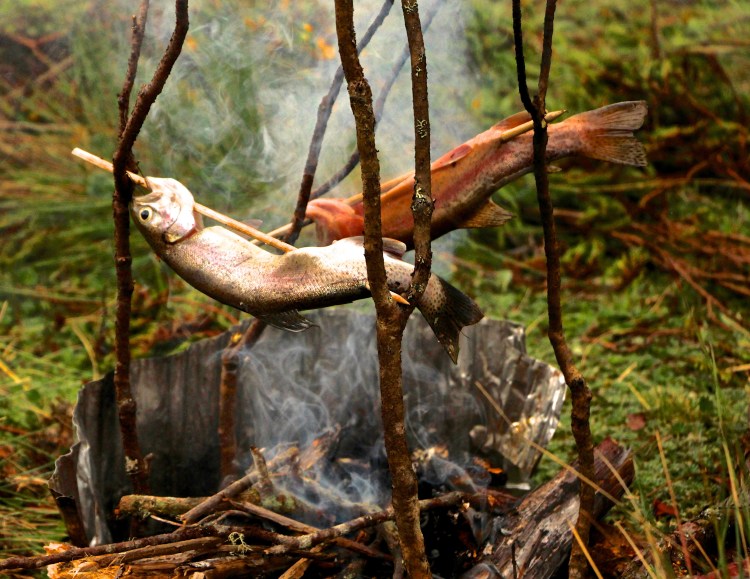
Smoking trout for dinner!
Smoked trout for dinner!

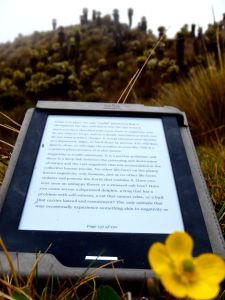
I was pleasantly surprised by how refreshing it was to be forced to slowdown and be still. I enjoyed being able to read a book without being constantly distracted by texts or e-mails, and having real conversations with friends who were truly paying attention to what I was saying, rather than half-listening while scrolling through Instagram.

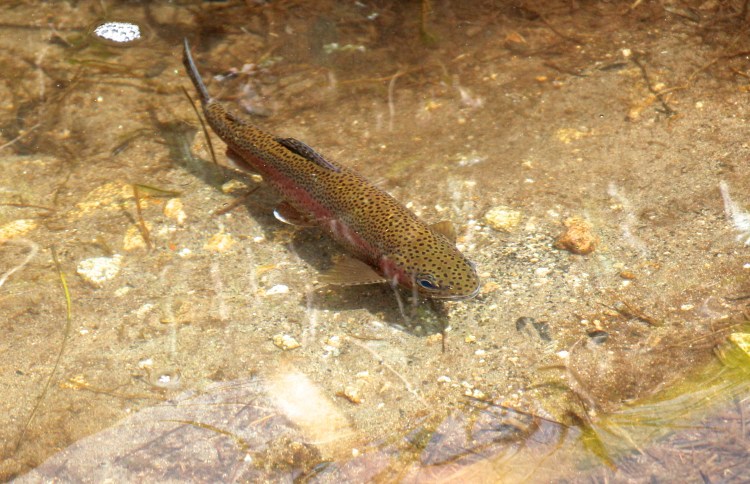
Trucha (trout)
Trucha (trout)
The sun did make some brief appearances! Good thing a 5am need to pee forced me out of my tent to see this beauty of a sunrise.
The sun did make some brief appearances! 5am sunrise over the laguna.
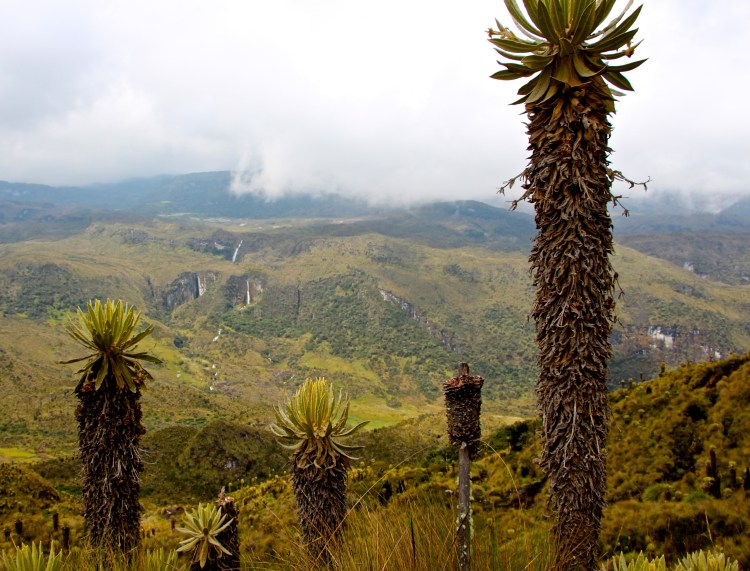
Frailejones, a cacti-looking plant that is exclusive to the Andes of Venezuela, Colombia, and Ecuador. It grows only 1cm/year, so the one in the right corner is likely 800-100 years old!
Frailejones, a cacti-looking plant that is exclusive to the Andes of Venezuela, Colombia, and Ecuador. It grows only 1cm/year, so the one in the right corner is likely 800-1000 years old!
Apparently the trail goes through here.
Apparently the trail is this way.

My week of being ‘out on the land’ (a phrase I often heard used by Inuit when I lived in Pond Inlet, Nunavut, to describe being in nature) forced me to truly live in the moment, which according to Buddhist and many New Age philosophies, is the pathway to happiness.

I loved being able to read without distractions.

(Okay, so maybe one of the books I read in my tent during a monsoon was Eckhart Tolle’s The Power of Now, which further reinforced the idea that showing up, being present, letting go of the past and our expectations for the future, and living in what he calls ‘the NOW’, is essential for spiritual transformation and whole-hearted living).

I guess my challenge NOW that I’m back in the city, is how to live without distractions in a world that is full of them. I haven’t even been able to write this post without pulling out my phone to see if my friend’s messaged me on WhatsApp or compulsively checking Instagram for @justoneolive’s latest status update.

Maybe I should start by–gasp!– turning my phone off.


Wasn’t ‘the plan’ to settle in Canada?

OLYMPUS DIGITAL CAMERA
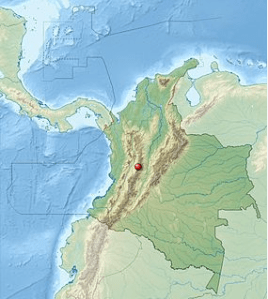
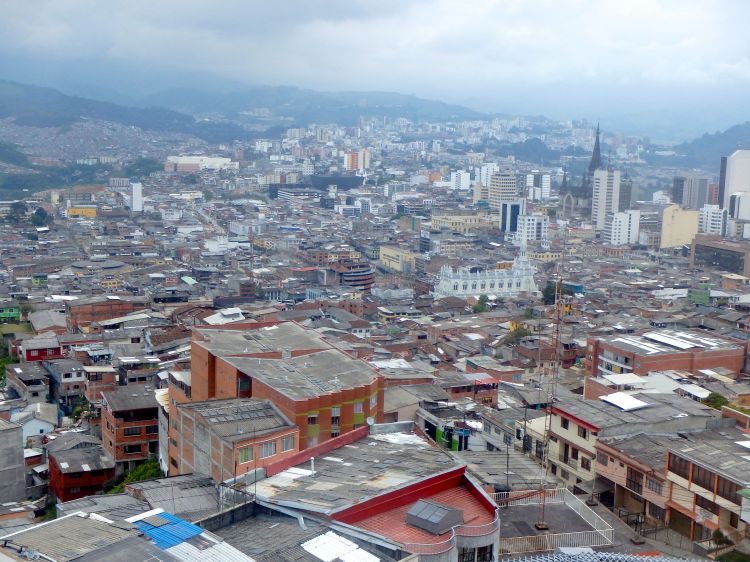
Manizales, Colombia: my new home!

I could hear the surprise my Mom’s voice as she reacted to the news that I had accepted a last-minute teaching position in Manizales, Colombia. She was right. “The plan” was to stay in Toronto where I had been living for the last year.

Since 2007, I had lived in seven different cities: Kingston, Ottawa, and Toronto, Ontario. Banff, Alberta. London, UK. Fort St. John, British Columbia. Pond Inlet, Nunavut. After years of being away from home, I was feeling a strong pull to put down roots in Toronto where I’d lived on and off since 2009.

However, things in Toronto weren’t really coming together as I’d hoped they would. By the end of the summer, I was feeling frustrated, heart-broken, and restless. So when my good friend messaged me out of the blue to tell me that her school in Manizales was looking for a grade five teacher, I began to wonder if life’s really meant to be lived according to a specific plan. As my friend reminded me, “Toronto will always be there”. Thus, I abandoned “the plan” and opted instead for a more uncertain path, the  “the one less traveled” that Robert Frost wrote about.

Maybe the pressure to “have a plan” and follow a linear path prevents us from taking risks on the spontaneous opportunities that could lead us in the right direction (or maybe I’m just trying to justify a foolish decision).

This all being said, it was never part of my plan to live in Colombia, but here I am.

OLYMPUS DIGITAL CAMERA
Checking out the sights of Manizales!
OLYMPUS DIGITAL CAMERA
Coffee plant. Manizales is part of Colombia’s “Coffee Triangle”
OLYMPUS DIGITAL CAMERA
Posing in front of some wax palms on the Vallé de Cocora hike on a trip to Salento
avacado.jpg
Picking my first aguacate (avocado)
OLYMPUS DIGITAL CAMERA
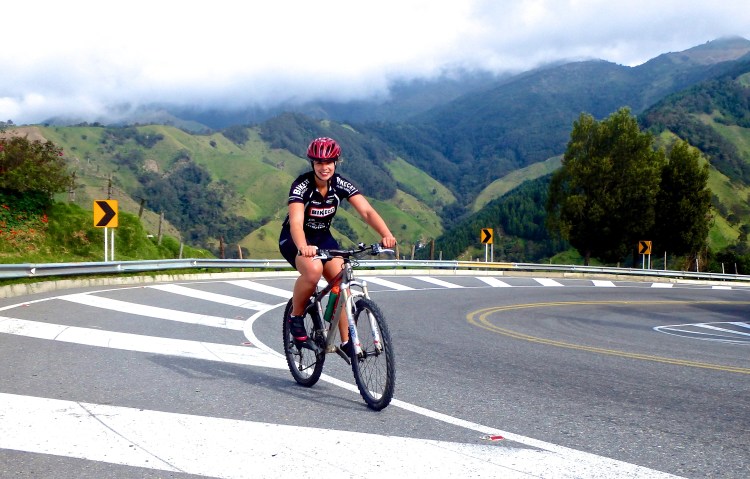
Its mountainous terrain makes Manizales a cycling mecca in South America.