Inspiring Women Series: A Conversation with Debbie Jenkins
DSC05062.JPG

“My inspiration is in nature. It’s simplicity. It’s complexity. It’s beauty.”

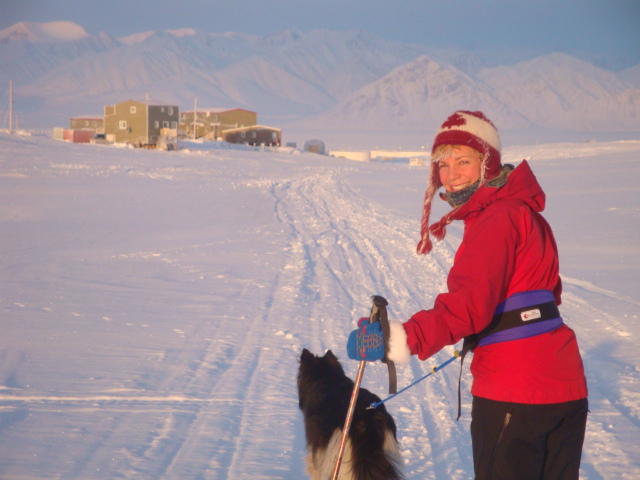
For the fifth episode of the Inspiring Women Series, I chatted with Debbie Jenkins, an amazing woman who I had the pleasure of meeting while teaching in Pond Inlet, Nunavut. Debbie worked for 7 years in the Canadian Arctic as a caribou biologist, and is currently completing her PhD at Trent University.

Debbie grew up in North Bay, Ontario. She attributes her current passion for biological conservation to her active, outdoorsy childhood, a life-long gift from her amazing parents.  

From an early age, she developed a deep connection with nature, and this relationship is at the core of everything that she does. An avid adventurer, Debbie takes every opportunity to get outside, whether that is through traveling, hiking, skiing, paddling, camping, or simply spending time alone on the land.

“At the core of who I am is this connection I have with nature.” 

After completing her undergraduate degree at Laurentian University in Environmental Science, Debbie worked for Science North and then the Department of the Environment in Sudbury for several years. Eventually, her love of learning and commitment to nature pulled her to quit her job to follow her dreams of becoming a biologist and she began a Master’s Degree in Biology at Trent University.

During her Master’s, Debbie worked with elk that had been reintroduced in Ontario, and white-tailed deer, and developed a research interest in large ungulates. After graduating, she left the security and comfort of her work in Ontario, and moved to the Arctic where she lived and worked for 7 years.

“I always wanted to work in the Arctic. I always felt this passion for large, wild spaces and I couldn’t imagine a wilder space than the Arctic.” 

As a wildlife research biologist in Pond Inlet, Nunavut, Debbie conducted population surveys of caribou and muskoxen, collaring projects, and community-based monitoring. She traveled all over the High Arctic and completed research projects in some of the most remote regions, many of which had not been monitored for 40 years. 

Debbie is currently completing her PhD at Trent University and is using the data she collected from her time in Nunavut to inform her research. With many caribou populations declining, not only in the Arctic, but across Canada and globally, Debbie’s work is important for gathering information on the status, distribution and structure of caribou and muskoxen populations, as well as the potential impact of climate change on these iconic Arctic species. She hopes that she will be able to use the knowledge she gains from doing her PhD to communicate scientific research in a way that is meaningful and “palatable to people in the Arctic and to people around the globe.”

In this episode of the Inspiring Women Series, Debbie talks about her loves of nature, her partner, her family, and her dog, her passion for protecting the earth’s biological diversity, and her personal challenge to do new things even when she’s afraid.  

“I quit two jobs to go back to school. I left a really comfortable job in Ontario to go up to the Arctic, and it’s not to say I was this brave person heading out, because I was scared to death when I did some of those things. But I did [them] afraid. You know when you think you can’t do it, when you can’t get past the fear, just do it afraid.”

The Inspiring Women Series is a podcast dedicated to sharing the many stories of women who have inspired me in my life, or who have inspired others.

You can subscribe to the podcast series in the iTunes store or listen to Debbie’s interview here:

Inspiring Women Series: A Conversation with Josefina Bittar

Josefina

“I think sometimes you just have to let some things go so that you can find better things.”

For the fourth episode of the Inspiring Women Series, I had a lovely conversation with Josefina Bittar, a Paraguayan woman who currently holds a Fulbright Scholarship to study a Master’s Degree in Linguistics at the University of New Mexico in the United States.

After graduating from high school in Paraguay, Josefina studied Language Arts at the University of Asuncion. During her undergrad, at the age of 19, Josefina became pregnant and got married. Unfortunately, her marriage didn’t work out and she got divorced shortly after.

Instead of dropping out of school to deal with the emotional pain of her divorce and the challenges of raising her son as a single mother and full-time student, Josefina found the strength to continue her studies.

“School made me happy. If I didn’t have school, it would have been much more difficult.”

Her close-knit extended family was an amazing support for her during this difficult time. In addition, Josefina found hope through learning the stories of other women who had also gone through a similar experience. Josefina feels that her divorce has taught her important lessons that can be applied to both her personal and professional lives.

“You can try to convince yourself that this is the person or this is the place or this is the job and you don’t realize that you might be missing out…that there might be something better for you out there.”

Following university, Josefina worked for two years as a school teacher at the American School of Paraguay in Asuncion. While she excelled as a teacher, she felt pulled to continue her education. When she was awarded the prestigious Fulbright Scholarship, she moved to the United States with her 6-year-old son and her new husband.

In the future, Josefina hopes to work as a linguist in Paraguay, and possibly pursue a PhD so she can research the country’s use of Spanish and Guaraní, an indigenous language spoken by 90% of the population.

There has been very little research done in linguistics in Paraguay, so Josefina hopes to advance knowledge in this field. (Guaraní is the only indigenous language of the Americas whose speakers include a large proportion of non-indigenous people. Elsewhere, the indigenous languages have been largely replaced by European colonial languages such as Spanish, French or English).

In this episode of the Inspiring Women Series, Josefina talks about her research goals, love, self-acceptance, and the many different roles that women can have in society.

“I’ve learned that I can be the way I want to be, and as long as I’m a good person…that’s okay…”

The Inspiring Women Series is a podcast dedicated to sharing the many stories of women who have inspired me in my life, or who have inspired others.

You can subscribe to the podcast series in the iTunes store or listen to Josefina’s interview here:

Practising Self-Love on Valentine’s Day


IMG_0776-2
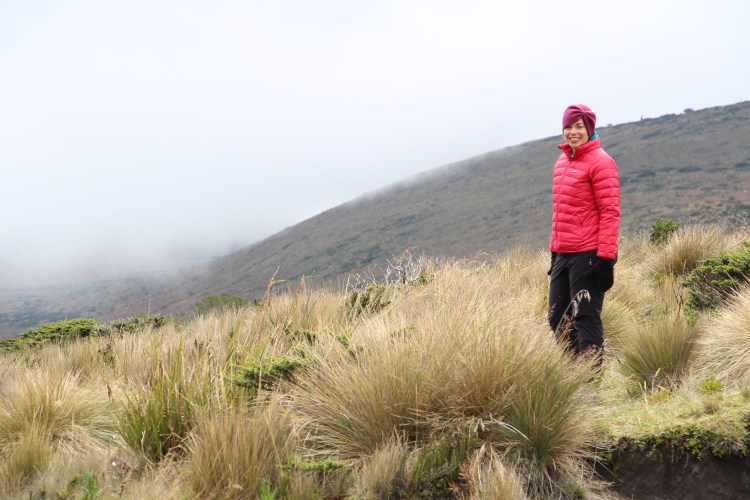
Finding my balance by connecting with nature! (On a camping trip in Los Nevados National Natural Park, Colombia) Photo credit: Jill Holmes

In light of it being Valentine’s Day in North America (in Colombia El Dia del Amor y La Amistad is celebrated in September), I thought I’d write about self-love. (After all, the longest relationship any of us will ever have is with ourselves!)

Sadly, though, we live in a world that makes it difficult to love ourselves. From a young age, we are taught that we are never enough. Beauty is purchased. Happiness is pursued. Bodies are shaped. There’s always someone smarter, fitter, faster, stronger, more beautiful than us. In my grade five class, I’ve been alarmed by the number of uber-thin girls who have told me how fat they are, and the boys who have broken down in tears after receiving 9/10 on their Math quizzes. As high-achieving ten-year-olds, they are already striving for perfection in every aspect of their lives.

But I did the same when I was their age. I was constantly complaining about how fat I was compared to the other girls in my ballet class and would wear baggy sweatshirts to hide my curvy figure. While I never developed an eating disorder, like many other dancers and female athletes, I struggled with exercise addiction until my mid-twenties (and arguably still do). I’d push my body to the point of injury and would beat myself up if I missed a day at the gym.

I’ll admit, there was a day during my undergrad when I taught three fitness classes and then played 80 minutes of rugby. I’d always opt for a Sunday morning run over Sunday morning cuddles with my boyfriend. In addition, I over-scheduled my life with clubs, activities, and leadership roles to fulfill a compulsive need to be the best at everything I did. But it wasn’t entirely my fault: “busy-ness,” over-achievement and perfectionism were glorified in the culture of my university. I even won an award at my graduation for outstanding contribution to athletics and student government. I’m sure my Dean’s List average, long list of extra-curriculars, and high-achieving résumé helped me land a grad school scholarship.

However, my extensive involvement and over-scheduled life came at a cost: time for myself. I went years without going to the doctor, was often running on little sleep, experienced several chronic injuries from over-exercise, and took some of the relationships I valued most in my life for granted. I missed a few of my good friends’ weddings. I had to skip out on Thanksgiving at the cottage (my favourite family time of the year), and wasn’t able to be there for friends who were going through hard times. Also, I never made time for creative pursuits, like writing and photography, which add joy and meaning to my life.

It took a tough and painful breakup alongside the professional heartbreak of not receiving funding for my PhD research for me to realize that the compulsive need to be busy all of the time, as well as perfectionism, come from a place of fear of not being enough as I am. I was forced to confront the fact that I’m human like everyone else, and this means accepting that I’m deeply flawed and ultimately, imperfect. But, as a good friend wisely told me, my beauty lies in my imperfection: my inability to close cupboards or doors, my awkwardness in big groups, my terrible sense of direction.

One of the hard lessons that I’ve learned from being a teacher is to practise self-love in both my personal and professional lives. This means, putting myself first and being okay with saying “no” to people who need my help.

Most of my teaching experiences have been in low-income, “at-risk” communities, like inner-city Toronto and London, and on First Nations reserves. So I’ve worked really hard in my role as a “helper”: helping students believe in themselves, helping them overcome adversity, helping them reach their potential when the odds are stacked against them. However, the amount of energy I spent in investing in others came at the expense of helping myself. Since I was on the road most weekends  coaching basketball or rugby, I struggled to make time for the people and passions that I loved. This led to frustration and burn-out. It’s no wonder that nearly half of teachers leave the profession within their first five years of teaching.

I love teaching, but I’ve learned that to thrive in the profession, as well as maintain my health and sanity, that I have to constantly practise self-love. I have to put myself before my students. As my amazing and inspiring friend and fellow teacher said, “It’s like being on an airplane. You have to put on your own oxygen mask before you put on someone else’s.” This means making time every day to exercise, prepare healthy meals, and get to bed early, no matter how much grading I have. I give myself permission to have shitty lessons every now and then. I give less assignments that I have to grade myself and have more peer and self-evaluated assessments. I continue to be involved in extra-curriculars but I don’t coach EVERY sports team or run EVERY club.

Prioritizing self-love in my professional life has also helped me in my personal life. I say “no” to social events I don’t want to go to and have stopped trying to please other people. I make time to pursue my passions like writing and travel. I’ve stopped investing in friendships that don’t make me better or add substance to my life and instead, spend the bulk of my time with the people I really care about. While I still exercise most days, I schedule time for my body to rest and recover, and I don’t beat myself up when I skip my workouts.

While I spent the bulk of this Valentine’s Day alone, I didn’t feel sad or lonely. I went for a beautiful run in the morning and shared a traditional Colombian lunch with my friend. I spent the afternoon writing in a café, practiced photography with my new camera, and then enjoyed una cerveza y sol with another friend. I felt free to do what I wanted with who I wanted because I didn’t feel the need to achieve, or please, or meet any sort of social expectations.

This Valentine’s Day, I feel lucky to have spent the day loving the person who matters most in my life: me.