The Secret Garden: Magic, Solace & Adventure

jumping pic 1
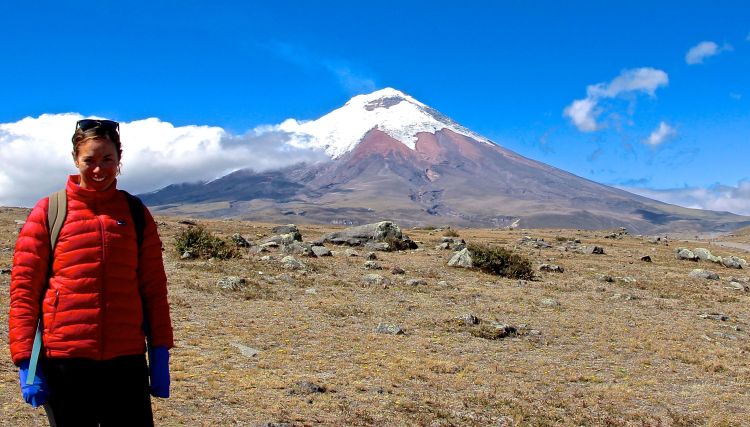
Why stand when you can JUMP in front of Cotopaxi, the world’s highest ACTIVE volcano?!

When I was in Grade 2 a teacher at my school gave me the children’s novel, The Secret Garden, as a gift.

thesecretgardenbookAs I was quite the avid reader, I read it in less than a weekend. It’s a story about an orphan, Mary, who is sent to England to live with a a grieving uncle. At first she feels isolated and neglected, but eventually finds solace in a rose garden she discovers. Being in the secret garden is a magical experience for Mary and transforms her into a healthier, happier version of herself.

Maybe it was my love of nature, the outdoors, and summers at the cottage, but I instantly connected with the story of a girl who is transformed by the power of nature.

I was also enchanted by the idea of secrets; the playful privilege of holding onto information that others would never know about.

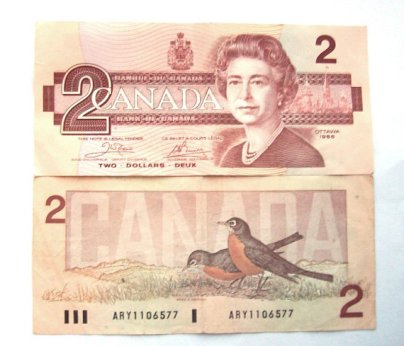
So after reading The Secret Garden, I did something that seemed like the obvious next step: I created a fake cover in the book and hid a couple of crisp $2 bills inside (which had recently been discontinued from circulation), thinking that they might be worth something someday. They are still there.
il_570xN.434409258_6q60


More than 20 years later, I was reminded of that childhood secret I created–the discontinued 2$ bills hidden in a secret cover inside The Secret Garden, bills which are now valued at more than 20$–when my friend, Michelle, recommended that I visit The Secret Garden Cotopaxi“It’s literally the best hostel I’ve ever stayed at.”

Two months later, The Secret Garden Cotopaxi became my favourite hostel as well.

After spending almost a year living and working as a teacher in Colombia, I took a two week trip to Ecuador before heading back home. The previous five weeks, cinco semanas de viaje en Colombia, had been spent with people I love: my parents, my brother Brian, and my friend, Ashley. So I was craving a bit of time to myself for quiet reflection on Las lecciones: What I learned from teaching & traveling in Colombia.

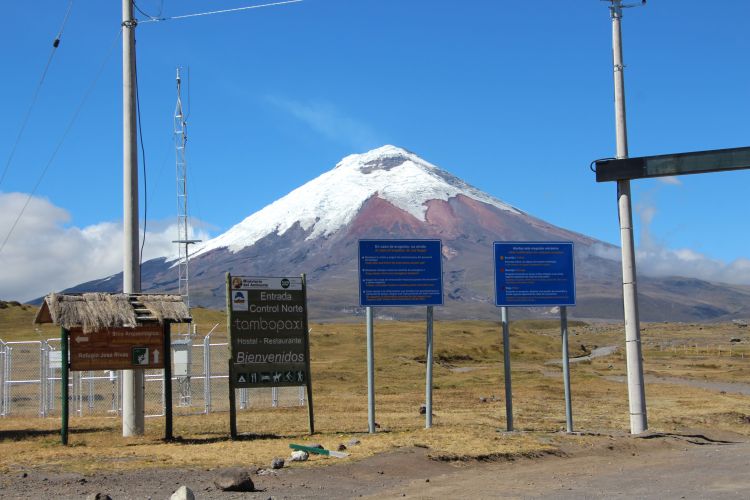
I took a 2 hour bus ride from The Secret Garden Quito (sister location in Ecuador’s capital) to The Secret Garden Cotopaxi for four days of activity and adventure in the Andes at the base of Cotopaxi, the world’s highest active volcano.

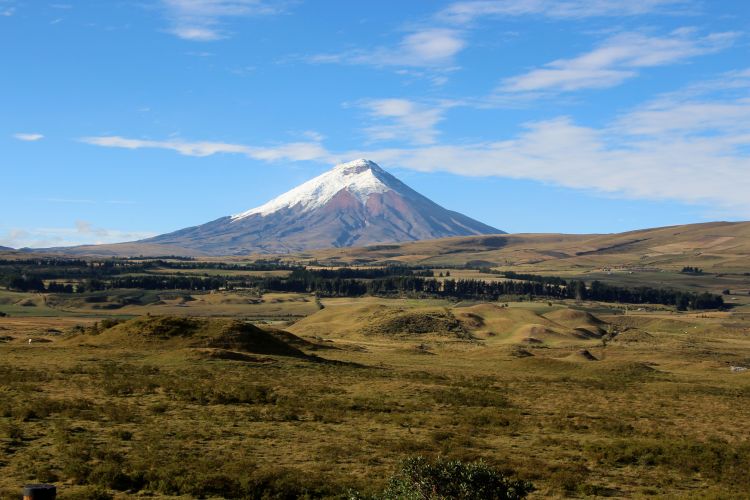
When I arrived it felt like I’d stepped into a fairytale. The landscape: golden grasses of high Andean tundra, rolling green pastures, and clear blue sky contrasted against the snow-capped peaks of Cotopaxi (which means the neck of the moon in Kichwa, one of Ecuador’s Indigenous languages), was enchanting. It was like I’d stepped into Mary’s rose garden, the majestic Eden I’d read about as a child but that I knew didn’t really exist in real life. It was beautiful. Enchanting. Real.

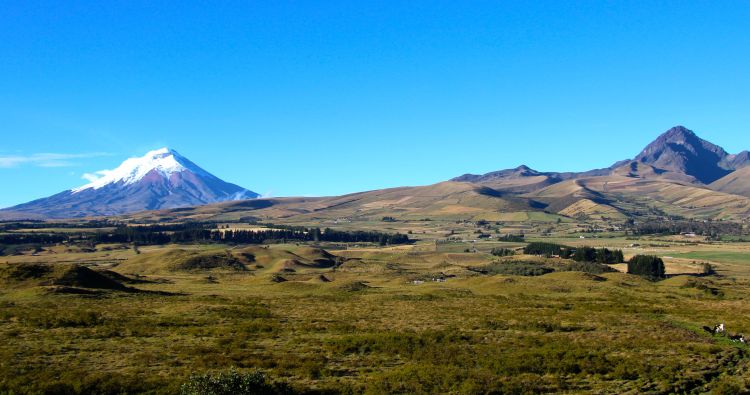
Cotopaxi clear day 2

Cotopaxi clear day

The hostel itself was as magical and special as the surrounding landscape. As soon as I stepped off the bus, I felt like I’d become part of a family. There’s no WIFI, so travellers are forced to talk to each other, share dinners together, play cards, and relax in the hot tub, basically, a kind of summer camp for adults.

During the day, we could opt to go hiking, mountain biking, fishing, horse-back riding, or even summit the volcano (this option was not available to me as Cotopaxi was closed due to recent volcanic activity).

Cotopaxi Horses 2

shan caught a fish

Park entrance

Even though I met many amazing people from all over the world at the hostel, I appreciated being able to take time to myself to write, read, and reflect.

For me, it was a time of transitions.

I was moving back home after living in Colombia for nearly a year, and I wasn’t sure if I really wanted to leave. Part of me wanted to stay. There was so much more of South America that I wanted to discover. I wanted to improve my Spanish. I would be leaving behind a special community of friends that I had made. The story felt, in a way, unfinished, and I wasn’t ready to write the ending just yet.

But I knew I needed to go back to Canada, at least for a little bit, to publish my first novel, to spend time with my family, to gain a little bit of stability before the next adventure (Patagonia: Dec 2017!!!).

I’m thankful that the mountain air of Cotopaxi helped me to find some peace and clarity about moving forward at a time when all I wanted to do was take a u-turn and go back.

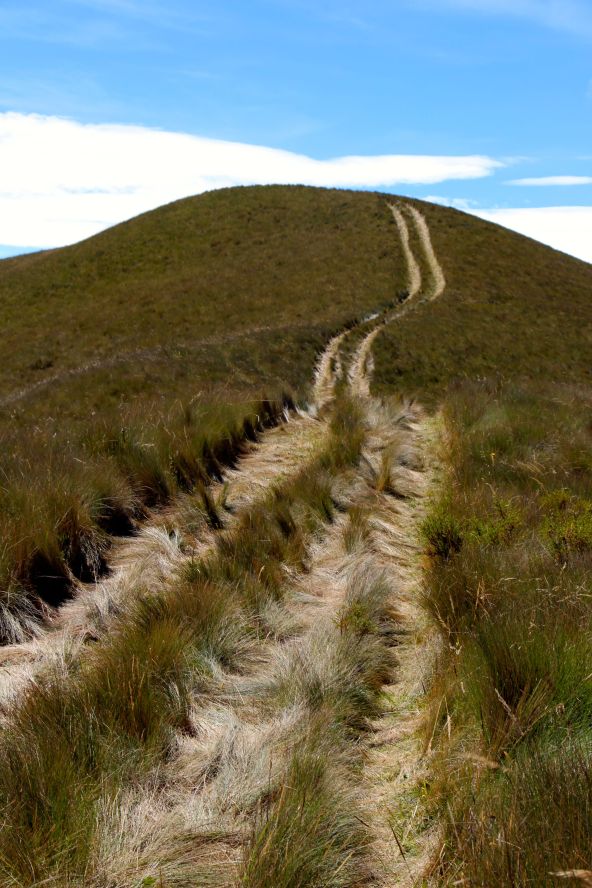
The thing I’ve learned about journeys and paths from traveling is that they don’t have to be linear. Mine is winding and twisted, with just as many u-turns as straight stretches. I’ve learned that just because you leave doesn’t mean you can’t, or won’t, ever go back.

Sometimes I do go back.

We hear the expression “going full circle” all of the time. Maybe our paths in life aren’t lines but circles.

When I was in Grade 2, I was enchanted by The Secret Garden. More than 20 years later, I was enchanted again. And the value of my 2$ bills just keeps growing.

Shan Pasochoa hike

flying kite 2

llama posing 3

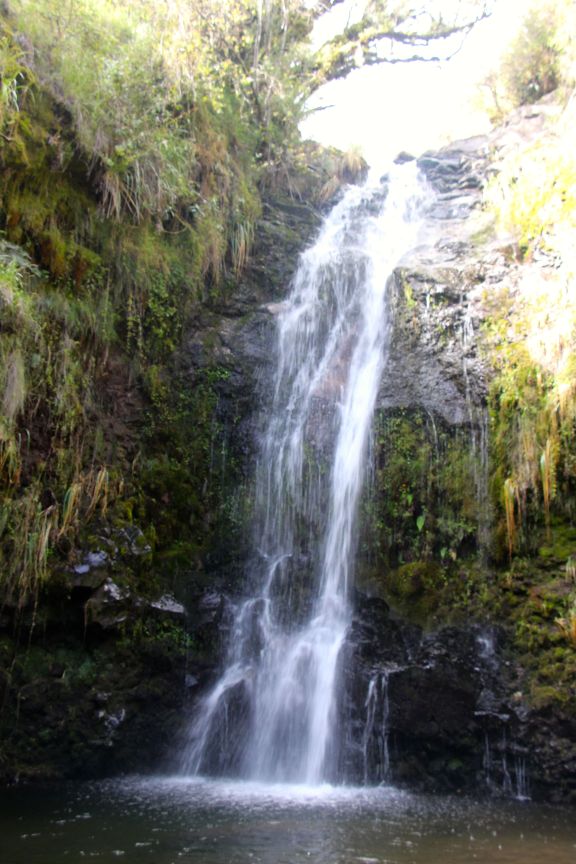
Cotopaxi waterfall

Cotopaxi clear day

Me and Volcano

Cotopaxi hike


There is Poetry in a Pint of Guinness

My parents are celebrating their 30th anniversary (a few years late!) in Ireland. One of their first stops was the Guinness Storehouse in Dublin, where my Mom, who’s not much of a beer drinker, enjoyed her first pint of fresh Guinness. 

This made me nostalgic for the first time I sampled Guinness in its ‘homeland.’ I originally published the post below in 2009 on Bangers ‘n Mash, my blog about teaching and traveling in London, UK. Since it is my most viewed blog post EVER, I thought I’d republish it here. 


SDC10108
My first pint of “fresh” Guinness at the Guinness Storehouse in Dublin, Ireland

“Guinness tastes so much better in Ireland,” I had been told before my trip to Dublin. Intrigued as to how a mass produced brand could taste distinctly different in one country, I felt obligated to sample “a few pints” of the famous brew in its homeland. Prior to the trip, I had only tasted Guinness a couple of times, and was not a huge fan. I found the beer bitter and was worried that its heaviness would do damage to my dainty waistline (haha). I had also perceived it to be more of a ‘Dad drink’ so wasn’t inclined to order it at pubs (as weird as that sounds). Thus, I did not expect to enjoy the notorious perfect pint of Guinness that I would be served in Ireland.

The production of Guinness began in December of 1759 when Arthur Guinness bought a 9000 year lease on an old brewery (which had been on the market for 10 years!) on St. James Street in Dublin. The purchase was quite a risk, as the location was very popular for competitors. More than 60 small breweries had already established their business in Dublin due to its excellent water supply from the rivers Liffey, Dodder and Poddle. Through hard-work and perseverance, Guinness was able to surpass the competition. A dry stout, Guinness has just four ingredients: barley, hops, water, and yeast. Through trial and error, and pure craftsmanship, Arthur Guinness combined these ingredients to create what is now often referred to as the “perfect pint.”

By 1833, Guinness had become so popular that the St. James Gate Brewery was the largest in Ireland, and by the 1880s, it had become the largest brewery in the world. As a side note, I have a soft spot for the Guinness Brewery because I played on the St. James Gate (an Irish pub in Banff) basketball team when I lived in the wonderful little mountain town, although I never drank Guinness while I was there…

Today, 35 countries brew Guinness worldwide. However, each brewery must include the famous secret ingredient, a flavoured extract that is still brewed exclusively in Dublin and sent to international breweries so that the flavour of the perfect pint is consistent.

My first sip of Guinness in Dublin was at the Brazen Head, Ireland’s oldest pub. Dating back to 1198, The Brazen Head had been serving alcohol well before official licensing laws came into effect in 1635. A neat bit of trivia is that the pub is featured in the James Joyce novel, Ulysses: “You get a decent enough do at the Brazen Head.”

It was the perfect venue to sample the perfect pint: its “medievally, tavern-esque” dark, cozy atmosphere and cobble-stone courtyard create the Irish pub that I’d envisioned. All that was lacking was the music, which was to start in a couple of hours (we went for dinner, the traditional Irish pub food- stew, chowder, fish and chips, so were there a bit early).

When I put the ‘liquid gold’ (as Guinness is known due to its flawless flavour and profitability) to my lips, I was surprised at how smooth, creamy, and delicious it was. The thick creamy head is the result of the taps injecting nitrogen gas into the beer as it is being poured. With aftertastes that hinted flavours of rich coffee and dark chocolate, Guinness was not at all the bitter black stuff that I remembered. I am not sure if it was the beverage itself that I was enjoying, or merely the excitement of drinking Guinness in Dublin, but I was hooked. I literally began to crave the beverage’s distinct malty, mocha flavours. Thanks to Lululemon and stretchy denim I was able to put all of my waistline anxieties aside and continue to contribute to Ireland’s economic growth (in truth, at 198 kcal per pint, Guinness actually contains less calories than most non-light beers).

Guinness 3
Me, my brother Pat and my friend Kirbie (another Canadian teacher)

The next day, we visited the Guinness Storehouse, where you can go on a self-guided tour of the brewery, learn how to pour the perfect pint, and purchase Guinness merchandise. The tour was really interesting, well-organized, and informative. At the end of the tour, you receive a freshly brewed pint of Guinness. Actually, you have the option of learning how to pour the perfect pint, or enjoying a pint poured for you at the top-floor Gravity Bar, which is walled with windows and offers a 360 degree view of the city. It is worth going on the factory tour simply to see this fantastic view of Dublin.

Pat and I opted to enjoy our pints on the top floor, while our friends earned certificates of mastery in Guinness pint pouring. Did you girls remember to update your résumés?

The slogan, “It’s alive inside” is used to advertise Guinness.

Although this is not literally true, there is something magical about drinking Guinness, especially drinking Guinness at the St. James Gate in Dublin.

The pint I had in the Guinness Storehouse was pure perfection. It tasted smoother, creamier, and more delicious than the pint I had at the Brazen Head (and at subsequent pubs…). In terms of its physical composition, I doubt that the beer poured at the St. James Gate is in actuality any different than the beer poured at any other pub in Dublin. However, the allure of drinking Guinness at the Guinness brewery definitely adds to the richness of the experience, and makes you feel like you are consuming an extra special recipe.

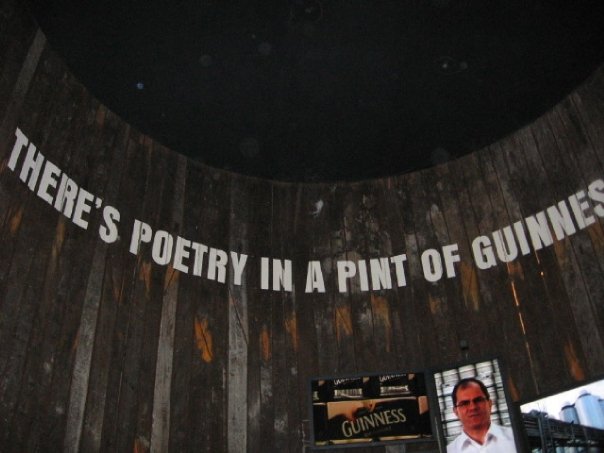
One sign that caught my eye in the Guinness Storehouse read “There is poetry in a pint of Guinness.”

I thought a lot about what this means. I suppose I would define poetry in an English class as a “written expression of human emotion”. But another interpretation could be that, poetry is, essentially, life. Therefore, the poetry is not the pint of Guinness itself but the life experiences created by the pint: sampling Irish pub food with my brother and friends, discovering that musicians in Irish pubs seem to only play American covers and U2 (I guess I had expected the fiddle??), the feeling of panic when I looked in my wallet and realized I had spent more on a night at the pub than on my return flight from London to Dublin (alcohol is ridiculously expensive in Dublin- I literally spent 7 Euros on pints at some pubs), meeting other interesting travellers, and of course, the memory of tasting my first sip of Guinness in Dublin.

It is interesting to note that despite the love of Guinness that I developed while I was in Dublin, I haven’t had a drop of it since I got back a couple months ago*. Perhaps this is because I subconsciously know that it just won’t taste as good as it did at the St. James Gate? Although I am sure that I will order the odd pint of Guinness every now and then, I doubt I will ever choose it regularly over other options that I would, of course, drink responsibly.

Since my perspective of Guinness consumption in Dublin came from a tourist’s point of view, I am interested in learning more about whether Guinness is actually the drink of preference for most Dubliners, or if that is simply a stereotype. I suppose the commercial success of Guinness suggests that people do, in fact, drink it quite often, but do Irish people link Guinness with part of their cultural identity? Or is its Irishness simply the brand image that Guinness promotes to the world?

I’m sure I’ll sample many more pints in the future, but none will have quite the same ‘magic’ as my first Guinness in Dublin!

*Since I published this article in 2009, I have consumed many more pints of Guinness. Yet none have been as tasty as that first sip of Irish magic!

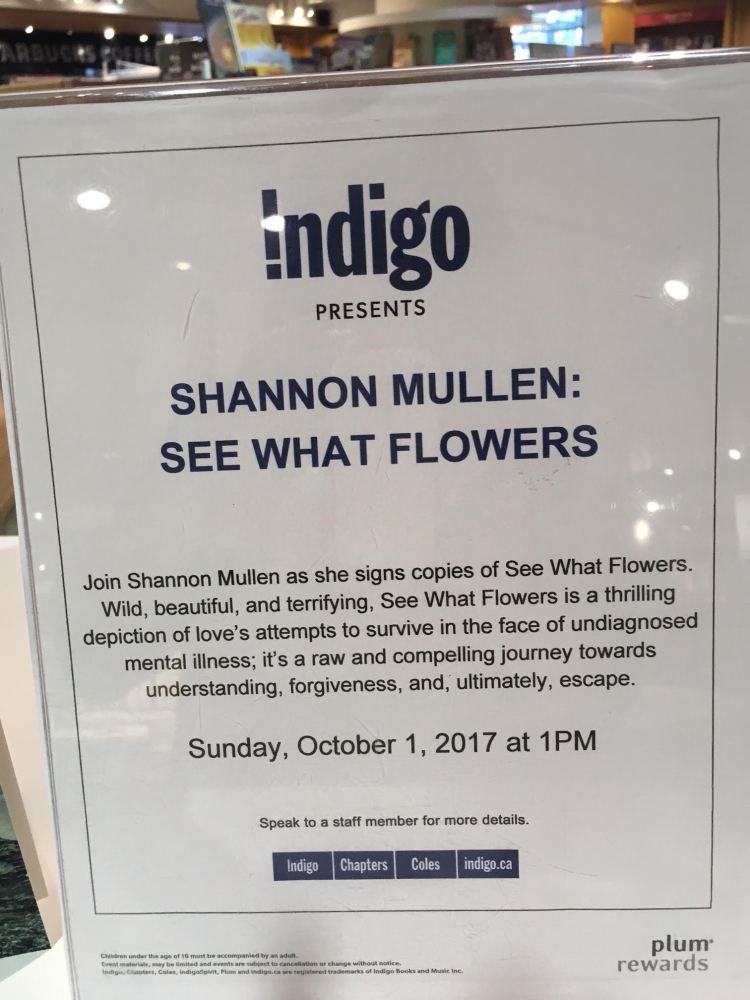
See What Flowers Book Signing at Indigo

Chapters 1

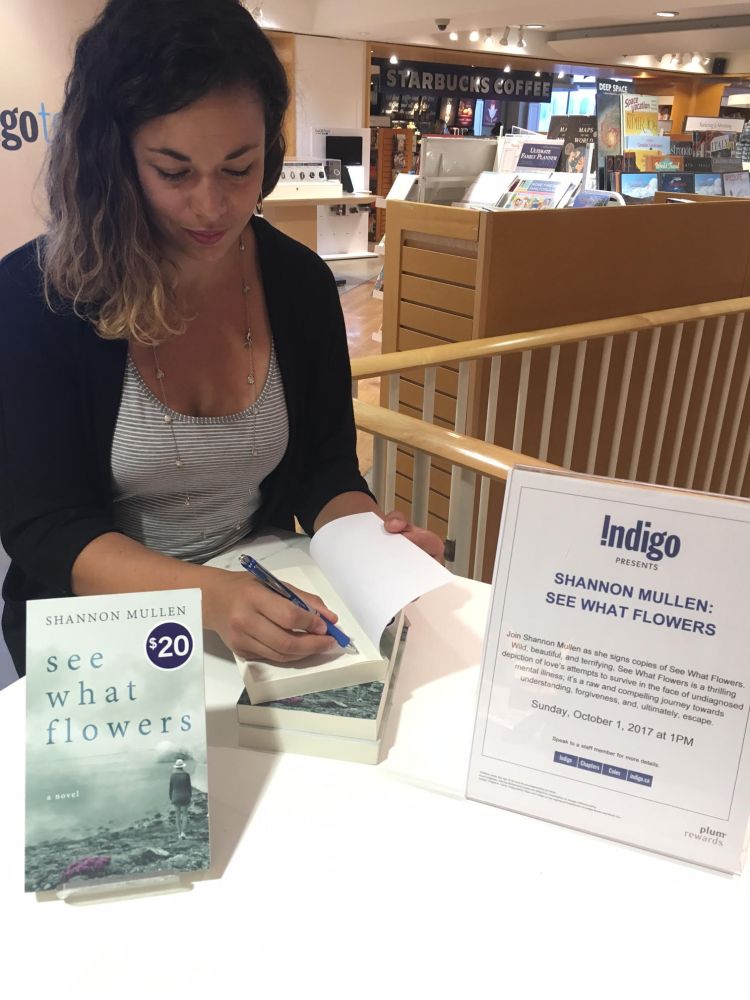
This past Sunday, I was thrilled and honoured to have had the opportunity to sign copies of my début novel, See What Flowers, at the Yonge and Eglinton Indigo location in Toronto, Canada.

Set in Toronto, Vancouver, and the Canadian Arctic, See What Flowers is a contemporary fiction about love and mental illness.

While this is not the first event I’ve done to promote my book–I launched it in both Toronto and Ottawa, and did a book signing in Shawville, Québec–I was most nervous to talk about my book in front of Indigo customers, most of whom I had never met before.

Chapters/IndigoChapters/Indigo is Canada’s biggest bookstore, so it felt like I had entered the “big league” with this event.

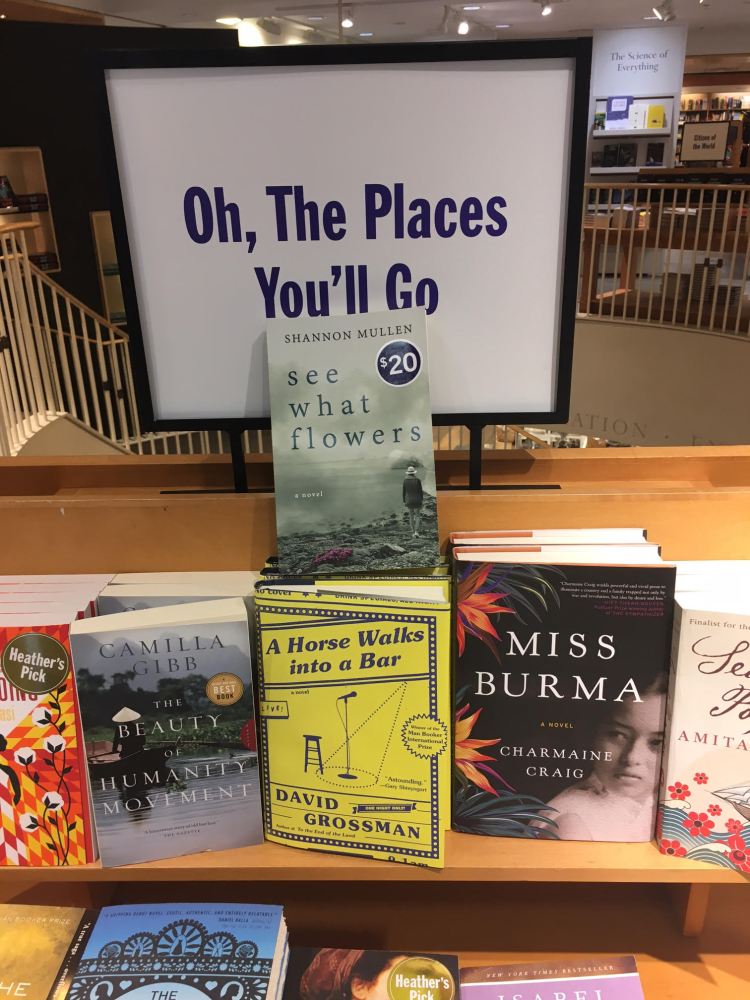
camilla gibb

During the event, there were most definitely awkward moments. I felt shy about encouraging readers to purchase copies of my book when copies of Rohinton Mistry’s A Fine Balance and Marlon James’ A Brief History of Seven Killings were prominently displayed on the shelf in front of me.

Munro

But I kept reminding myself that my last name is “Mullen”…which gives me the alphabetical order advantage to be shelved beside “Munro” (as in Alice).

This little self-pep talk gave me the boost of confidence I needed to chat about the plot, setting, and characters of See What Flowers, my writing process, and about book publishing in general.

In the end, many customers took a chance on my book, choosing to place See What Flowers alongside the many books that fill their own personal libraries.

signing.jpg

See What.jpg

I am very fortunate and grateful that Chapters/Indigo has such an active “Local Authors” program to support emerging authors like me promote their work.

The best part of the day was when one of the staff members placed the remaining copies in Indigo’s CanLit section, complete with “Signed By Author” stickers.

can lit.jpg