Inspiring Women Series: A Conversation with Josefina Bittar

Josefina

“I think sometimes you just have to let some things go so that you can find better things.”

For the fourth episode of the Inspiring Women Series, I had a lovely conversation with Josefina Bittar, a Paraguayan woman who currently holds a Fulbright Scholarship to study a Master’s Degree in Linguistics at the University of New Mexico in the United States.

After graduating from high school in Paraguay, Josefina studied Language Arts at the University of Asuncion. During her undergrad, at the age of 19, Josefina became pregnant and got married. Unfortunately, her marriage didn’t work out and she got divorced shortly after.

Instead of dropping out of school to deal with the emotional pain of her divorce and the challenges of raising her son as a single mother and full-time student, Josefina found the strength to continue her studies.

“School made me happy. If I didn’t have school, it would have been much more difficult.”

Her close-knit extended family was an amazing support for her during this difficult time. In addition, Josefina found hope through learning the stories of other women who had also gone through a similar experience. Josefina feels that her divorce has taught her important lessons that can be applied to both her personal and professional lives.

“You can try to convince yourself that this is the person or this is the place or this is the job and you don’t realize that you might be missing out…that there might be something better for you out there.”

Following university, Josefina worked for two years as a school teacher at the American School of Paraguay in Asuncion. While she excelled as a teacher, she felt pulled to continue her education. When she was awarded the prestigious Fulbright Scholarship, she moved to the United States with her 6-year-old son and her new husband.

In the future, Josefina hopes to work as a linguist in Paraguay, and possibly pursue a PhD so she can research the country’s use of Spanish and Guaraní, an indigenous language spoken by 90% of the population.

There has been very little research done in linguistics in Paraguay, so Josefina hopes to advance knowledge in this field. (Guaraní is the only indigenous language of the Americas whose speakers include a large proportion of non-indigenous people. Elsewhere, the indigenous languages have been largely replaced by European colonial languages such as Spanish, French or English).

In this episode of the Inspiring Women Series, Josefina talks about her research goals, love, self-acceptance, and the many different roles that women can have in society.

“I’ve learned that I can be the way I want to be, and as long as I’m a good person…that’s okay…”

The Inspiring Women Series is a podcast dedicated to sharing the many stories of women who have inspired me in my life, or who have inspired others.

You can subscribe to the podcast series in the iTunes store or listen to Josefina’s interview here:

Inspiring Women Series: A Conversation with Rose LaBrèche

12992210_10101394149915001_201775016_n
27-year-old Rose LaBrèche has been named as Canada’s only official for Rugby Sevens at the 2016 Olympic Games in Rio.

“When I started refereeing I never thought I would get to this point…or even when I started playing. You never think that what you are doing is going to take you down this amazing road of challenges but awesome occurrences in your life.”

For the third episode of the Inspiring Women Series, I had a conversation with Rose LaBrèche, a former rugby teammate of mine at Queen’s University, who has been named as Canada’s only official for the début of Rugby Sevens at the 2016 Olympic Games in Rio. At 27-years old, Rose feels honoured to be part of the Games so early in her refereeing career, an event she describes as being much bigger than herself, and much bigger than rugby.

“It’s the pinnacle of sport. It’s what everybody strives for.”

Rose started refereeing as a result of the encouragement of her coaches, particularly Beth Barz, at Queen’s University. After a series of concussions kept her off the pitch as a player, Rose began by refereeing high school and junior club rugby, and eventually progressed to both men’s and women’s matches at the top level.

Rose was initially attracted to the analytical and reflective nature of officiating, and loves how refereeing has enabled her to stay in the sport, despite her injuries.

“I am absolutely enthralled…and have this love affair with rugby.” 

This past September, Rose was named to the international panel of officials for World Rugby. Since then she has officiated “World Rugby Women’s Sevens Series” stops in Dubai, Sao Paulo, and in Langford, BC, as well as Six Nations games.

In order to make split-second calls during the fast-paced action of sevens play: a 14-minute game involving constant sprinting,  Rose has to maintain an incredible level of physical fitness. Rose has been described as one of the “fittest and fastest female referees out there,” which she attributes to her disciplined running regime and CrossFit workouts.

“It’s really tough once you’ve made an eighty meter break or something on the field and then you get to the next breakdown and you have to make a 50/50 decision….In order to make it easier for yourself you have to train by putting yourself under that sort of stress.”

Rose currently works for the Federal Government in Ottawa and has set high standards for herself in her “daytime” career. After graduating from Queen’s with a Bachelor of Science Honours Degree in Environmental Science and a minor in French, Rose worked for two years in Toronto at the Immigration and Refugee Board. Next, a short internship in Brussels, Belgium inspired her to complete a Master’s Degree at the University of Ottawa in International Affairs and Environmental Sustainability. Rose feels that what she has learned through refereeing has positively impacted her confidence and assertiveness in the workplace.

In this episode of the Inspiring Women Series, Rose talks about how overcoming her struggles with self-confidence has helped her to gain the respect of top-players and coaches in the international arena, as well as become better in all aspects of her life.

“When you have failure in your life you always second-guess yourself and you always doubt yourself. It’s about being able to come back from that minor failure, or even major failure to overcome your fears…

I have messed up. I have made bad calls on the international stage that have been on TV and that so many thousands of people have been watching and it’s kind of like, ‘How could I have done that? How do I ever come back from this?’ 

It’s all about looking within yourself and knowing that this is a temporary feeling and that you’ll get over it and time moves on, and you’ll get out of this in a better spot than when you came in.”

The Inspiring Women Series is a podcast dedicated to sharing the stories of the many women who have inspired me in my life. You can subscribe to the Inspiring Women Series podcast in the iTunes Store and can listen to my conversation with Rose below.


Witnessing Magic in the Amazon Rainforest

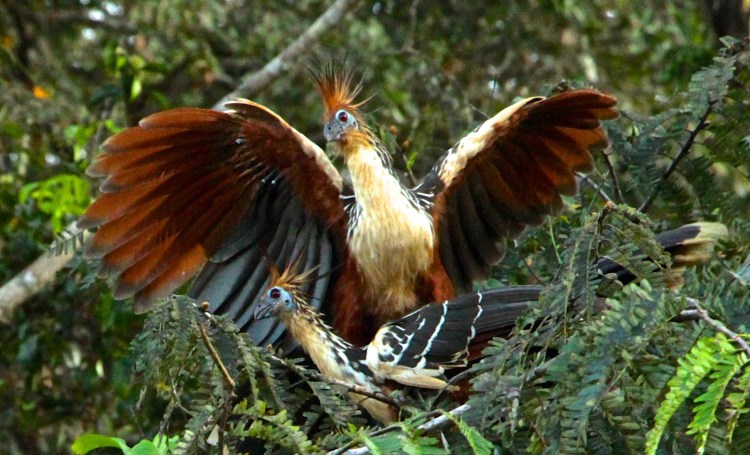
Peacock Fly
Peacock Fly in Cuyabeno Wildlife Reserve, Ecuador.

A few years ago, I took my first trip to Disney World during a spring break vacation to Florida. To be honest, I was kind of dreading the experience. I thought that I’d be turned off by all the crowds, commercialism, and unrealistically proportioned princesses.

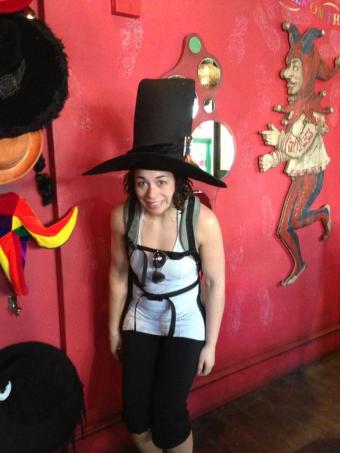
Shannon as wizard
Becoming a wizard in the Magic Kingdom.

But since the friend I was traveling with was excited to visit the recently opened Harry Potter World, I decided to give it a chance.

As predicted, I did find some of the ways that the park commodifies happiness a little soul-crushing. Surprisingly, though, underneath all of the make-up and costumes, amusement park rides, princesses, castles, light shows and souvenir shops, I was witnessing a hint of magic–something unbelievable but that existed nonetheless.

Stripped down, I could see that Walt Disney World is an example of the extraordinary power of the human imagination and what can be accomplished when dreams are put into action.

Oddly, I sensed a similar presence of magic on a trip to the Amazon last week.

Tree love
The Amazon is so wild and beautiful that it is hard to believe that it really exists. But it does.

I know that Walt Disney World is NOTHING like the wild of the Amazon Rainforest, but both left me feeling like I was witnessing the impossible. They inspired a sense of wonder, left me questioning reality, and stretched my imagination of what I believed could exist in real life.

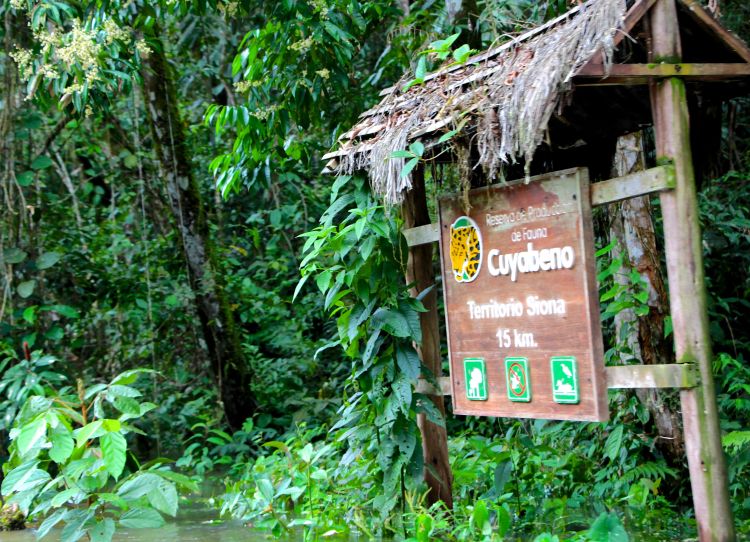
Cuyabeno
I visited the Amazon in Ecuador’s Cuyabeno Wildlife Reserve, home to an abundance of flora and fauna and several indigenous communities.

Unlike Disney World, however, the magic of the jungle is that it is not imagined, but a living, breathing ecosystem. It exposes the darkest side of nature, but also its brightest colours.

Baby Anaconda
A baby anaconda hides amidst the bushes. The average length of adult male anacondas is 2.7m, with the longest on record being almost 9m.
Caiman 1
Caimans, which tend to be 2.5-4m long, are well camouflaged in the dark, murky waters of the Amazon River.

The Amazon River is the largest river on earth, making up one-fifth of the earth’s freshwater. It’s been referred to as the “lung of the world” because of its massive power to have vital gases exchanged between the forest and the atmosphere. The rainforest stretches through nine countries:  Brazil, Peru, Colombia, Venezuela, Ecuador, Bolivia, Guyana, Suriname and French Guiana, and is the most bio-diverse region on the planet.

In the Amazon, there are anacondas that prey upon caimans, birds, and even jaguars from blackwater lagoons, trees that are over 5000 years old, termites that inspire engineering projects, birds that mate for life (take that, Ashley Madison!), and butterflies that re-define the colour wheel.

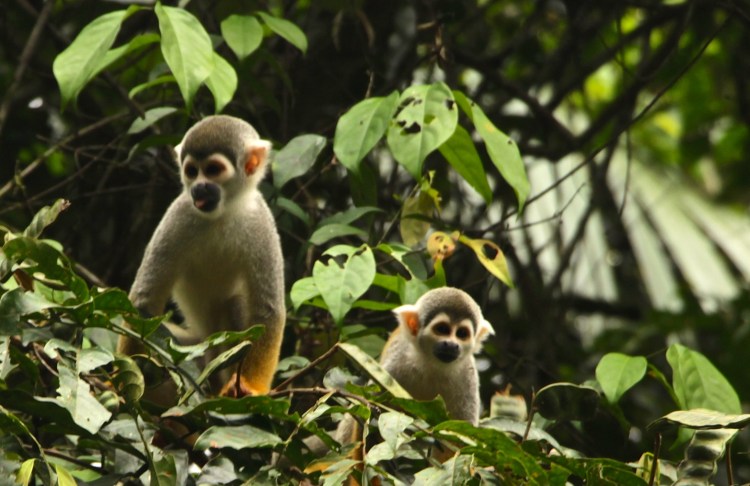
Squirrel Monkeys
Squirrel Monkeys search for food in the Amazon’s canopy areas.
Sloth 4
A sloth slowly makes its way along a tree branch.
Stinky Turkeys
Stinky Turkeys are one of over 580 species of birds in the Amazon.
Wooly Monkey
The Wooly Monkey is one of over 10 species of monkeys in Cuyabeno Wildlife Reserve.

Due to its diversity, the extraordinary role it plays in regulating the earth’s climate, and the sense of wonder it inspires, the Amazon Rainforest is an example of the ways in which life can transcend what we believed to be possible. Unfortunately, looming threats of oil and gas extraction, deforestation, and other development projects threaten the future of the Amazon (along with many of the Earth’s wildest places).

Not only will this limit the diversity of life on the planet, it will also threaten our ability to imagine new possibilities for how to make the world a better place to live.  For me, it’s these glimpses of magic that make life interesting. They push us to dream bigger, live more fully, and expand our imaginations of what we can accomplish.

As Walt Disney said: “It’s kind of fun to do the impossible.”

Mitad del Mundo: Centring Myself in the Middle of the World

Shan Mitad del Mundo
That time I straddled the #Equator.

I smile in disbelief as my friend takes a picture of me, right leg in the northern hemisphere, left leg in the southern.

I’m standing in front of the Mitad del Mundo Monument, a historic site located 26km north of Quito, Ecuador, built between 1979 and 1982 to commemorate the 1736 French Geodesic Mission which determined the Equator’s approximate location at zero degrees latitude. (According to more recent GPS readings, the Equator actually lies about 240 meters north of the marked line.)

Thousands of tourists have struck a similar pose, but for me, the photo feels like MORE than a sweet shot for my Instagram followers #zerodegreeslatitude.

Why? At 31, I haven´t “checked the boxes” expected of someone my age: no stable career, no husband, no babies, no house, no pension, no savings, no assets. Yet I have a wealth of life experiences, lots of stamps on my passport, and amazing friends all over the world.

So, as I strike a pose in the middle of the world, I realize how lucky I am to be where I am, and how far I’ve come in order to get here.

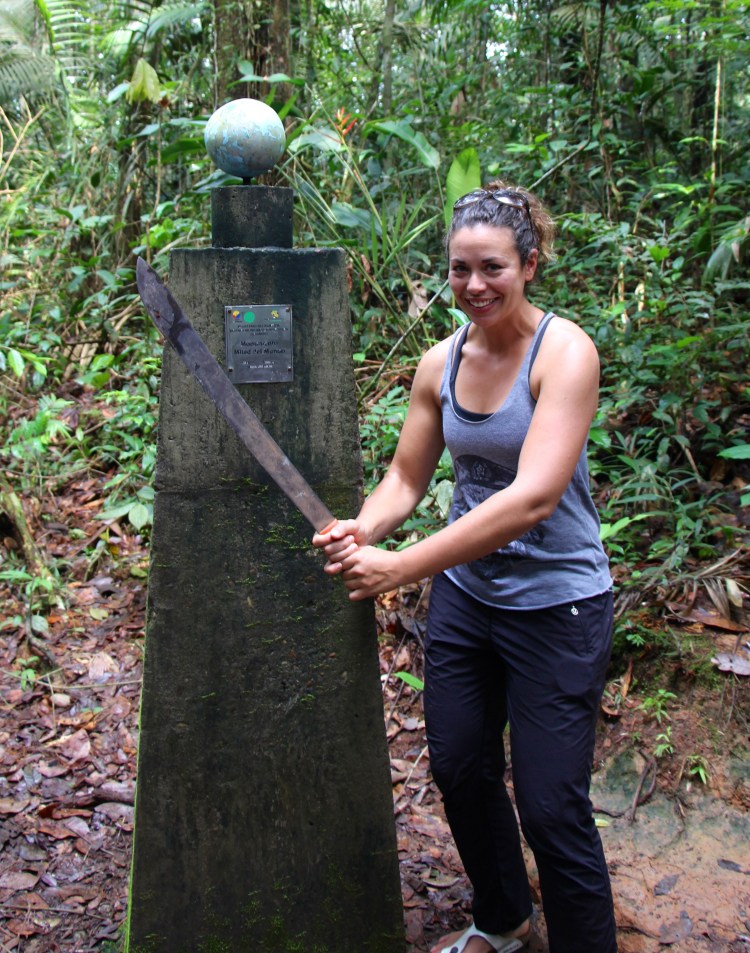
Shan Machete
“Machete-ready” at the Mitad del Mundo Monument in the Amazon. There are milestones to mark the Equator along zero degrees latitude all over the world.

At zero degrees of latitude, the Equator may be an imaginary line. However, for me, it represents something real: taking risks, starting over, being one step closer to my dreams.

Only two years before, I was living above the Arctic Circle, at 72 degrees north, working towards becoming a university professor. However, after a few personal and professional heartbreaks, life has spun me in another direction, and I’ve begun pursuing more creative writing, (as opposed to academic which would have been a much more secure investment of my time and energy, but not as personally fulfilling).

Sundial
The position of the sun in relation to the Earth enables us to tell the time on a sundial.

It wasn’t until I stood at the centre of the world that I realized that finding my own “centre,” the road that I’m truly meant to follow, might involve choosing a different path than what’s expected of me. I guess the bright side of life not going “according to plan” is that the new plan (the one you are forced into when your previous one doesn’t work out) can take you somewhere new and unexpected, somewhere closer to where you wanted to go, but never had the courage to pursue.


At the Mitad del Mundo, I’m realizing that even though I’m traveling further and further away from the direction I thought I’d be going, that I’m moving closer and closer to where I truly ought to be.